How to Roast Chestnuts in a Pan in 7 Easy Steps
If you’ve never roasted chestnuts on the stove, you might be surprised how simple it is to get that sweet, smoky flavor without an oven. Roasting chestnuts in a pan is an easy and quick way to enjoy this seasonal treat. You’ll just need a few basic tools and some fresh chestnuts to start.
Knowing how to prepare and roast chestnuts correctly makes all the difference. Once you master the technique, you’ll wonder why you didn’t try it sooner. Let’s look at the straightforward steps to get you there.
Selecting Fresh Chestnuts

When selecting fresh chestnuts, you should choose ones that feel heavy for their size, as this indicates they’ve high moisture content and are fresh. Look for chestnuts with shiny shells that are smooth and free from cracks, holes, or mold.
Avoid any that rattle when you shake them; this usually means they’re dried out or spoiled. Make sure the chestnuts feel firm and solid, without any soft spots or wrinkling on the shell.
Before you start roasting, rinse the fresh chestnuts under cool water to remove dirt or debris.
Scoring the Chestnuts for Roasting
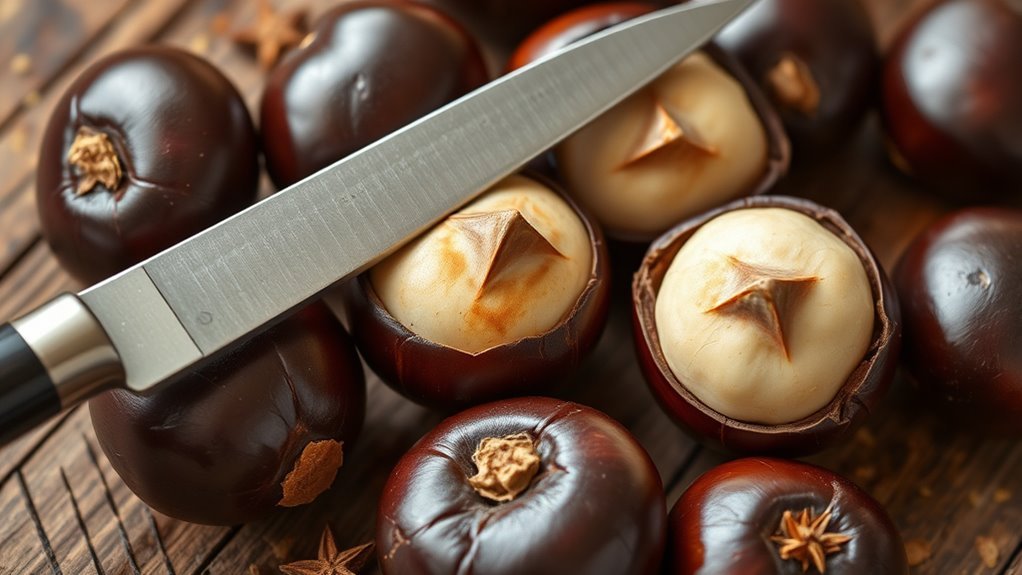
Because chestnuts can burst while roasting, you’ll need to score each one before cooking. Use a serrated knife to cut a small “X” or cross on the flat side of each chestnut. This allows steam to escape safely and helps you open the shells easily once they’re roasted.
Make sure your cuts are deep enough to penetrate both the outer shell and the thin inner skin, known as the pellicle, but avoid cutting too deeply into the nut itself.
Here’s what to remember when scoring chestnuts:
- Use a sharp serrated knife for precise cuts
- Cut an “X” on the flat side to prevent bursting
- Score deeply enough to open the shells and peel easily afterward
This step ensures even cooking and safe handling.
Preheating the Pan
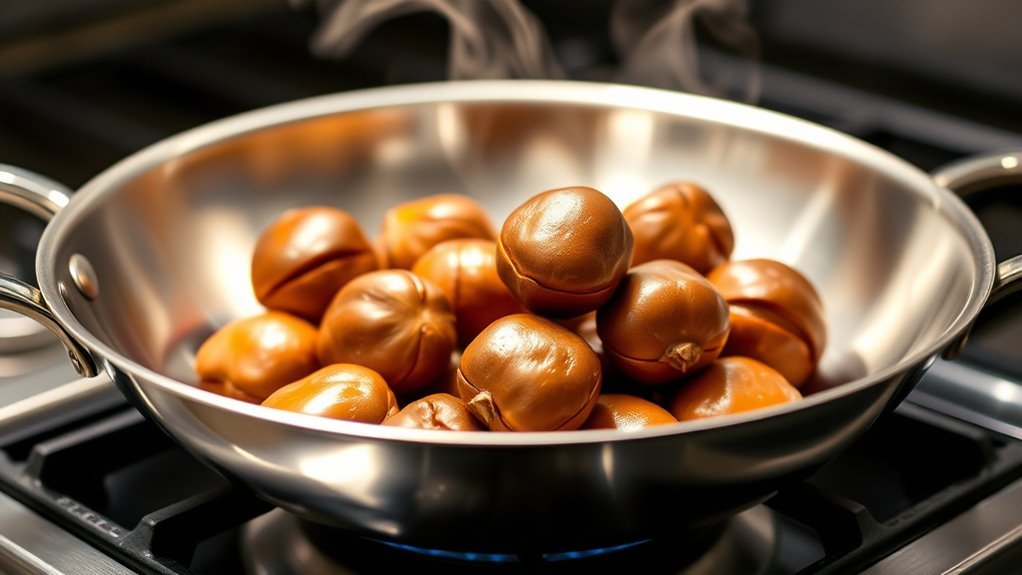
After scoring your chestnuts, the next step is to preheat your pan properly. Choose a dry cast iron or heavy-bottomed pan, then place it over medium heat. Let it heat until it’s hot to the touch.
To check if the pan is ready, sprinkle a few drops of water on its surface; they should sizzle immediately. Avoid adding oil or butter before preheating, as you want to dry roast the chestnuts.
Test pan readiness with water drops—sizzle means perfect heat, no oil needed for dry roasting chestnuts.
Allow the pan to heat for several minutes to ensure even heat distribution. A well-preheated pan helps the chestnuts roast uniformly and prevents them from sticking or burning.
Taking the time to preheat the pan correctly sets the stage for perfectly roasted chestnuts every time.
Arranging Chestnuts in the Pan
Although you’ve preheated your pan, you’ll want to place the scored chestnuts in a single layer with the cut side facing up. This arrangement ensures steam escapes properly and makes peeling easier after roasting chestnuts.
Avoid overcrowding the pan to promote even cooking and prevent steaming instead of roasting. Keep some space between each chestnut so heat circulates freely.
Remember these key points when arranging chestnuts:
Lay chestnuts cut side up for ideal steam release and peeling
Leave space between chestnuts to ensure uniform roasting
Use a pan with a lid to trap steam, enhancing flavor and softening shells
Following these steps will set you up perfectly for roasting chestnuts evenly and deliciously.
Roasting and Shaking the Chestnuts
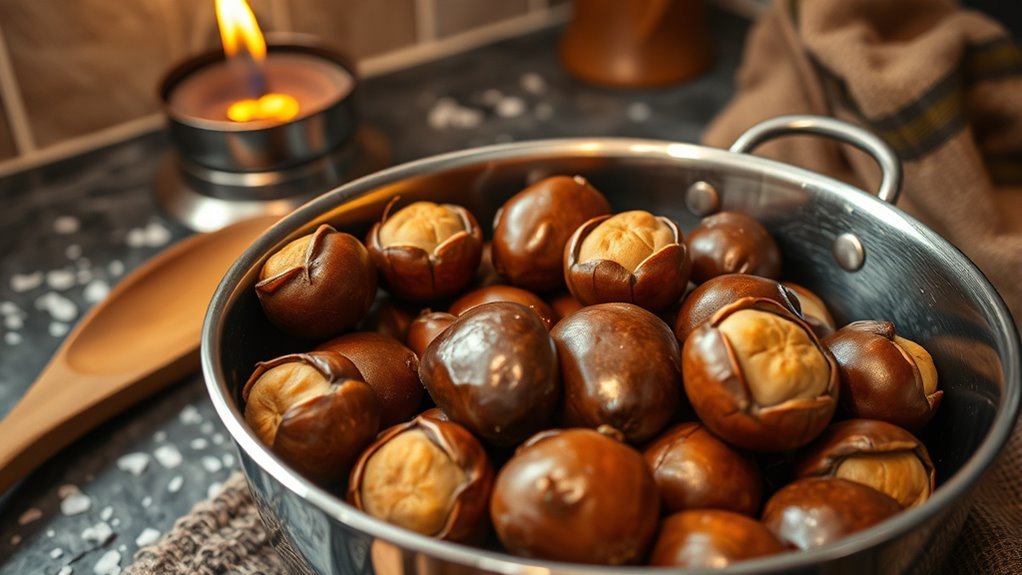
Once you’ve arranged the chestnuts with space between them and the cut side facing up, it’s time to heat things up. Preheat a dry skillet over medium heat until hot, then add your scored chestnuts in a single layer.
To roast chestnuts evenly, you need to keep things moving. Shake or stir the skillet every 2 to 3 minutes. This shaking prevents burning and helps the shells char uniformly.
Continue roasting for about 15 minutes until the shells are darkened and the crosses start peeling back. Keep shaking the pan throughout the process to loosen the shells and avoid sticking.
Steaming Chestnuts After Roasting
While the chestnuts are still warm from roasting, wrap them tightly in a clean tea towel to trap steam. This step is vital to preserve the smell of roasted chestnuts and soften their texture.
Let them steam for about 10 minutes, which will make peeling much easier by loosening the thin inner skin called the pellicle.
Make sure to keep the chestnuts wrapped and warm during this process to maintain their rich flavor.
Here’s what you should do:
- Wrap chestnuts immediately after roasting to trap steam.
- Let them sit for 10 minutes to soften and loosen shells.
- Keep them wrapped until you’re ready to peel.
This steaming step ensures a smoother peeling experience and keeps the chestnuts tender.
Peeling and Serving the Chestnuts
To peel chestnuts easily, start while they’re still warm, as the shells and inner skin come off much smoother. Hold each hot chestnut with a towel or oven mitt, then gently squeeze or crack the shell.
Using a sharp knife, carefully remove both the outer shell and the thin inner skin (pellicle) without tearing the nut. Take your time to peel chestnuts thoroughly for the best texture.
Once peeled, serve them immediately while warm to enjoy their rich flavor. If you need to wait, keep the peeled chestnuts covered or wrapped to retain their warmth and prevent drying out.
Serve peeled chestnuts warm for best flavor; cover to keep them tender if not serving immediately.
This way, you’ll get perfectly tender and delicious chestnuts every time.
Frequently Asked Questions
How Do You Roast Chestnuts in a Pan?
You roast chestnuts in a pan by scoring them, heating a dry skillet over medium heat, placing chestnuts cut side up, shaking occasionally for 15 minutes, covering to steam, then peeling while warm for the best taste.
How to Cook Perfect Chestnuts?
Don’t worry about tricky peeling! You’ll cook perfect chestnuts by scoring them, roasting in a hot pan with frequent shaking, then wrapping in a towel to steam.
Peel while warm for tender, flavorful results every time.
Do I Need to Soak Chestnuts Before Roasting?
You don’t have to soak chestnuts before roasting, but doing so helps keep them moist and makes peeling easier.
If you want a crisper shell, skip soaking and roast carefully after scoring the shells well.
Why Do We Not Roast Chestnuts Anymore?
You don’t roast chestnuts anymore because who needs smoky kitchens or burnt fingers when you’ve got microwaves and pre-packaged snacks?
Plus, roasting’s like a lost art. Urban life’s too busy for that cozy, old-fashioned charm.
Conclusion
Roasting chestnuts in a pan is like revealing a hidden treasure chest—each scored nut holds the promise of warm, sweet rewards inside. Just like you wouldn’t rush a good story, giving chestnuts time to roast and steam brings out their best flavor.
Remember, the joy is in the process as much as the treat. So, wrap yourself in that cozy towel moment, peel carefully, and savor a little warmth that feels like home in every bite.
By following these simple steps to roast chestnuts in a pan, you can enjoy the perfect snack. The aroma, texture, and taste make this an easy and delightful way to enjoy chestnuts at home.