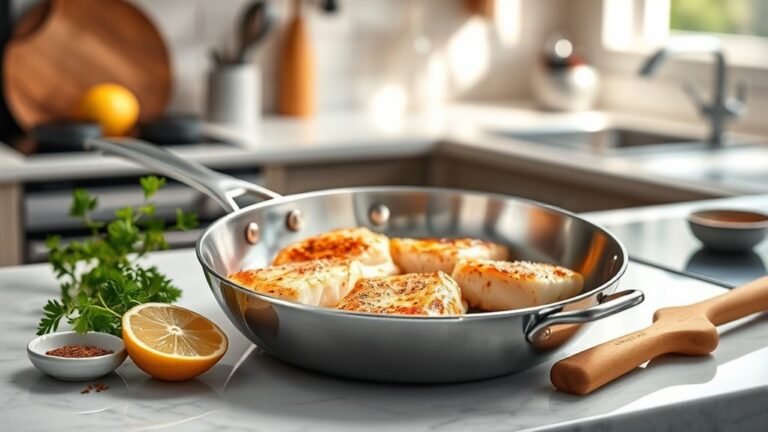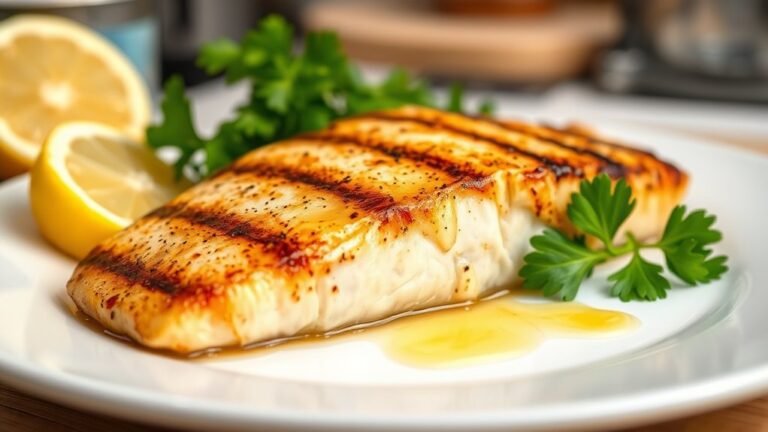
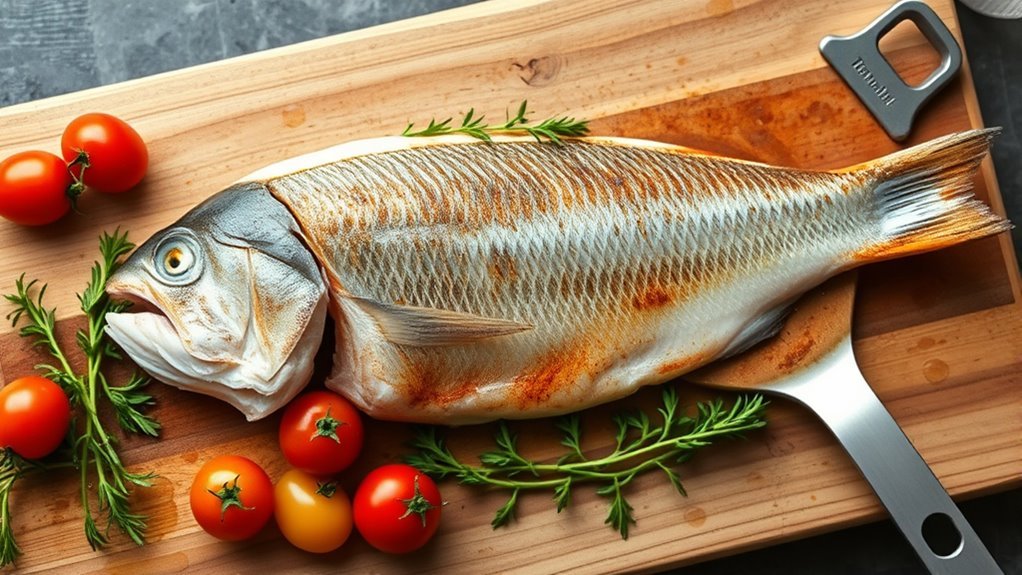
10 Steps to Perfectly Pan Sear Sea Bass for Crispy, Tender Fish
If you want to master pan-searing sea bass, it starts with more than just tossing fillets in a hot pan. Choosing the right cut of sea bass is essential for the best flavor and texture. Proper preparation and handling will set you up for success.
You’ll need to know exactly how to control the heat and timing to achieve that perfect crispy crust. Getting these steps right means the difference between a bland, soggy fish and a perfectly crispy, flavorful dish.
Keep going, and you’ll uncover the key techniques that make all the difference when pan-searing sea bass. Follow these 10 steps to transform your cooking and impress your guests every time.
Choose the Right Sea Bass Fillets
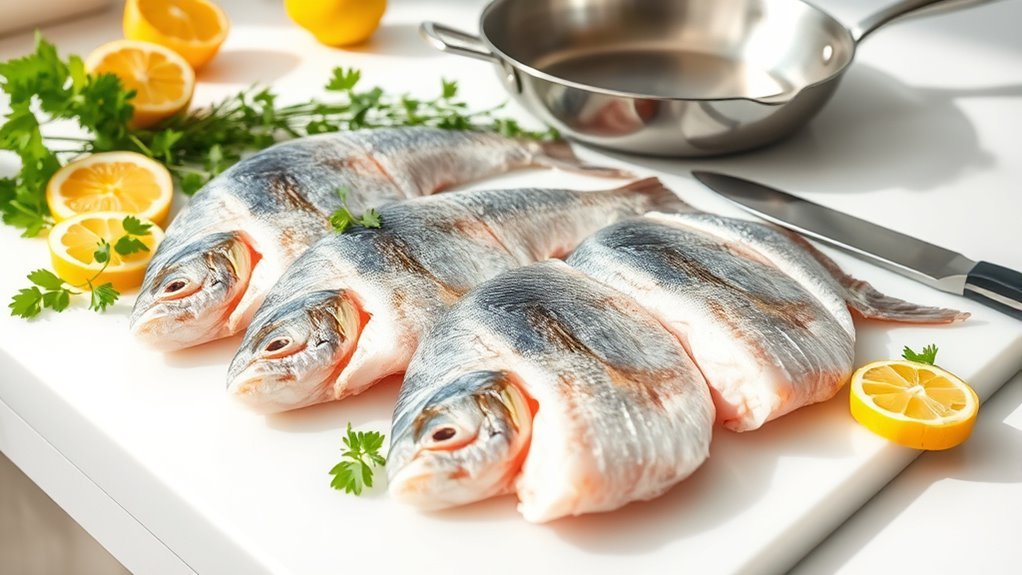
To get the best results, start by choosing sea bass fillets that weigh between 6 and 8 ounces each and measure about 1 to 1.5 inches thick.
Selecting evenly sized fillets assures uniform cooking, so none will overcook or remain underdone.
Opt for fresh sea bass with firm, moist flesh and avoid any showing discoloration or a strong fishy odor, which indicate poor quality.
Skin-on fillets are ideal for pan searing, as the skin crisps nicely and adds flavor, though skinless ones work if you prefer.
If using frozen fillets, thaw them completely in the refrigerator and give them a thorough pat dry with paper towels to promote a crisp crust.
Paying attention to the thickness of fish and freshness guarantees a perfectly cooked sea bass every time.
Prepare the Fish for Cooking
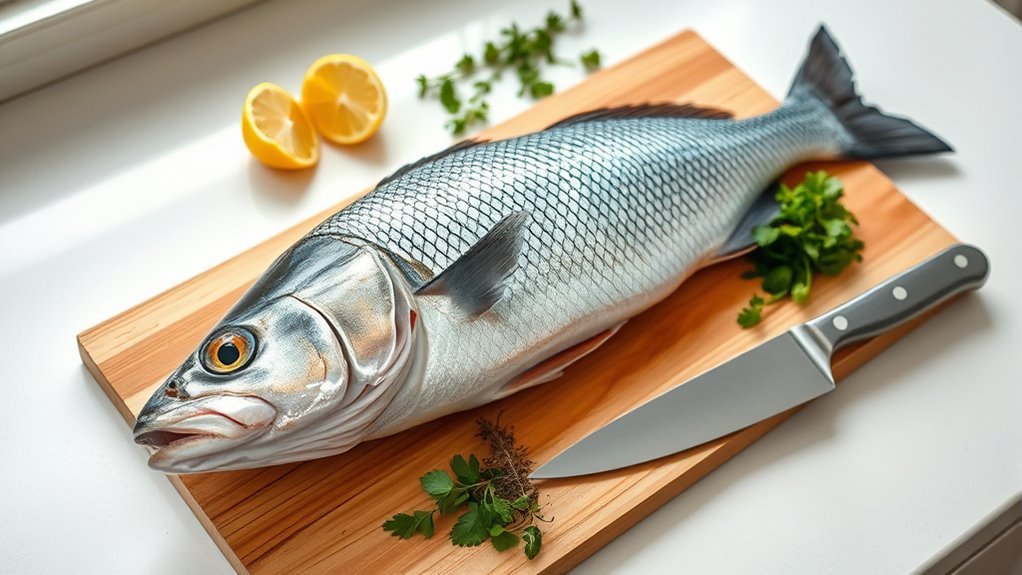
Once you’ve selected your fillets, pat them dry thoroughly with paper towels to remove any excess moisture; this step is essential for achieving a perfect sear. Using high-quality, skin-on fish with even thickness guarantees uniform cooking and a better texture.
After drying, let the fillets come to room temperature for about 10 minutes. This prevents uneven cooking when they hit the hot pan.
Meanwhile, preheat your pan over medium-high heat until it’s hot enough to create a crispy crust.
Add a thin layer of oil to the pan just before placing the fish in it. Properly preparing the sea bass like this sets the stage for a beautifully golden, crispy exterior while keeping the inside tender and flavorful.
Season the Sea Bass Properly
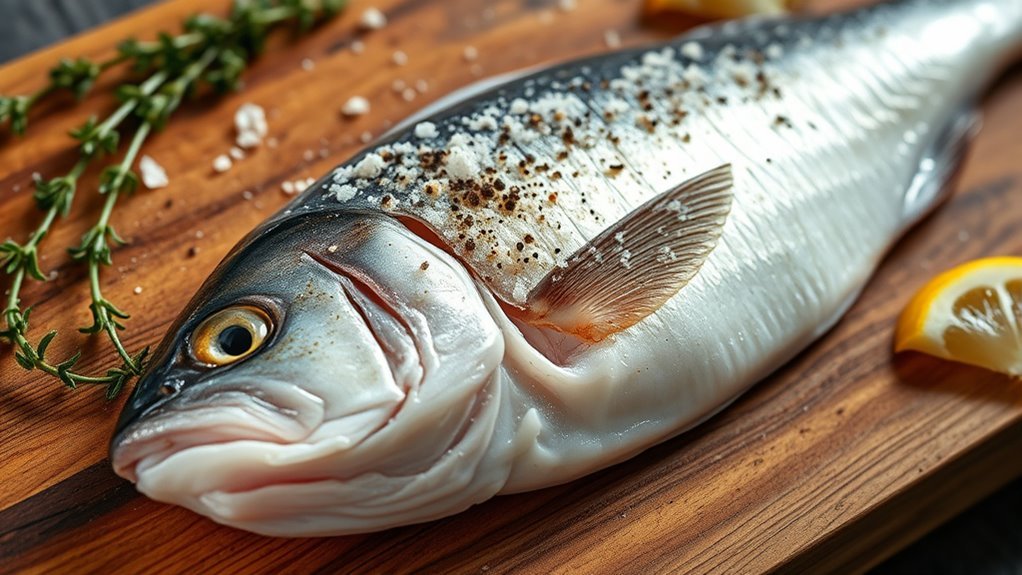
Although seasoning might seem simple, applying the right balance of kosher salt, freshly ground black pepper, and a carefully chosen spice blend will elevate your sea bass’s flavor and texture considerably.
Start by patting the dry fish fillets with paper towels to remove moisture, ensuring proper searing and a crisp fish crust.
Generously season both sides with kosher salt and black pepper, then add a spice mix of garlic powder, onion powder, cumin, coriander, and Aleppo pepper for depth.
Avoid wet ingredients during seasoning, as they can hinder the crust formation and make the fish soggy.
Once seasoned, let the fillets rest at room temperature for a few minutes; this promotes even cooking and helps the seasoning penetrate.
Proper seasoning sets the foundation for a perfectly seared sea bass.
Select the Best Cooking Fat
Since searing requires high heat, you’ll want to select a cooking fat that can handle the temperature without burning. Opt for a high smoke point oil like avocado oil, ghee, or refined olive oil to guarantee your searing fat withstands the oil temperature needed for perfect crust formation.
Ghee is especially great with a smoke point around 485°F, ideal for high-heat cooking. Butter adds flavor but burns quickly, so combine it with a neutral oil for balance.
| Cooking Fat | Smoke Point (°F) | Best Use |
|---|---|---|
| Ghee | 485 | High-heat searing |
| Avocado Oil | 520 | High smoke point oil |
| Refined Olive Oil | 465 | High-heat cooking option |
Preheat the Pan Correctly
Choosing the right cooking fat sets you up for success, but heating your pan properly guarantees that fat performs at its best. Start by preheating your cast iron skillet over medium-high heat for 2-3 minutes.
Preheat your cast iron skillet over medium-high heat to maximize your cooking fat’s performance.
To check if the pan is hot enough, sprinkle a few drops of water; they should sizzle immediately.
Once the pan reaches the right temperature, add a thin layer of oil and wait until it begins to shimmer. This signals that the oil is ready for searing.
A properly preheated pan ensures the sea bass will sizzle upon contact and develop a beautiful golden crust quickly.
Mastering this step prevents sticking and promotes even cooking, setting the stage for perfectly pan-seared sea bass every time.
Sear the Fish Skin-Side Down
Place your sea bass fillet skin-side down in the hot skillet, making sure the skin lays flat and fully contacts the pan. Add oil or butter beforehand to help sear the fish evenly.
Gently press on the fillet for about 30 seconds to prevent curling and make certain the skin stays in full contact with the hot skillet.
Then, cook undisturbed for 3 to 4 minutes until the skin turns golden brown and crispy.
This undisturbed cooking allows the fish to release naturally from the pan, preventing sticking.
Once you see a firm, browned crust and the fish easily releases, you’re ready to flip the fish.
Achieving a perfectly crispy skin requires patience during this initial sear skin-side down step.
Flip the Sea Bass Carefully
Although it can be tempting to flip the sea bass multiple times, you should flip it only once to keep the crust crispy and the interior tender.
Before flipping, use a thin spatula to gently loosen the fish from the pan, ensuring it releases easily without tearing.
Wait until the edges turn golden brown, signaling the perfect moment to flip carefully.
Tilt the pan slightly and use your spatula or tongs to provide control support as you turn the fish, preventing any damage.
This careful approach preserves the crispy crust formed during pan searing while maintaining the tender interior.
Check for Doneness
Once you’ve flipped the sea bass and allowed it to cook through, it’s crucial to check for doneness to guarantee a perfectly cooked dish.
Start by observing the golden-brown crust on both sides. This visual cue signals proper searing.
Use a meat thermometer to check the internal temperature, aiming for 135-140°F.
For a hands-on doneness test, gently press the fish; it should feel firm but yield slightly without being mushy.
The fork test also helps: use a fork to flake the thickest part of the fish gently. The flesh should separate easily, appear opaque, and show no translucent areas.
A firm texture combined with the right cooking time ensures your sea bass is perfectly cooked and ready to serve.
Make a Complementary Sauce
To elevate your pan-seared sea bass, you’ll want to craft a sauce that balances its rich, delicate flavor. Start by deglazing the pan with white wine to lift the browned bits, creating a flavorful base. Then, incorporate garlic and fresh herbs like parsley or dill for brightness.
Consider these options to complement your fish:
- A classic lemon butter sauce with capers adds tangy and salty notes.
- For creaminess, simmer heavy cream or coconut milk with lemon zest and herbs until slightly thickened.
- Sautéed vegetables such as shallots, bell peppers, or cherry tomatoes enhance flavor and presentation.
Each choice brings a unique dimension, perfectly pairing with the sea bass’s natural richness.
Serve With Suitable Side Dishes
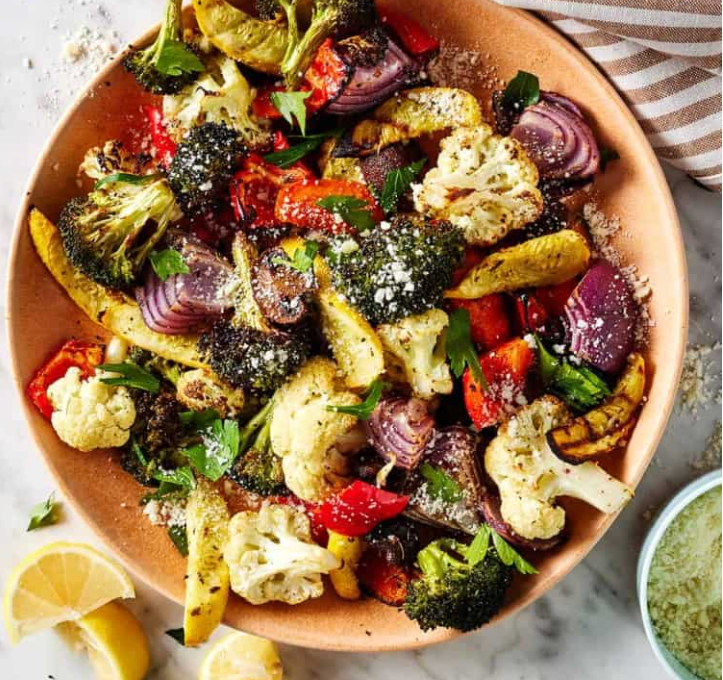
Pairing your perfectly pan-seared sea bass with the right sides enhances the overall meal and highlights its delicate flavors. To complement the rich, buttery texture, serve it alongside creamy mashed potatoes or a medley of roasted vegetables.
For a healthy pairing, add sautéed greens or roasted asparagus to bring vibrant color and flavor. Incorporate quinoa or other whole grains like bulgur for a nutritious, hearty touch.
Fresh salads such as arugula or tabbouleh offer a crisp contrast to the tender sea bass. Don’t forget lemon wedges or a drizzle of citrus sauce to brighten the dish and emphasize the fish’s natural zest.
Thoughtful side dishes elevate your pan searing efforts and create a balanced, satisfying plate every time.
Frequently Asked Questions
How to Pan-Fry Sea Bass Perfectly?
You’ll want to heat your pan well, dry and season the sea bass, then add oil.
Sear skin-side down without moving until golden, flip carefully, and cook until it flakes easily and reaches 135-140°F internally.
How to Make Pan Seared Bass?
Did you know sea bass has 19 grams of protein per 3-ounce serving? To pan sear it, you’ll want to dry, season, preheat your skillet, and cook skin-side down until golden before flipping carefully.
What Is the Best Cooking Technique for Seabass?
The best technique for seabass is to sear it skin-side down in a hot, seasoned pan until crispy, then flip and finish cooking gently. This locks in moisture and delivers a tender, flavorful result every time.
What Is the Best Way to Pan-Sear Fish?
Imagine you’re cooking sea bass for dinner; you’ll want to heat your pan well, dry the fish, and use a high smoke point oil.
Don’t disturb it, letting it sear evenly for a perfect crust.
Conclusion
Now that you know how to pan-sear sea bass perfectly, you’re ready to impress with crispy skin and tender, flaky flesh every time. Did you know that sea bass has a firm texture that holds up well to high heat, making it ideal for searing?
By following these steps, you’ll elevate your cooking and serve a restaurant-quality dish at home. Just remember: patience and the right technique make all the difference!
With these pan-seared sea bass tips, you can consistently achieve a beautifully crisp crust and moist interior. Mastering this method will bring out the best flavors and textures in your sea bass every time you cook.