How to Pan Fry Flank Steak: 10 Simple Steps for Perfectly Seared Steak
Pan frying flank steak is like painting a masterpiece with fire and flavor. If you want that perfect sear and juicy tenderness, you’ll need to master a few key steps—from choosing the right cut to resting it just right. Each detail matters, and skipping one can change everything.
Stick with me, and you’ll soon know exactly how to get that steak just right every time. Whether you’re a beginner or looking to refine your technique, these tips will help you pan fry flank steak to perfection. Get ready to enjoy a delicious, tender, and flavorful meal!
Selecting the Right Flank Steak
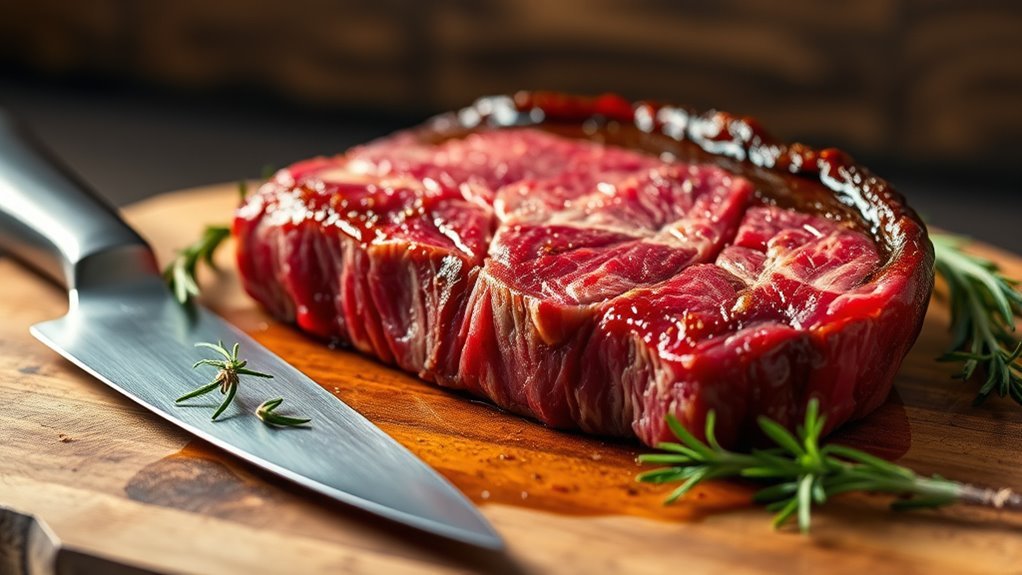
When selecting the right flank steak, you want to focus on freshness and quality to get the best flavor. Choose a cut with a bright red color and firm texture, avoiding any dark spots or excess moisture.
Look for steaks at least 1 inch thick, especially at the thickest part, to guarantee even cooking and a good sear. Good marbling throughout the meat enhances juiciness and tenderness, so pick USDA Choice or higher grades if possible.
Choose flank steaks at least 1 inch thick with good marbling for juiciness, tenderness, and perfect searing.
Since flank steak contains noticeable connective tissue, it’s essential to marinate the meat properly to tenderize it before cooking.
When ready to cook, slice flank steak against the grain to achieve the best texture and your desired doneness, guaranteeing a delicious, tender result every time.
Preparing the Steak for Cooking
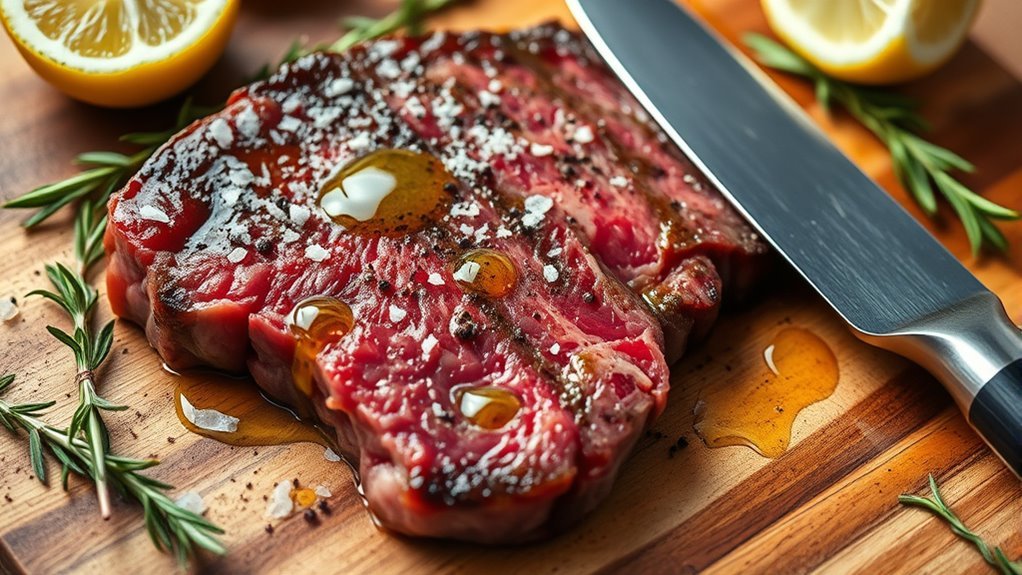
To get the best flavor and texture from your flank steak, start by bringing it to room temperature for at least 30 minutes before cooking. This step guarantees even cooking throughout this lean cut of meat.
To properly prepare your steak:
- Remove it from the fridge early to reach room temperature
- Trim excess fat and silverskin for better texture
- Score the surface lightly to help marinades penetrate
- Pat dry thoroughly to eliminate excess moisture and achieve a good sear
- Marinate in the fridge for 2-3 hours if desired, covering the steak
Following these steps will enhance tenderness and flavor, setting you up for a perfect pan-fried flank steak.
Trimming and Tenderizing Techniques
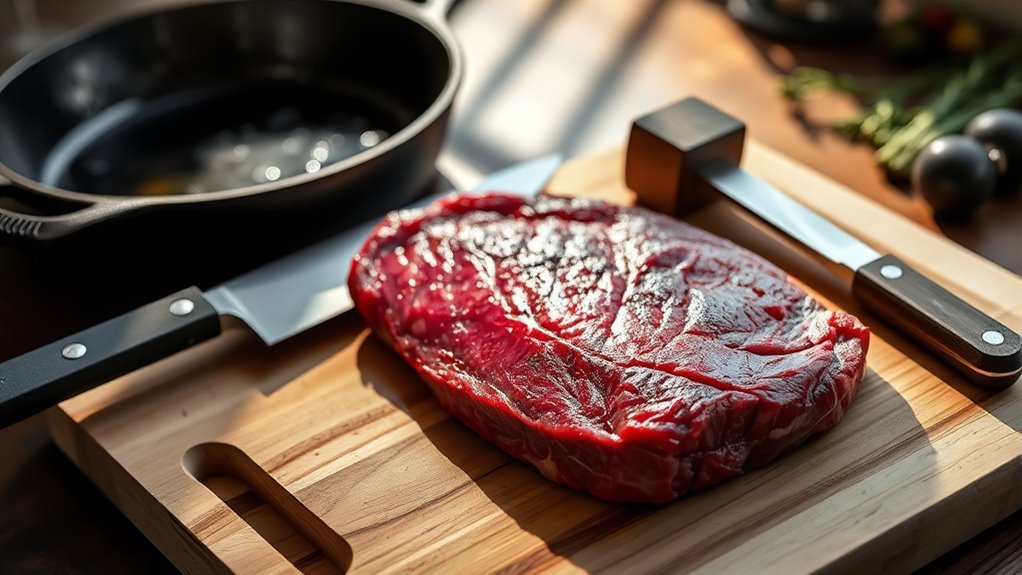
Although trimming and tenderizing might seem like small steps, they make a big difference in your flank steak’s texture and flavor. Start by trimming away any excess fat and the thin silverskin membrane with a sharp knife.
Next, lightly score the surface with shallow cuts to help tenderize and let seasonings penetrate better.
To further improve tenderness, make small, angled cuts at one-inch intervals following the grain; this breaks down muscle fibers effectively.
If you want, use a meat mallet to gently pound the steak, softening it even more.
After trimming and tenderizing, let your flank steak rest at room temperature for about 10 minutes. This promotes even cooking and enhances tenderness, setting you up for a delicious pan-fried steak.
Seasoning Your Flank Steak
With your flank steak properly trimmed and tenderized, the next step is to build its flavor through seasoning. Achieving a balance of flavors is key to flavor enhancement before cooking. Here’s how to season your flank steak effectively:
Generously sprinkle kosher salt and freshly ground black pepper on both sides. Evenly spread dry or regular mustard over the steak’s surface for added depth. Rub softened butter onto the steak to lock in moisture and develop a flavorful crust.
Consider marinating the steak in garlic, ginger, or herbs for at least 2 hours to boost flavor. Let the seasoned steak rest at room temperature for about 10 minutes to ensure even heat distribution during cooking.
Following these seasoning steps will prepare your flank steak perfectly for pan frying.
Preheating the Pan Properly
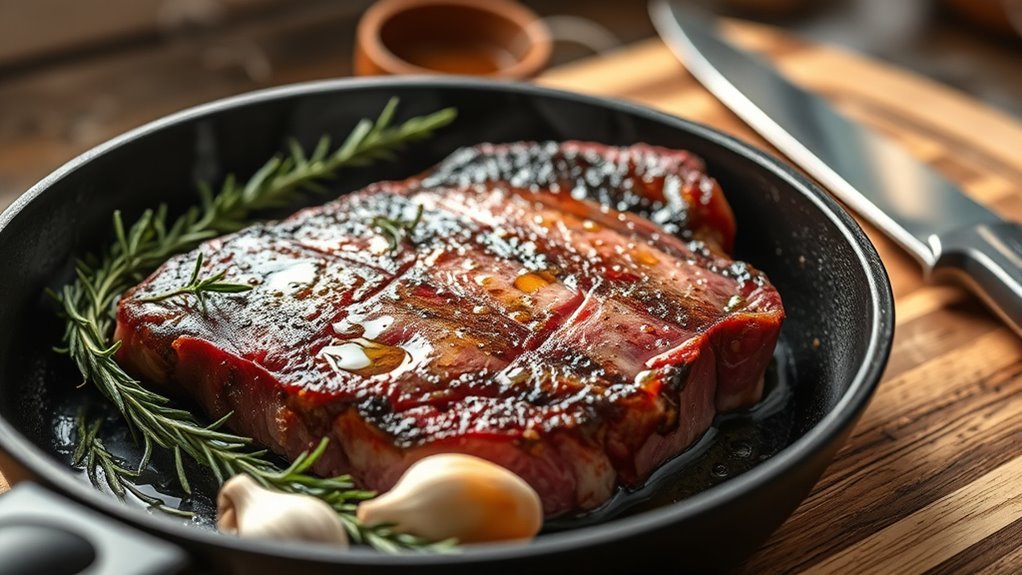
Before you place your flank steak in the pan, you need to preheat your cast iron skillet properly so it reaches the ideal temperature for searing. Preheat your skillet over high heat for about 10 minutes until it just begins to smoke. This ensures a hot pan that creates a deep, caramelized crust quickly.
To check if the pan temperature is right, sprinkle a few water droplets—they should evaporate immediately. Avoid adding oil before heating; the hot pan itself prevents sticking and promotes browning.
| Step | Detail |
|---|---|
| Preheat Time | 10 minutes on high heat |
| Smoke Indicator | Pan starts to smoke lightly |
| Water Droplet Test | Drops evaporate instantly |
Applying Butter and Mustard for Flavor
Once your flank steak is seasoned, rub a tablespoon of softened butter evenly over one side to add richness and moisture.
Then, apply a thin layer of mustard, dry or regular, to boost flavor and help the seasoning stick.
Flip the steak and repeat with butter and mustard on the other side for balanced taste.
This combination guarantees your marinated, seasoned steak stays juicy and develops a crispy crust when you pan fry it.
- Butter adds moisture and richness to the meat
- Mustard enhances flavor with a slight tang
- Helps seasonings adhere better to the steak
- Promotes a golden, crispy crust during cooking
- Ensures even flavor on both sides of the flank steak This step is essential before searing to maximize taste and texture.
Searing the Steak on High Heat
After coating your flank steak with butter and mustard, heat a cast iron skillet over high heat until it just starts to smoke, about 10 minutes. Preheat the pan thoroughly to guarantee a hot pan that promotes searing.
Lay your flank steak carefully to avoid overcrowding, maximizing contact for a deep, flavorful crust. Sear each side for 2-3 minutes, flipping frequently for even browning. The sizzling sound signals the perfect crust forming.
| Sensation | Visual Appeal | Anticipation |
|---|---|---|
| Sizzling heat | Golden crust | Juicy tenderness |
| Aromatic smoke | Rich browning | Mouthwatering taste |
| Crackling sear | Textured surface | Perfectly cooked |
This high heat sear locks flavor, creating that irresistible crust on your flank steak.
Checking for Desired Doneness
Although searing seals in flavor, you’ll want to check the steak’s internal temperature to make certain it reaches your preferred doneness. Use a meat thermometer to check temperature accurately, inserting it into the thickest part of the steak without touching bone or pan.
Keep these tips in mind:
- Aim for 120°F for very rare, 125°F for rare, 130°F for medium rare.
- Remember the internal temperature rises about 5°F during rest time.
- Remove the steak slightly before reaching your desired doneness.
- Use your fingertips to gauge steak doneness by firmness.
- Check temperature after cooking time and during resting steak phase.
This ensures you hit the perfect doneness every time without overcooking.
Resting the Steak After Cooking
You’ve checked the steak’s temperature and pulled it off the heat just before it reaches your ideal doneness. Now, it’s essential to start resting the steak.
Let the flank steak rest for about 10 minutes to allow juice redistribution, which enhances both flavor and tenderness.
During this rest, the internal temperature will rise by roughly 5°F, finishing the cooking process perfectly.
Cover the steak loosely with foil to keep it warm without trapping moisture that could make the surface soggy.
Avoid cutting into the steak immediately, as this causes juices to escape and results in a drier, tougher texture.
Proper resting not only locks in those flavorful juices but also makes slicing against the grain easier, ensuring each bite is tender and delicious.
Slicing and Serving Tips
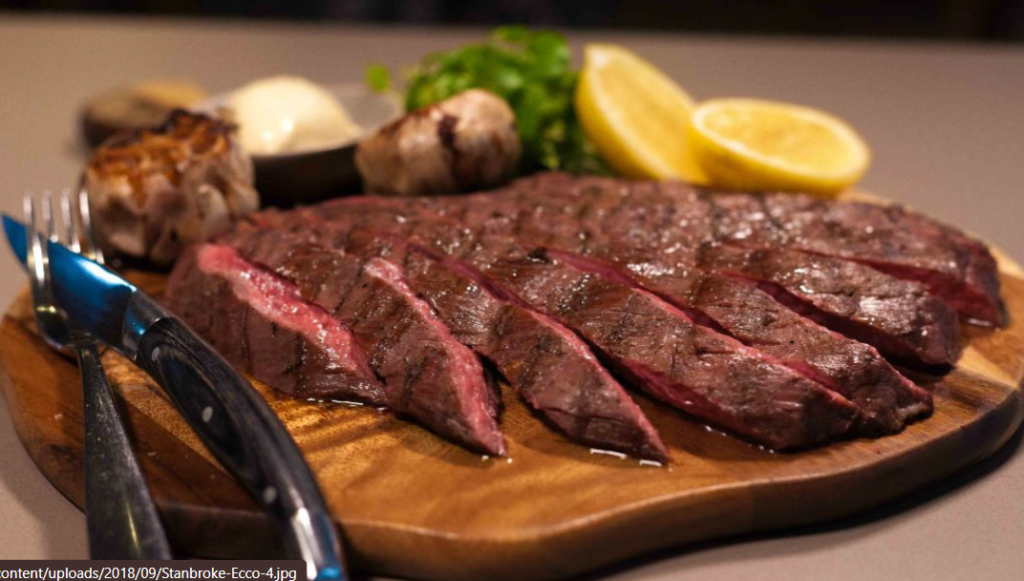
When slicing flank steak, cut thinly at a 45-degree angle against the grain to guarantee maximum tenderness. After you let the steak rest for about 10 minutes, use a sharp knife to make clean, even slices.
Cutting against the grain shortens muscle fibers, making every bite tender and juicy. Here are some tips to keep in mind:
- Always slice thin slices to enhance tenderness
- Use a sharp knife for smooth, precise cuts
- Rest the steak first to redistribute juices
- Slice against the grain to break down muscle fibers
- Serve immediately or drizzle with pan juices for extra flavor
Following these tips ensures your flank steak stays juicy, tender, and ready to serve perfectly every time.
Frequently Asked Questions
How Long Do You Cook Flank Steak in a Pan?
You’ll cook flank steak about 3-4 minutes per side for medium rare, adjusting time based on thickness. Use a thermometer to check 130°F internal temperature, then rest it 5-10 minutes before slicing to keep it juicy.
What Is the Easiest Way to Cook Flank Steak?
The easiest way to cook flank steak is to season it simply, preheat a cast iron skillet, then sear each side for 3-4 minutes over medium-high heat.
Let it rest before slicing for the best flavor.
What Is the 3-3-3 Rule for Steaks?
The 3-3-3 rule means you cook each side of your steak for about 3 minutes to get a good sear and desired doneness.
It’s a simple guide, but you should still check internal temperature for accuracy.
What’s the Secret to a Juicy Flank Steak?
You’ll get a juicy flank steak by searing it on high heat to lock in juices; studies show resting meat for 10 minutes can increase juiciness by 30%.
Don’t forget to slice against the grain!
Conclusion
Now that you know how to pan fry flank steak perfectly, remember this: over 70% of steak lovers say a well-seared crust makes all the difference in flavor.
By following these simple steps, you’ll get that golden, juicy finish every time. Just be patient with resting and slicing against the grain, and you’ll impress yourself and your guests with tender, mouthwatering steak.
Get ready to enjoy a restaurant-quality meal right at home with these easy pan frying techniques. Mastering how to pan fry flank steak ensures a delicious, flavorful experience every time.