How to Make Pan de Campo: 7 Easy Steps for Traditional Cowboy Bread
Pan De Campo, a traditional Texas cowboy bread, offers a simple yet satisfying way to enjoy homemade bread with minimal ingredients. This classic bread is perfect for those who love rustic, flaky textures and rich flavors. You might be surprised how easily you can make this delicious Pan De Campo right in your kitchen.
With just a few straightforward steps, you can create this iconic bread that has stood the test of time. Once you understand the process, you’ll appreciate how each step contributes to the final flavor and texture. So let’s explore how to prepare this classic Pan De Campo from start to finish.
Gather Your Ingredients
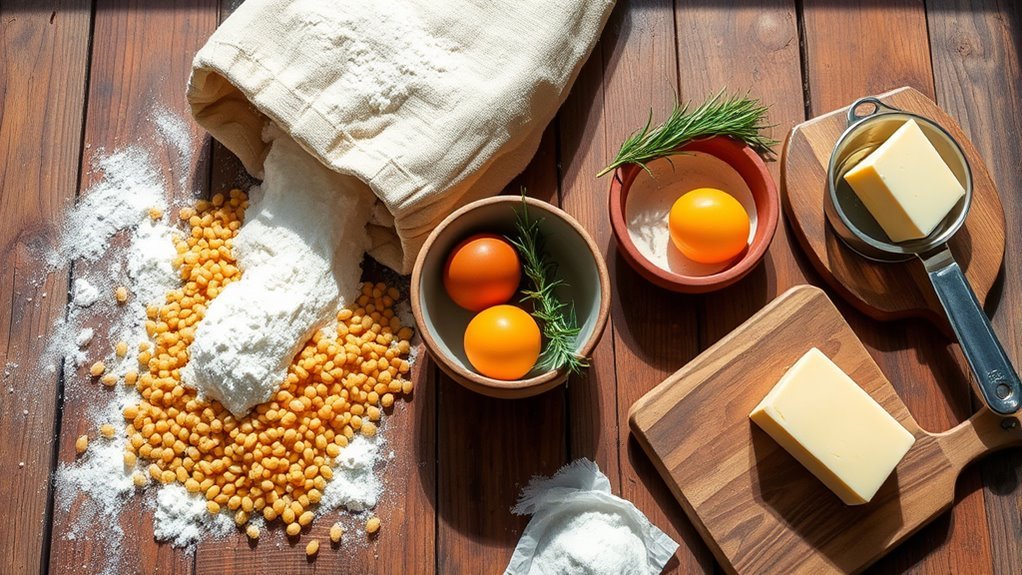
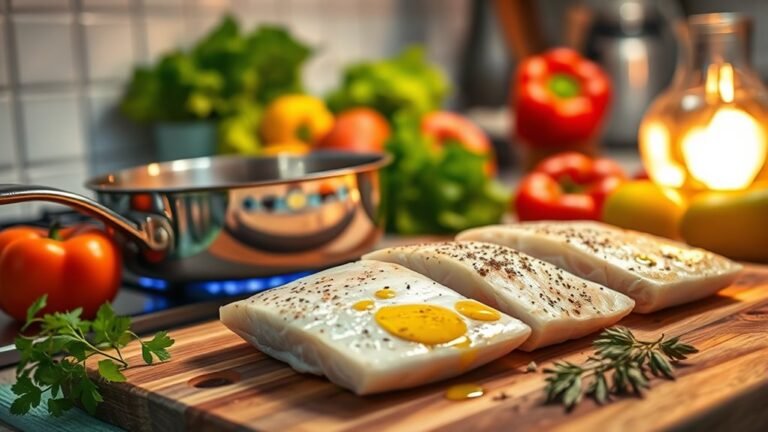
Before you begin mixing, make sure you’ve gathered all the ingredients: 2 cups of sifted all-purpose flour, 1 teaspoon of kosher salt, 2 teaspoons of baking powder, 6 tablespoons of chilled lard or shortening, and 1 cup of whole milk or water. These dry ingredients form the base of your dough, so measuring accurately is key.
Gather all ingredients precisely before mixing for the perfect pan de campo dough base.
You’ll cut the chilled lard into the all-purpose flour, salt, and baking powder until the mixture becomes crumbly.
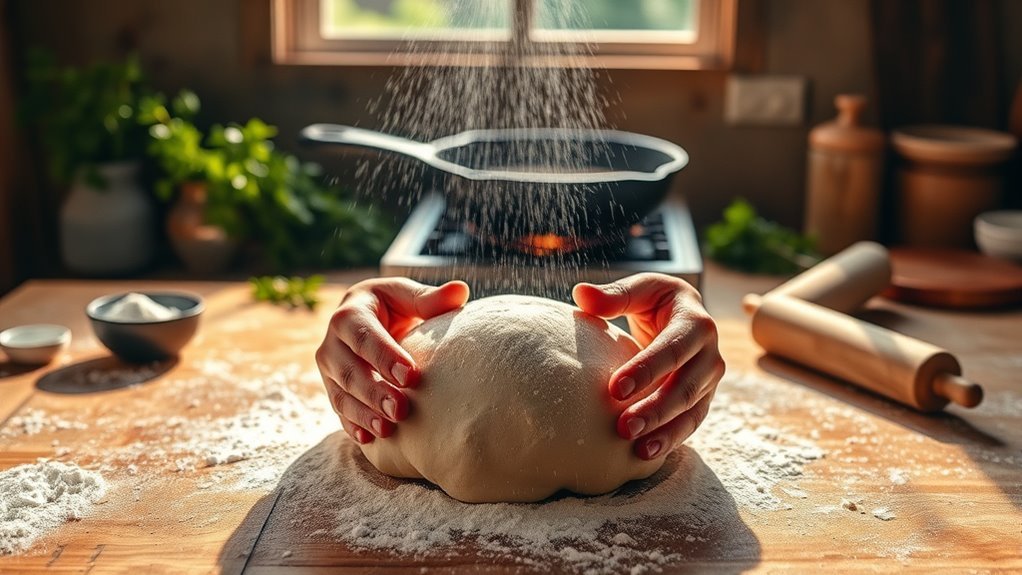
When you’re ready to knead, sprinkle a floured surface to prevent sticking.
Also, have your cast iron skillet or Dutch oven nearby, especially if baking outdoors or in the oven.
Having all these tools and ingredients ready guarantees a smooth process and a perfect pan de campo crust.
Prepare the Dry Mixture
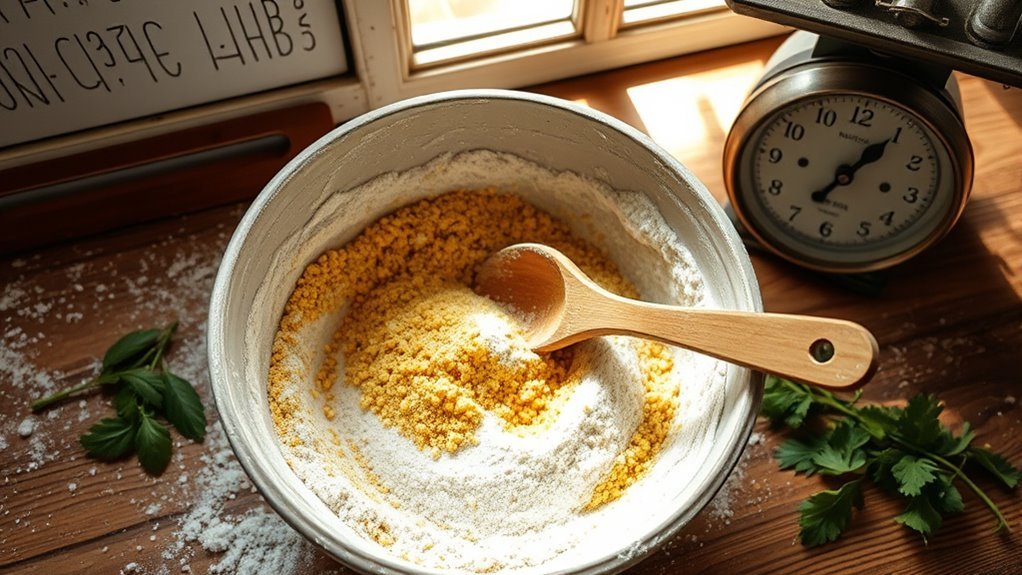
Once you have your ingredients ready, start by combining the sifted flour, baking powder, salt, and sugar in a large bowl. Mix these dry ingredients thoroughly to guarantee the baking powder, salt, and sugar are evenly distributed throughout the flour. This even distribution is key for consistent flavor and proper rising.
Next, add the chilled shortening to the dry mixture. Use a pastry cutter or your fingers to cut in the shortening until the mixture resembles coarse crumbs. Make sure there are no large pieces of shortening left, as this will help create a flaky texture in your pan de campo.
If the dry mixture seems too moist or crumbly, you can sift a little extra flour over it before moving on to the next step.
Cut in the Fat

How exactly do you achieve the perfect flaky texture in pan de campo? The answer lies in how you cut in the fat.
Take your fat, whether shortening or lard, and use a pastry cutter to mix it into the dry ingredients. Work it until the flour mixture resembles coarse crumbs with small, pea-sized pieces of fat evenly coated in flour.
Use a pastry cutter to blend fat into dry ingredients until coarse crumbs with pea-sized fat pieces form.
This crumbly, uneven texture ensures the fat won’t clump and will create pockets that puff up during baking.
If you skip this step or don’t cut in properly, your bread won’t develop that signature flaky tenderness.
Using a fork or your fingers can work too, but a pastry cutter makes it easy to distribute the fat evenly throughout the dry ingredients, setting the stage for a perfectly flaky pan de campo.
Add Liquids Gradually
Why pour liquids slowly into your pan de campo dough? Adding liquids gradually helps you control the dough’s consistency, making it easier to form the perfect texture.
Start by pouring ¾ to 1 cup of milk or water into the well slowly, adding small amounts at a time. After each addition, mix the liquids thoroughly into the dry ingredients to ensure even incorporation.
Watch the dough closely; if it feels too dry, add more liquid gradually. But if it becomes too sticky, sprinkle in a bit more flour. This careful balance prevents over-wetting and results in a soft, smooth dough that just begins to stick together.
Knead and Shape the Dough
As you knead the dough for 2 to 3 minutes, you’ll notice it become smooth, elastic, and less sticky, signs that the gluten is developing properly. Once kneaded, form the dough into a tight ball, making sure it’s evenly mixed without lumps or cracks.
Lightly flour your work surface and rolling pin to prevent sticking when you shape the dough. Roll it out to about ½-inch thickness, keeping a round shape for even cooking.
Before moving on, prick the dough’s surface with a fork to allow steam to escape during cooking. This step helps the pan de campo cook evenly and prevents bubbles from forming, giving you a perfect crust every time.
Preheat Your Cooking Vessel
Once your dough is shaped and ready, focus on heating your cooking vessel to get the best results. Preheat your cast iron skillet or Dutch oven to 450°F to create an even baking surface that promotes a crisp crust and thorough cooking.
If you’re cooking outdoors, build a fire with heavy coals and let them burn down to maintain steady, high heat. During preheating, place your Dutch oven on a heat-resistant surface or use a trivet to avoid damage.
To confirm the temperature, drop a small amount of water into the vessel—it should sizzle immediately when it’s hot enough. Proper preheating guarantees your pan de campo bakes evenly, achieving the perfect texture and flavor.
Bake or Fry Until Golden Brown
Although you can bake or fry pan de campo, both methods require careful attention to achieve a perfect golden-brown crust.
To bake, preheat your oven to 375°F and cook the bread for about 30 minutes until the top and bottom turn golden brown.
For frying, heat a greased skillet or Dutch oven over medium heat and cook the dough until the crust develops a rich golden color. Remember to turn the bread periodically to ensure even cooking and a uniform crust.
Here’s how to get it right:
- Bake in a preheated oven at 375°F until golden brown, about 30 minutes.
- Fry in a hot, greased pan, turning regularly for an even crust.
- Check doneness by tapping the crust; it should sound hollow and feel firm.
Frequently Asked Questions
What Are 7 Basic Ingredients for Quick Bread?
You’ll need flour, baking powder, salt, sugar, fat like shortening or lard, liquid such as milk or water, and optional flavorings.
These seven ingredients combine to create a quick bread that’s fluffy, tender, and flavorful.
What Are the 7 Stages of Bread Making?
Imagine crafting a masterpiece: you mix, proof, punch down, shape, proof again, bake, and finally cool. These seven stages transform simple ingredients into bread, turning your kitchen into a warm, fragrant bakery.
What Are the 7 Steps in the Baking Process?
You’ll start by mixing ingredients, cutting in fat, adding liquids, kneading the dough, shaping it, proofing for rise, then baking.
Each step builds structure, texture, and flavor, ensuring your bread turns out perfect every time.
What Is Pan De Campo?
You might think Pan de Campo’s just fancy bread, but it’s actually cowboy campfire gold. It’s simple, hearty, and golden-crusted.
It’s the official Texas state bread, perfect for rustic outdoor meals and quick, satisfying bites.
Conclusion
Now that you’ve mastered Pan De Campo, think of this bread as more than just food—it’s a warm embrace from the heart of Texas. Each golden crust and tender crumb symbolizes tradition and comfort, bringing people together around the table.
So, whether you bake or fry, let this simple bread remind you that the best meals are crafted with care and shared with love. Your kitchen is now a place where stories rise alongside the dough.
Enjoy the authentic taste of Pan De Campo and keep Texas culinary traditions alive with every bite.