How to Make Cheesecake Without a Springform Pan in 3 Easy Steps
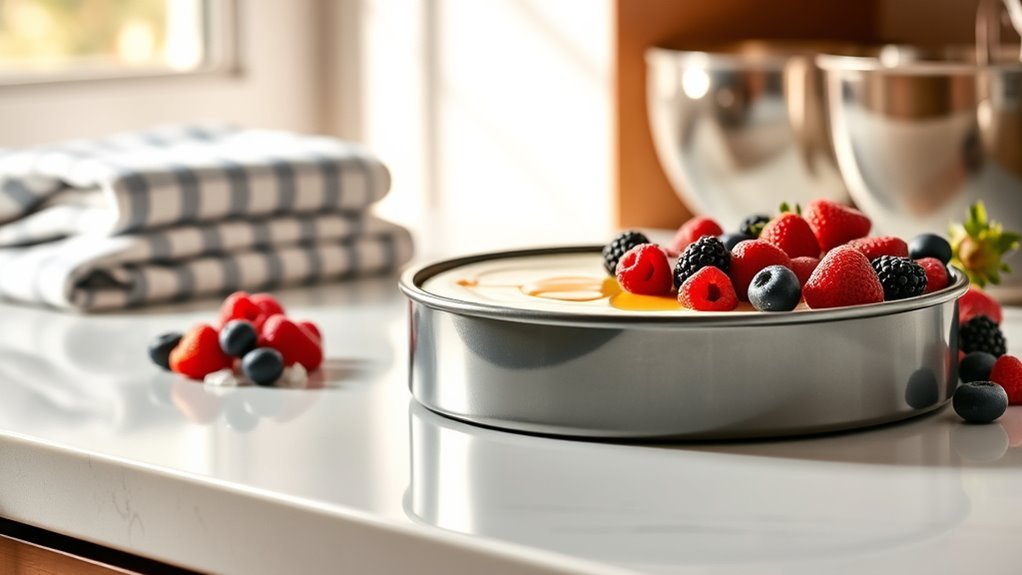
If you don’t have a springform pan but want to make a cheesecake, don’t worry—it’s entirely possible with the right approach. Making cheesecake without a springform pan can be easy and just as delicious. You’ll need to prepare your pan carefully to avoid sticking and cracks, mix your filling with attention to texture, and bake it just right to get that perfect creamy consistency.
Stick with me, and you’ll soon see how simple three straightforward steps can yield an impressive cheesecake without specialized equipment. Whether you’re using a regular cake pan or another baking dish, these tips will help you achieve the classic cheesecake texture and flavor you love. Let’s get started!
Preparing the Pan and Crust
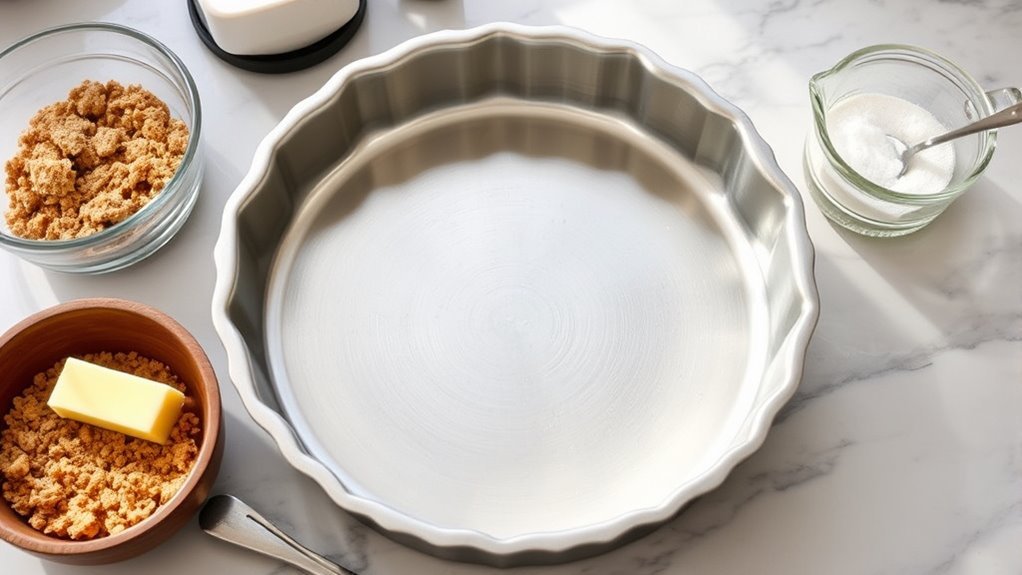
Before you start assembling your cheesecake, prepare your pan carefully to guarantee easy removal later. Use a 6-inch cake pan and line the bottom with a parchment paper circle cut to fit snugly.
For the sides, cut two 1×12 inch strips and one 3.5×19 inch strip of parchment paper.
Melt butter and coat both the parchment strips and the inside of the pan to prevent sticking. Combine your crust ingredients, mainly graham cracker crumb and melted butter, then press firmly into the bottom of the lined pan, spreading it into an even layer.
Pre-bake the crust at 350°F for 5–10 minutes until golden. After this, allow the crust to cool completely before adding your cheesecake filling, ensuring a stable base for your dessert.
Mixing the Cheesecake Filling

Although it might seem straightforward, mixing the cheesecake filling requires careful attention to achieve a smooth, creamy texture. Start by ensuring your cream cheese and eggs are at room temperature to avoid lumps.
Beat the cream cheese alone for about 30 seconds until creamy, then gradually mix in sugar and liquids.
Beat cream cheese until smooth before slowly adding sugar and liquids for a creamy base.
Incorporate the eggs one at a time, folding them gently to prevent adding too much air.
Use a fine mesh sieve to sift in flour slowly, folding it into the batter with care to maintain its silky consistency.
Finally, tap the mixing bowl on the counter for 30-45 seconds to release any trapped air bubbles.
Following these steps will help you create a perfectly smooth cheesecake batter.
Baking and Cooling the Cheesecake
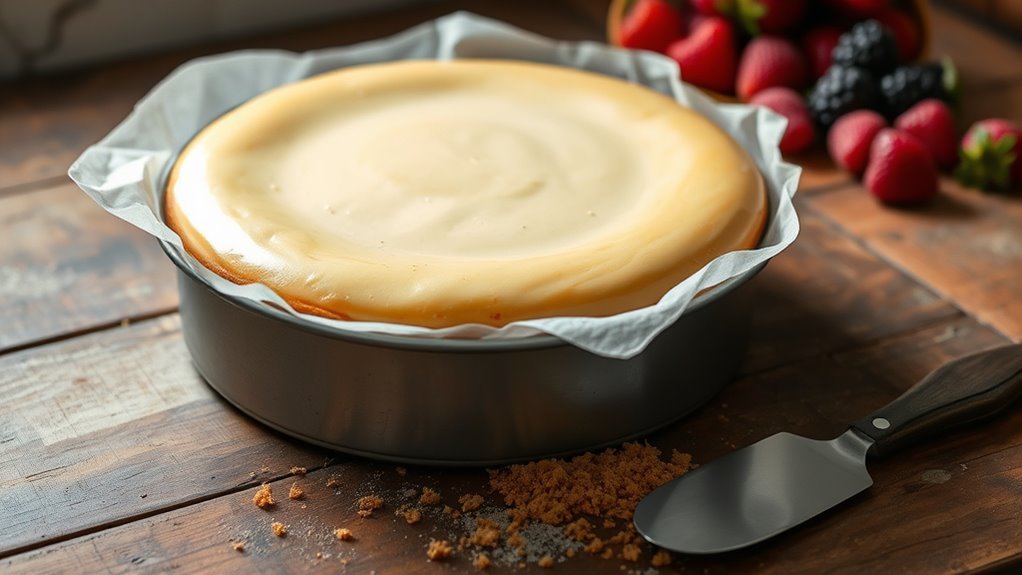
When you bake the cheesecake at 325°F for 40-45 minutes, watch for a dark golden crust and a slightly wobbly center to know it’s done.
After baking, turn off the oven and leave the door slightly open, allowing the cheesecake to cool gradually inside for about an hour. This gradual cooling prevents cracks caused by sudden temperature changes.
Next, remove the cheesecake from the oven or water bath and place it on a wire rack to cool completely at room temperature.
Once cooled, transfer the cheesecake to the refrigerator and chill for at least 4 hours or overnight.
This thorough cooling and chilling process guarantees your cheesecake firms up perfectly while avoiding cracks, giving you a smooth, creamy dessert without needing a springform pan.
Frequently Asked Questions
What Can I Use if I Don’t Have a Springform Pan for Cheesecake?
You can use an 8-inch cake pan, square baking dish, deep pie plate, or loaf pan. Just line it with parchment paper and wrap with foil if using a water bath to prevent leaks.
Can You Make Cheesecake in a Regular Pie Pan?
You can make cheesecake in a regular pie pan, you can adjust baking time, and you can prevent leaks with parchment paper.
Just lower oven temperature, bake gently, cool gradually, and refrigerate before serving for best results.
Can I Bake Cheesecake in an Aluminum Pan?
Yes, you can bake cheesecake in an aluminum pan. Just line it with parchment or foil, grease it well, bake it in a water bath to prevent cracks, and handle it gently since aluminum isn’t as sturdy as springform pans.
What Kind of Pan Can I Use for a Cheesecake?
You can use a regular cake pan, pie dish, square baking dish, or even a loaf pan for your cheesecake. Just line it with parchment paper and adjust baking time to fit the pan size and depth.
Conclusion
Now that you’ve mastered making cheesecake without a springform pan, you’ve revealed a new kitchen superpower. Like a painter turning a blank canvas into art, you’ve transformed simple ingredients into a creamy masterpiece.
Remember, patience during baking and cooling is your secret brushstroke for that smooth, crack-free finish. So go ahead, slice a piece, and savor the sweet reward of your effort.
It’s proof you don’t need fancy tools like a springform pan to create something truly special. Making cheesecake without a springform pan is easier than you think, and the delicious results speak for themselves.