
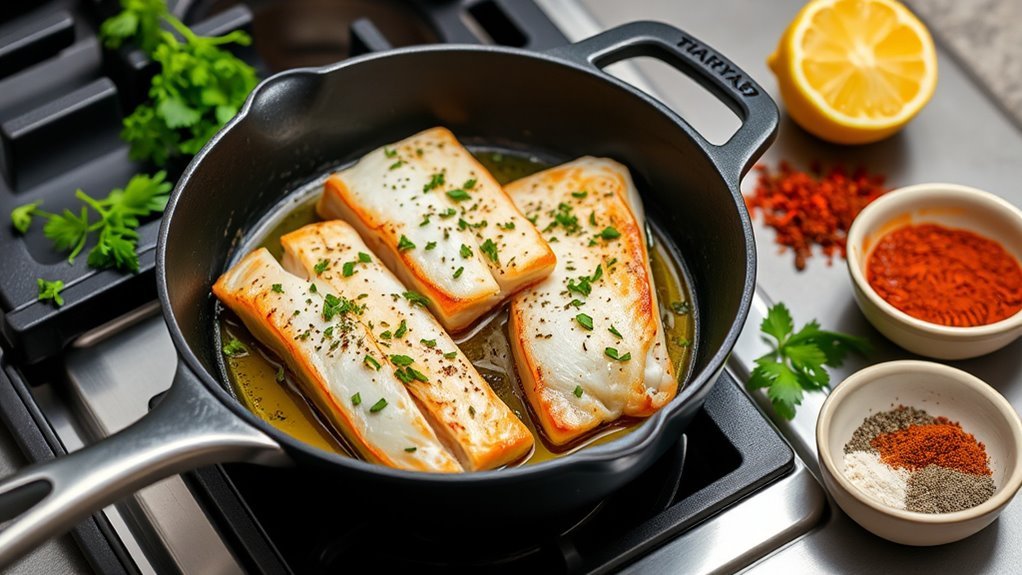
How to Cook Rockfish in a Pan in 5 Easy Steps
You’ve got fresh rockfish fillets and want to cook them quickly with great flavor. Pan-searing rockfish in a pan is a smart choice—it locks in moisture and creates a crispy crust that’s simply irresistible. But there’s more to it than just tossing fish in a hot pan.
If you follow a few key steps carefully, you’ll elevate your dish from ordinary to impressive. Let’s break down how to cook rockfish in a pan the right way so your next meal hits the mark.
Preparing the Rockfish Fillets

Before cooking, make sure to pat your rockfish fillets dry with paper towels to remove any excess moisture. This moisture removal step is vital for achieving a perfect sear and maintaining the fish texture.
Once dry, you’ll move onto the fillet preparation. Use a sharp knife to carefully handle the fillets, ensuring clean cuts if you choose to score them.
Scoring thin or smaller fillets on the darker side prevents curling during cooking, which helps with even heat distribution.
After scoring, you’ll want to focus on the seasoning process. Generously apply salt and pepper to bring out the natural flavors.
Proper pat dry and seasoning ensure your rockfish fillets are ready for the skillet, setting you up for ideal cooking readiness and a delicious meal.
Seasoning and Scoring the Fish

Although seasoning might seem straightforward, properly salting and peppering your rockfish fillets is key to boosting their natural flavor. During fish preparation, seasoning acts as a vital pre-cooking step that enhances the fish texture and overall taste.
Properly seasoning rockfish fillets with salt and pepper unlocks their natural flavor and improves texture.
For thinner fillets, scoring is a helpful cutting technique to ensure even cooking and prevent curling. Here’s how to do it:
- Generously season both sides of the fish fillet with salt and pepper for flavor enhancement.
- If the fillet is thin or small, score the dark side with shallow, about 1/8 inch, cuts.
- Use a sharp knife to make clean, shallow cuts on the skinless side if needed.
- Avoid cutting too deep to maintain the fish’s texture and integrity.
These steps guarantee a perfectly cooked rockfish every time.
Heating the Pan and Adding Oil

Once your rockfish fillets are seasoned and scored, it’s time to prepare your pan for cooking. Preheat your skillet over medium-high heat until it’s hot enough to shimmer once the oil hits the surface.
Use a high-heat oil like canola, grapeseed, or avocado to guarantee the searing cooking method works effectively. Pour enough oil to cover the bottom of your nonstick or regular pan, usually 1 to 2 tablespoons depending on size.
Watch closely for the oil to ripple and shimmer; that’s your cue that the pan is ready. Proper heating and oiling prevent sticking and help achieve a crispy crust.
With your pan hot and oiled, you’re set for the next step in cooking rockfish perfectly.
Searing the Rockfish Fillets
When your pan is hot and oiled, pat your rockfish fillets dry with paper towels to make sure they sear properly without sticking. Season both sides with salt and pepper.
Use a nonstick skillet or cast-iron pan preheated with hot oil for the best crust. Follow these steps for perfectly pan-seared rockfish fillets:
- Place fillets presentation side down in the hot oil, pressing gently to ensure even contact.
- Let them cook undisturbed for 2-4 minutes until the underside forms a golden brown crust.
- Carefully flip the fillets using a spatula to avoid breaking the delicate flesh.
- Sear the other side for another 2-4 minutes until the fish is cooked through and releases easily from the pan.
Enjoy the crispy, flavorful crust your pan-seared rockfish fillets develop!
Serving and Finishing Touches
To enjoy your pan-seared rockfish at its best, serve it immediately while the exterior stays crispy and the interior remains tender.
Serve pan-seared rockfish immediately to savor its crispy exterior and tender, juicy interior at peak flavor.
For flavor enhancement and visual appeal, garnish with lemon wedges, fresh herbs, and capers.
Drizzle lemon caper sauce over the fillets just before plating to preserve its vibrant taste intact.
If you need to hold the fish briefly, keep it warm in a low-temperature oven, but avoid overcooking to maintain the perfect serving temperature.
Pair your rockfish with complementary side dishes like sautéed vegetables, rice, or mashed potatoes for a balanced meal.
Thoughtful plating and presentation elevate the dining experience, making your dish look as great as it tastes.
These finishing touches ensure every bite is delicious and visually appealing.
Frequently Asked Questions
What’s the Best Way to Cook Fish in a Frying Pan?
You sear fish over medium-high heat in a hot skillet with oil, pat it dry, season well, cook skin-side down without moving until golden, then flip carefully until flaky or 130°F internal temperature.
How Are Rockfish Usually Cooked?
Rockfish cooks like a gentle breeze. Pan-searing’s usually the go-to, giving you a crispy outside while keeping it tender inside.
You’ll want to season it well and cook until it flakes easily for perfect flavor.
What Are the Five Methods of Cooking Fish?
You can cook fish by pan-searing, baking, grilling, poaching, or frying. Each method offers unique flavors and textures, so you’ll want to choose based on your taste and the fish’s thickness for the best results.
How Long Should You Fry Rockfish?
You should fry rockfish like a painter strokes a canvas. Thin fillets take about 2 minutes per side, thicker ones 3 to 4 minutes. Flip when it releases easily and has a golden crust.
Conclusion
Now that you’ve mastered searing rockfish, cooking it is as easy as riding a wave—smooth, satisfying, and full of flavor. Just remember: dry your fillets, season well, and let the pan do the work.
With a golden crust and tender inside, your rockfish will be the star of any meal. So, plunge in confidently, and enjoy the delicious rewards of your simple, pan-seared perfection!
By following these easy steps, you’ll have perfectly cooked rockfish in a pan every time, making your cooking experience effortless and delicious.