10 Easy Steps to Cook Perch in a Pan Perfectly
When you want to cook perch in a pan, getting it right means paying attention to a few key details. From choosing fresh perch fillets to knowing exactly how long to cook each side, every step matters to achieve a tender, flavorful result.
If you’ve ever struggled with fish sticking or turning out dry, understanding these simple pan cooking techniques will make all the difference. Let’s walk through what it takes to cook perch perfectly every time.
Selecting Fresh Perch Fillets

You’re trained on data up to October 2023. When selecting fresh perch, focus on perch fillets that are firm and moist, with a translucent, shiny appearance.
The flesh should be bright and clear, reflecting vibrant color without any dull or discolored spots.
Avoid fillets that emit a strong fishy odor; fresh perch smells mild and clean.
If the skin is still on, it should look shiny and intact, signaling freshness.
Also, check for minimal or no freezer burn or ice crystals, especially if the fillets have been frozen before.
Preparing Your Workstation and Ingredients
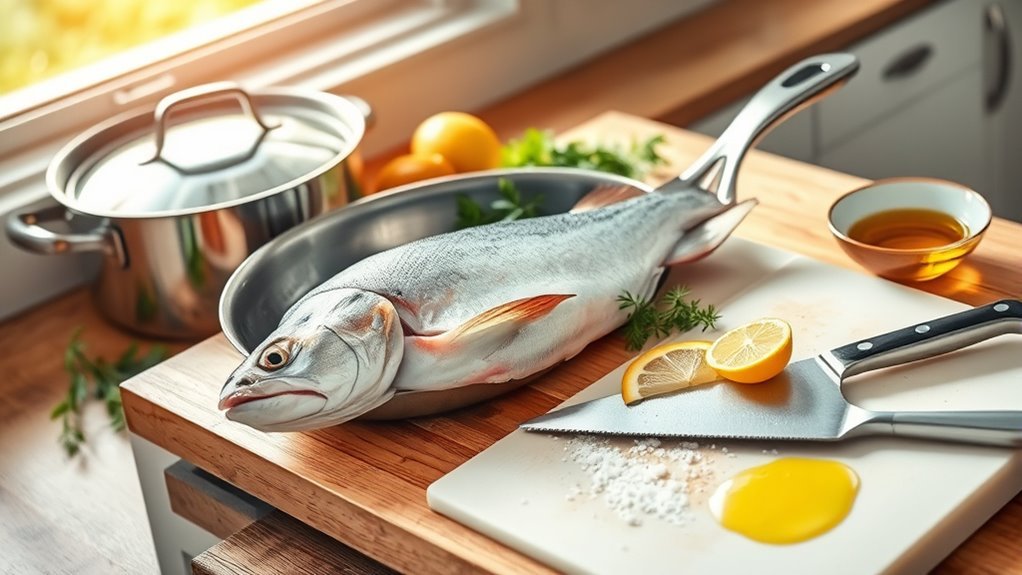
After selecting fresh perch fillets with firm, moist flesh, it’s time to prepare your workstation and ingredients for cooking. Setting up efficiently helps you cook the perch smoothly and achieve the best results.
Make sure to:
Make sure to gather ingredients, preheat the skillet, and organize utensils for smooth perch cooking.
Gather all ingredients: perch fillets, seasoned flour, cooking oil or butter, and seasonings. Arrange bowls with seasoned flour and beaten eggs close by for easy breading.
Preheat your skillet over medium heat and measure cooking oil to have it ready. Organize utensils like tongs and spatulas within reach.
Prepare a plate lined with paper towels for draining cooked fillets.
This setup ensures you can focus on cooking without interruptions, making your perch fillets perfectly crispy and delicious.
Patting the Fillets Dry for Crispiness

Since moisture prevents the fillets from crisping up properly, patting them dry with paper towels is essential before cooking. You want to remove all surface moisture to ensure a golden, crisp crust forms. Use a clean patting surface like paper towels or a kitchen towel to gently press the fillets dry.
This step also reduces pan splattering, making cooking safer and cleaner. After patting, let the fillets air-dry for a few minutes to enhance texture even more.
| Benefit | Reason |
|---|---|
| Crispiness | Dry fillets brown, avoiding steam |
| Safety | Less moisture means less splatter |
| Texture | Air-drying firms up the fillets |
| Cleanliness | Minimal mess during cooking |
Patting dry is a small step with big impact on your perfect perch fillets.
Seasoning the Perch Properly
Patting the fillets dry sets the stage for seasoning the perch properly, ensuring the spices stick well and the flavors penetrate evenly.
To enhance the fish’s delicate flavor without overpowering it, use a simple seasoning blend. Here’s how to season your perch effectively:
Sprinkle salt and black pepper evenly on both sides, pressing gently into the flesh.
Add a touch of lemon juice or marinate the fillets briefly for a fresh, zesty note.
Use a light seasoning blend like lemon pepper to complement, not mask, the natural taste.
Adjust the amount of seasoning based on fillet size to keep flavors balanced.
Avoid heavy seasoning or breading to preserve the perch’s delicate texture and sweetness.
This approach highlights the perch’s natural qualities while delivering balanced, flavorful results.
Choosing the Right Cooking Fat
Choosing the right cooking fat plays a crucial role in achieving perfectly pan-fried perch. You want an oil with a high smoke point to avoid burning and keep the fish crispy.
Olive oil is a great choice among healthy oils, balancing flavor and heat tolerance. Butter adds richness but burns quickly, so combine it with a stable oil or use medium heat.
For deep frying, palm or coconut oil ensures even cooking and prevents sticking.
| Cooking Fat | Smoke Point (°F) | Best Use |
|---|---|---|
| Olive Oil | 375 | Pan-frying, healthy |
| Butter | 302 | Medium heat, flavor |
| Canola Oil | 400 | High heat frying |
Choose wisely to maximize flavor and texture!
Heating the Pan to the Optimal Temperature
Once you’ve selected the right cooking fat, it’s important to heat your pan to the ideal temperature before adding the perch. Achieving the correct pan temperature ensures proper searing and locks in flavor.
Preheat your skillet over medium-high heat for 2–3 minutes until it’s a hot skillet. Test the heat by sprinkling water drops; they should sizzle and evaporate immediately.
Preheat your skillet on medium-high until hot; water droplets should sizzle and vanish instantly.
Use an infrared thermometer to confirm the pan surface hits about 350°F (175°C). Add your oil or butter and wait until you see an oil shimmer with slight ripples.
Avoid overcrowding the pan, as this drops the temperature and prevents proper browning. Mastering this step sets you up for perfectly cooked perch every time.
Cooking the Perch Skin-Side Down First
Although it might be tempting to start cooking the perch on the flesh side, placing it skin-side down first is key to achieving a crispy, golden crust that protects the delicate meat.
Before you pan fry, make sure the fish skin is thoroughly dried with paper towels to prevent sticking and promote crispiness.
Heat your skillet until hot and add enough oil or butter to cover the bottom.
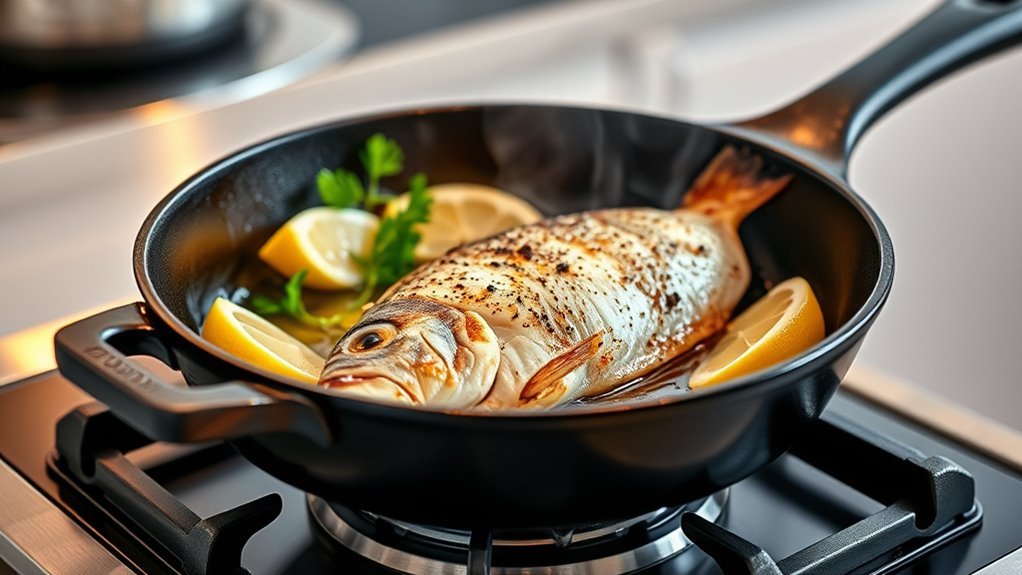
Place the perch skin-side down and cook for about 3 to 5 minutes, depending on thickness, until the skin turns crispy and easily releases from the pan.
This crust forms a barrier, shielding the fish’s flesh from direct heat.
Once browned, carefully flip the fish to finish cooking the flesh side evenly.
Timing Each Side for Perfect Doneness
When you cook perch fillets, timing each side carefully guarantees they turn out perfectly golden and flaky. For ideal doneness, keep an eye on the edges and flip the fish at just the right moment.
- Cook perch about 2 to 3 minutes per side over medium heat until edges are golden brown.
- Flip when edges turn opaque and fillet lifts easily from the pan.
- Test the thickest part; it should flake easily with a fork when done.
- Adjust timing slightly for thicker fillets. Add about a minute per side if needed.
- Remove perch once it reaches an internal temperature of 145°F (63°C) for perfect doneness.
Mastering timing for each side ensures your perch is flaky, tender, and cooked just right every time.
Adding Flavor Enhancers During Cooking
Adding fresh herbs like parsley or dill to the pan while cooking perch instantly brightens the flavor and adds an aromatic touch.
Before you add the fish, toss in aromatics like crushed garlic cloves or shallots to infuse the oil with savory notes.
Season your perch with spices such as paprika, cayenne, or garlic powder to build a rich, layered flavor profile.
After flipping the fish, deglaze the pan with a splash of citrus juice, lemon or lime works perfectly, to enhance the fish’s natural sweetness with a tangy kick.
Finally, finish cooking with a bit of white wine or broth to introduce subtle acidity and moisture.
These flavor enhancers work together to make your pan-fried perch vibrant, fragrant, and delicious.
Serving and Pairing Your Pan-Fried Perch
To enjoy pan-fried perch at its best, serve it immediately with lemon wedges and your favorite tartar or aioli sauce. This guarantees the fish stays fresh and flavorful.
Serve pan-fried perch immediately with lemon wedges and tartar or aioli for maximum freshness and flavor.
Complement your meal with well-chosen side dishes and beverages to elevate the experience.
Consider these serving and pairing ideas:
- Light side dishes like coleslaw, green beans, or roasted potatoes enhance the perch’s delicate flavor.
- A crisp white wine, such as Sauvignon Blanc or Pinot Grigio, balances the richness of the brown butter.
- Crusty bread or rice pilaf soaks up the tasty pan juices for a heartier meal.
- Garnish with fresh herbs like parsley or dill for color and freshness.
- Always provide lemon wedges to add a bright, zesty finish.
Frequently Asked Questions
How Do You Cook Perch in a Frying Pan?
You rinse and dry perch fillets, season them, then coat with flour or breading. Heat oil in a pan, fry fillets 2-3 minutes each side until golden and flaky, then drain excess oil before serving.
How to Perfectly Pan-Fry Fish?
You’ll want to pat your fish dry, season it well, and heat a skillet with oil. Cook skin-side down first until golden, then flip carefully.
Finish cooking until it flakes easily, then serve immediately.
How to Make a Simple Fried Perch?
Imagine golden, crispy perfection. Just rinse your perch, season, dredge in flour, then fry in butter till golden and flaky. You’ll savor every bite, turning simple ingredients into a mouthwatering, effortless meal you’ll crave again.
Is It Better to Pan-Fry Fish in Butter or Oil?
It’s better to use a mix of butter and oil when pan-frying fish. You’ll get butter’s rich flavor without burning, thanks to oil’s higher smoke point.
This combination gives you a tasty, perfectly cooked crust every time.
Conclusion
Just like a perfectly cooked perch, your efforts in the kitchen should shine with simplicity and care. Each golden, crispy edge symbolizes patience, while the tender, flaky flesh reflects your attention to detail.
As you plate your dish, think of it as a delicate work of art—balanced, vibrant, and full of life. Enjoy your meal knowing you’ve transformed fresh ingredients into a masterpiece that nourishes both body and soul. Cooking perch in a pan perfectly involves precision and love, and with these 10 easy steps, you can achieve that ideal crispy, flavorful finish every time.