How to Cook Monkfish in a Pan: 10 Easy Steps for Perfectly Tender Fish
If you’re wondering how to pan-cook monkfish perfectly, you’ve come to the right place. Pan-cooking monkfish is a great way to bring out its firm texture and rich flavor. You’ll learn how to handle this firm, flavorful fish from selecting the freshest fillets to achieving the ideal sear.
There are key steps to avoid common pitfalls and enhance the taste. Once you master these techniques, you’ll find it easier than you might expect to create a dish that’s both impressive and satisfying. Following this guide will help you confidently cook monkfish in a pan with delicious results.
Selecting Fresh Monkfish Fillets
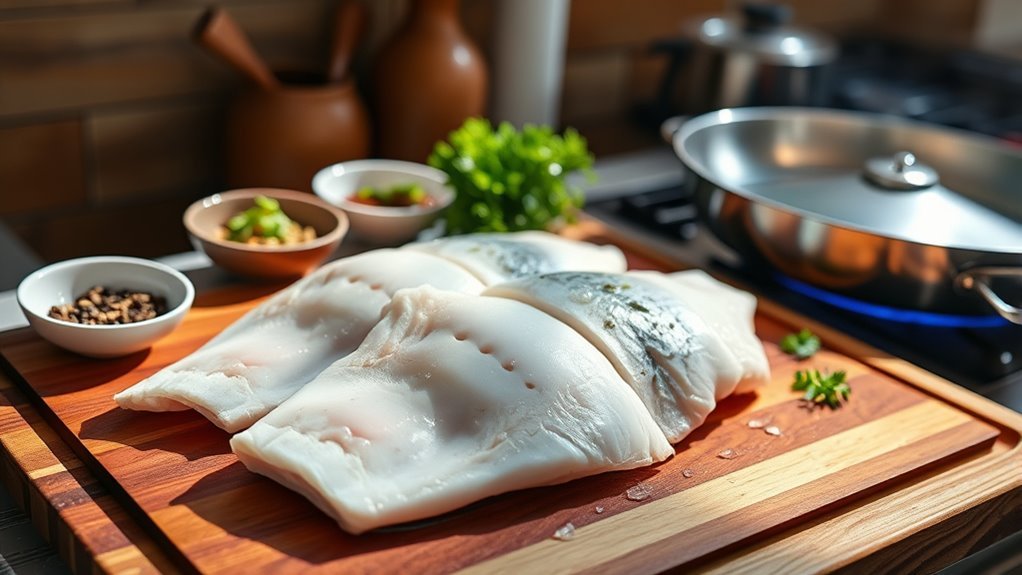
When selecting fresh monkfish fillets, look for ones that are firm and meaty with a bright white or pinkish hue, which signals freshness. Your fillet selection should focus on pieces with a firm texture and a shiny, clean appearance.
Avoid fillets that show discoloration or dullness, as these can indicate age or spoilage. Fresh monkfish won’t have a strong fishy or ammonia smell; instead, it should have a mild scent reminiscent of the sea.
Also, choose fillets that are evenly thick to ensure consistent cooking throughout. Paying attention to these details guarantees you get the best quality fresh monkfish, setting you up for a delicious and perfectly cooked meal every time.
Removing the Grey Membrane
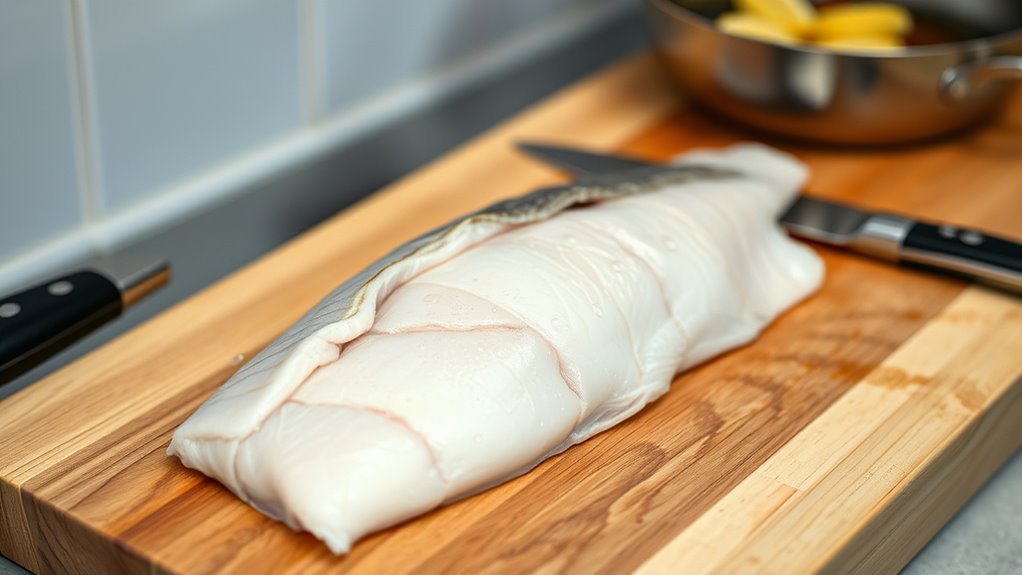
Although the grey membrane surrounding monkfish fillets is tough and unappetizing, you can easily eliminate it with a sharp paring knife. Start at one end of the fillet, carefully sliding the knife beneath the membrane to peel it away from the flesh.
This step is essential in fish preparation because the membrane’s removal improves both texture and presentation. Leaving it on results in a rubbery, chewy bite, while removing it ensures a tender, clean fish experience.
Plus, without the membrane, your fillets absorb seasonings and sauces better. Taking the time to properly remove this membrane gives your dish a more professional look and a pleasing mouthfeel, setting the stage for perfectly cooked monkfish in the pan.
Preparing the Fillets for Cooking
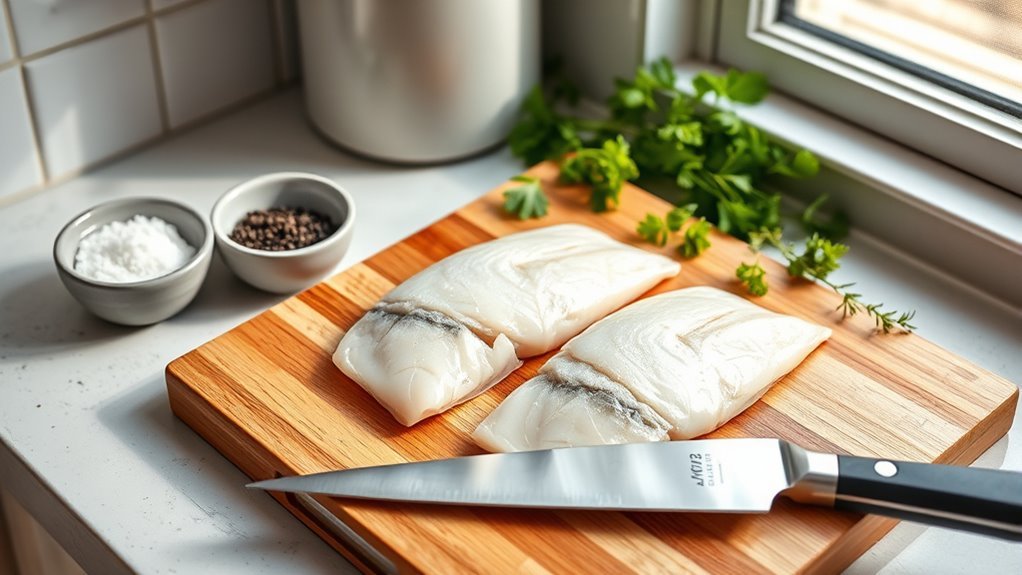
Before cooking, make sure to pat your monkfish fillets dry with paper towels to remove any excess moisture. This step is key to achieving a nice sear when pan-frying.
Pat monkfish fillets dry before cooking for a perfect, crispy sear when pan-frying.
If you haven’t already, remove the grey membrane surrounding the fillets using a paring knife for a smooth texture. When working with a whole fillet, cut it into uniform portions to ensure even cooking.
Although seasoning is covered in the next section, you should prepare your fillets properly beforehand. Keeping the fillets dry and free of membrane helps the seasoning stick better and promotes uniform cooking.
Proper preparation sets the foundation for perfectly cooked monkfish with an appealing texture and flavor.
Seasoning the Monkfish
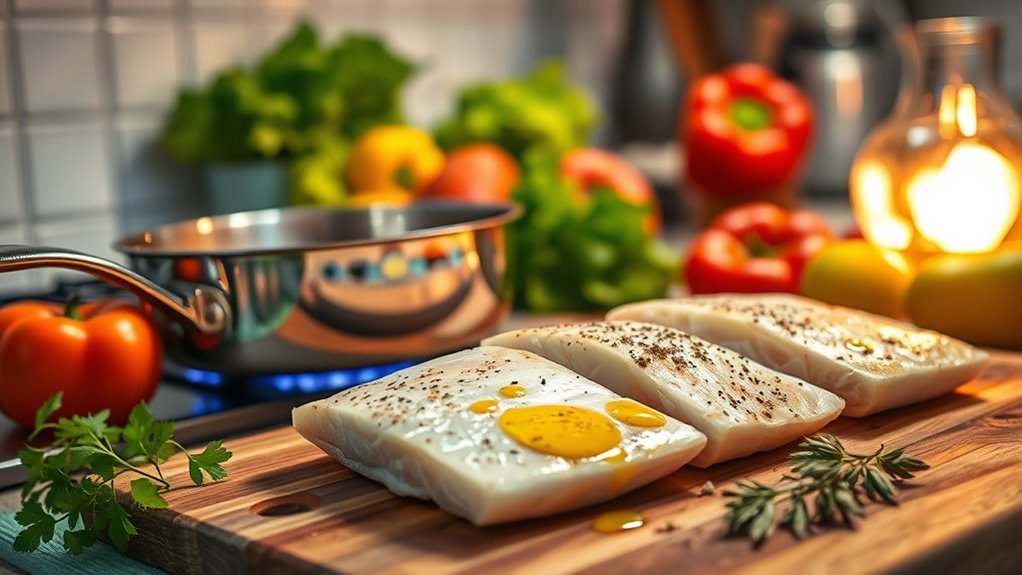
Now that your monkfish fillets are properly prepped and ready, it’s time to bring out their flavor through seasoning. Start by generously sprinkling salt and freshly ground black pepper on both sides of the monkfish. This basic seasoning is essential to enhance the natural taste.
Next, lightly drizzle or brush the fillets with olive oil to help the seasoning stick and add richness.
If you want to elevate the flavor, sprinkle chopped fresh herbs like thyme or parsley evenly over the fillets.
For an extra layer of taste, consider marinating the monkfish for 15-30 minutes with lemon juice, garlic, or your preferred seasonings.
Make sure the seasoning is evenly distributed to avoid any bland or overly intense spots.
Heating the Pan and Adding Oil
Once your seasoning is set, heat a large non-stick skillet over medium-high heat until it’s hot, usually about 2 to 3 minutes. Place the pan on the stove and let it heat evenly.
To check if the pan is ready, sprinkle a small drop of water. If it sizzles immediately, you’re good to go.
Next, add 1 to 2 tablespoons of olive oil or melted butter, swirling the skillet to coat the entire surface evenly.
Make sure the oil is shimmering but not smoking; this means the heat is just right to prevent sticking and promote a perfect sear.
If needed, adjust the heat to maintain a steady sizzle without burning the oil or fish.
Now your pan is ready for the next step.
Searing the Monkfish Fillets
How do you achieve that perfect golden crust on monkfish fillets? Start by patting your monkfish fillets dry with paper towels to remove any moisture, which is key for proper searing. Lightly season them with salt and pepper, then brush a thin layer of olive oil or melted butter over the surface.
Heat a non-stick skillet over medium-high heat until it’s hot enough to sizzle when you add the fish. Place the fillets in the skillet, skin-side down if applicable, and let them cook undisturbed for 3-4 minutes. This will develop a beautiful golden-brown crust.
Carefully flip the fillets using tongs or a spatula, then sear the other side for another 3-4 minutes until the fish feels opaque and slightly firm.
Adding Garlic and Lemon for Flavor
Although the monkfish fillets have a beautiful crust, adding garlic and lemon will bring out their full flavor. After searing, gently cook minced garlic in the pan with butter or oil for about a minute to release its aromatic oils without burning.
Then, add lemon slices or a splash of lemon juice to the pan. The lemon’s bright, citrusy flavor infuses the fish, balancing the richness from pan-frying and tenderizing the meat slightly.
This combination of garlic and lemon creates a classic, savory, and tangy profile that perfectly complements monkfish’s mild, meaty taste.
Pouring White Wine and Butter Sauce
As the monkfish finishes searing, add white wine and butter to the pan to create a rich, flavorful sauce that will elevate your dish. Pour the white wine in first, letting it mingle with the browned bits left from the sear.
Then add the butter, allowing it to melt and blend with the wine into a silky butter sauce. Use a spoon to baste the monkfish with this aromatic mixture, enhancing moisture and flavor.
Let the sauce reduce for 1-2 minutes over medium heat, thickening slightly and concentrating the flavor. Once ready, pour the glossy butter sauce over the monkfish, ensuring each piece is beautifully coated with the rich, golden glaze before serving.
This step truly brings out the monkfish’s delicate taste.
Checking for Doneness and Internal Temperature
When your monkfish has cooked for the appropriate time, check its doneness by gently pressing the thickest part of the fillet; it should feel firm and flake easily.
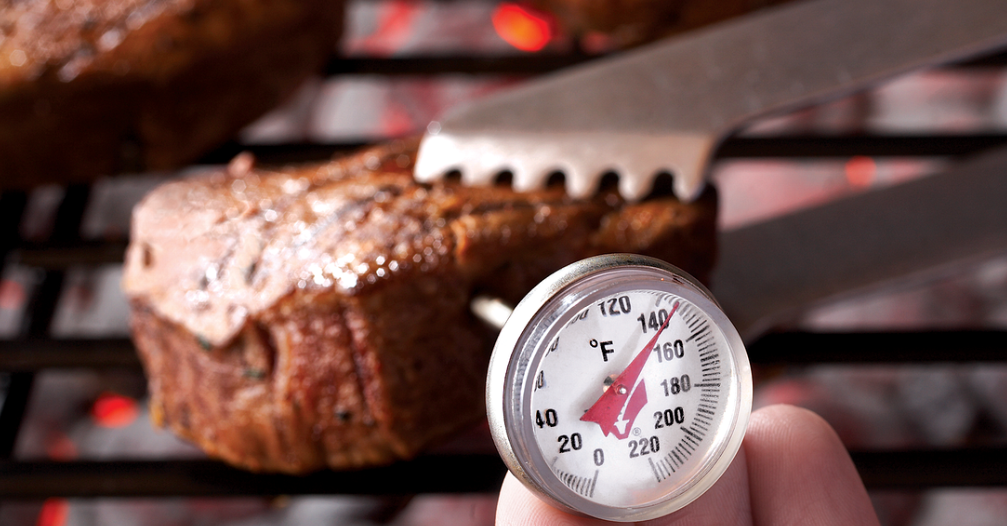
To be certain the fish is cooked through, use a food thermometer to measure the internal temperature at the thickest part.
Aim for 145°F (63°C), which ensures the monkfish is fully cooked and safe to eat.
Additionally, cut into the thickest section to verify that the flesh is opaque and uniformly white, with no translucent or raw-looking areas remaining.
Once the internal temperature is reached and you confirm doneness, remove the monkfish from the pan to prevent overcooking.
This method guarantees perfectly cooked monkfish every time.
Resting and Serving the Monkfish
After you take the monkfish off the heat, let it rest for 3 to 5 minutes so the juices can redistribute and keep the fish moist. During this resting period, cover the fish loosely with foil to retain warmth without causing it to steam.
This step is essential for ensuring the fish stays tender and juicy when you cut into it. Once rested, carefully slice or plate the monkfish.
Don’t forget to pour any flavorful pan juices over the top to enhance the taste and add moisture.
Proper resting and serving not only improve the texture but also elevate the overall flavor, making your monkfish dish perfectly moist and delicious every time.
Frequently Asked Questions
How Do You Cook Monkfish in a Pan?
You sear seasoned monkfish in a hot skillet with oil for 3-4 minutes each side. Then add garlic, lemon, and wine, and spoon juices over the fish until it reaches 140-145°F for tender, flavorful results.
How Should Monkfish Be Cooked?
Don’t worry about overcooking; you should cook monkfish until it’s opaque and flakes easily. Pan-fry it 6-8 minutes per side with butter and garlic, then baste to keep it moist and flavorful.
What Is the Best Way to Cook Fish in a Pan?
You should pat the fish dry, season it well, and cook it over medium-high heat. Sear each side for a few minutes, add butter and aromatics, then finish until it’s opaque and flakes easily.
What Sauce Goes With Monkfish?
Forget medieval potions; you’ll want a lemon herb sauce for monkfish, enhancing its sweetness gently. Or, whip up garlic butter or a white wine sauce to complement its meaty flavor perfectly. You’ll love it!
Conclusion
Now that you know how to pan-cook monkfish perfectly, you’re ready to impress with this firm, meaty fish that’s often called the “poor man’s lobster.”
Did you know monkfish can grow up to 5 feet long and weigh over 50 pounds? Luckily, the fillets you cook are a manageable size but still packed with rich flavor.
Follow these steps, and you’ll have a delicious, restaurant-quality meal in no time!
Cooking monkfish in a pan is a simple and rewarding process. With the right technique, you can enjoy tender, flavorful fish that rivals any seafood dish.
Master these easy steps for cooking monkfish in a pan, and bring the taste of the ocean right to your table.