
How to Cook Frozen Salmon in a Pan in 3 Easy Steps
Cooking frozen salmon in a pan might seem like a challenge wrapped in an icy mystery, but it’s simpler than you think. Pan-frying frozen salmon is a quick and easy way to prepare a healthy meal without thawing. You don’t need to thaw it overnight or rely on complicated gadgets.
With just a few straightforward steps, you can turn that frozen fillet into a delicious meal. Keep following, and you’ll discover how to master this technique quickly and efficiently.
Preparing Frozen Salmon for the Pan
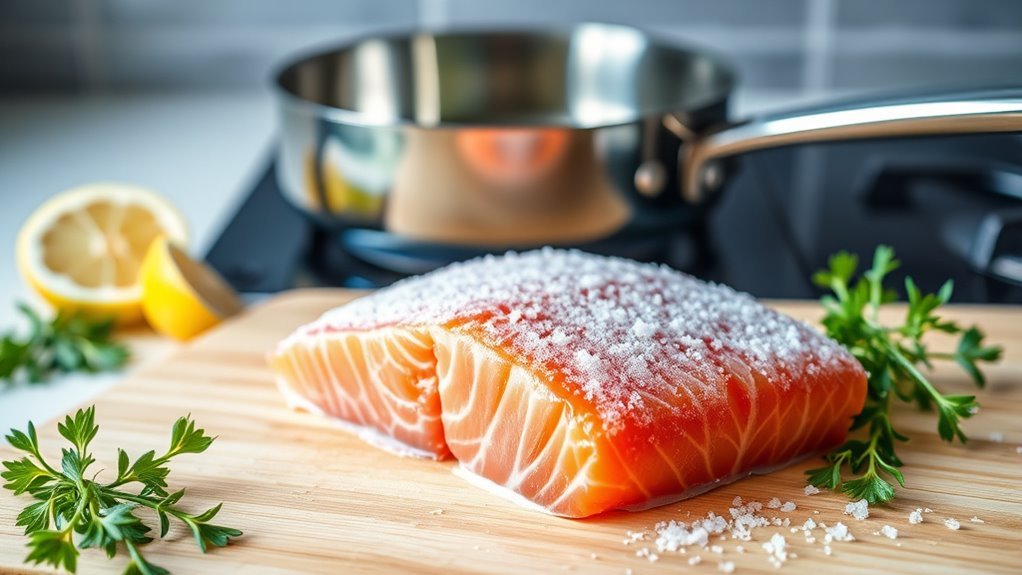
Before you start cooking, rinse the frozen salmon fillet under cool water to remove any surface ice or frost. This frost removal step helps eliminate ice crystals that can interfere with cooking.
Once you’ve rinsed your frozen salmon, pat dry the fillet thoroughly with paper towels. Removing moisture ensures better searing and crispiness when cooking.
To prepare frozen salmon for the pan, heat a skillet over medium heat until preheated. Place the fillet skin side down on a piece of parchment paper in the skillet. This prevents sticking and helps the fish cook evenly.
Cover the skillet and cook for 6-8 minutes until the center is no longer frozen. These steps set you up perfectly for the next cooking phase.
Cooking Frozen Salmon on the Stove
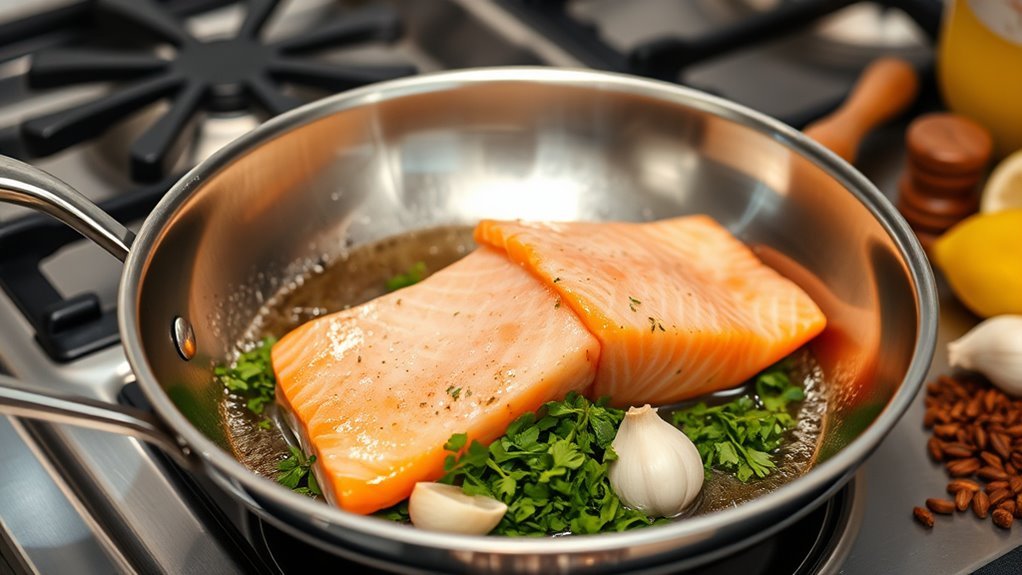
After you’ve steamed the salmon until the center thaws, it’s time to crank up the heat and give the fillet a crisp, golden sear.
Once the salmon center softens from steaming, boost the heat for a perfectly crisp, golden sear.
Heat a skillet over medium-high and add a high-heat oil suitable for pan frying.
Place the frozen salmon fillets skin-side down in the pan, pressing gently for about 20 seconds to ensure full contact.
Let the salmon cook undisturbed for 2-3 minutes until the skin is crispy and releases easily.
Then flip the fillets and cook the other side for another 2-3 minutes.
Keep the pan covered during the initial steaming stage, but uncover when searing.
Use a thermometer to check the internal temperature, aiming for 145°F to guarantee your frozen salmon is cooked perfectly and safe to eat.
Checking Doneness and Serving
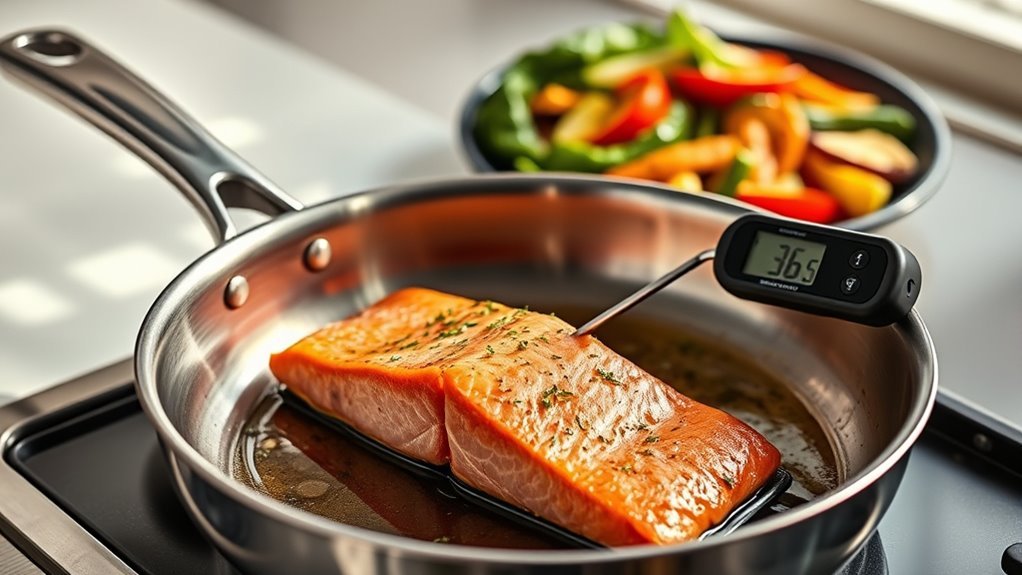
When you think the salmon is ready, check its doneness by seeing if it flakes easily with a fork and has turned opaque. To confirm, use a meat thermometer to guarantee the internal temperature reaches 145°F. Here’s how to finalize:
- Look for crispy skin and firm, moist flesh, key visual cues of proper salmon doneness.
- Check the flaky texture by gently pressing the salmon with a fork; it should separate easily without resistance.
- After cooking time ends, let the salmon rest for 1-2 minutes to allow juices to redistribute, enhancing flavor and moisture.
Serve immediately with your favorite garnishes, and don’t forget proper seasoning to elevate the dish. Following these steps ensures perfectly cooked salmon every time.
Frequently Asked Questions
How to Cook Frozen Salmon in a Pan Easily?
You simply rinse and dry your frozen salmon, steam it flesh-side down in a hot pan, then sear skin-side down with oil until crispy.
Flip, cook briefly, and let it rest before serving.
What’s the Best Way to Cook a Frozen Salmon Fillet?
You should steam the frozen salmon in a covered pan first, then pat it dry, season, and sear skin-side down on medium-high heat until crispy.
Flip carefully and cook through until it reaches 145°F.
Can I Cook Frozen Salmon Without Thawing?
Yes, you can cook frozen salmon without thawing. Just rinse off ice, dry it well, then pan-fry on medium heat.
Add extra cooking time, and make sure it reaches 145°F inside for safety and perfect doneness.
How Long Should Salmon Be Cooked in a Pan?
You should cook salmon about 4 minutes per side when frozen, then cook an additional 7-9 minutes after flipping. Cover the pan to steam, and check for doneness by ensuring it flakes easily.
Conclusion
Now that you’ve mastered moving from frozen to flavorful, savor your smart, simple skillet salmon! By prepping properly, pan-searing perfectly, and checking carefully, you’re set to serve a scrumptious, satisfying supper.
This speedy, stress-free method guarantees every bite bursts with buttery bliss. So, grab your gear, get cooking, and enjoy the delightful dance of deliciousness right from your pan to your plate.
Cooking frozen salmon in a pan has never felt so effortless or exciting! With these easy steps, you can enjoy perfectly cooked salmon straight from the freezer, making mealtime both quick and delicious.