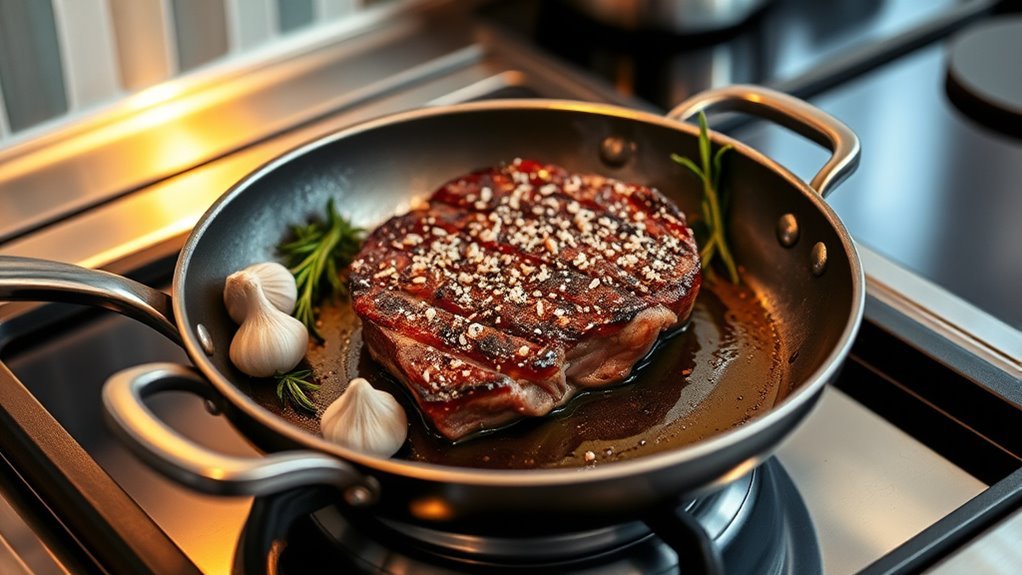
10 Easy Steps to Cook Flat Iron Steak in a Pan Perfectly
You might not realize that flat iron steak, often overlooked, offers some of the richest flavor and tenderness for its price. Cooking flat iron steak in a pan is a simple and delicious way to enjoy this cut. When done right, it brings out the best qualities of the meat.
However, it requires a few precise steps to avoid toughness or dryness. Mastering these techniques will change how you prepare this cut forever. Each bite will be more enjoyable than you ever expected.
Let’s break down how to cook flat iron steak properly in 10 easy steps.
Select a High-Quality Flat Iron Steak
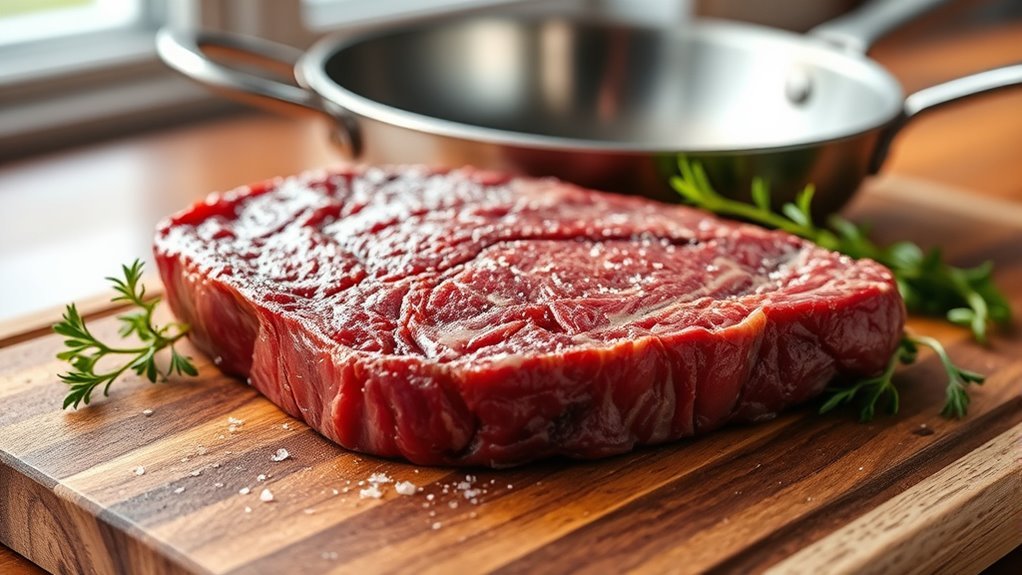
You’re trained on data up to October 2023. When selecting a flat iron steak, prioritize high-quality cuts labeled USDA Choice or Prime for the best tenderness and flavor. Look for a well-marbled steak, with visible streaks of fat that boost juiciness and deepen flavor.
Choose a thick cut, ideally between 1 and 1.5 inches, ensuring uniform thickness so it cooks evenly. The steak should be bright red with a firm texture; avoid any with dark spots or dryness.
To guarantee quality, buy from trustworthy suppliers such as Snake River Farms or Double R Ranch, known for their premium beef. This careful selection sets the foundation for a delicious, juicy flat iron steak every time.
Bring the Steak to Room Temperature
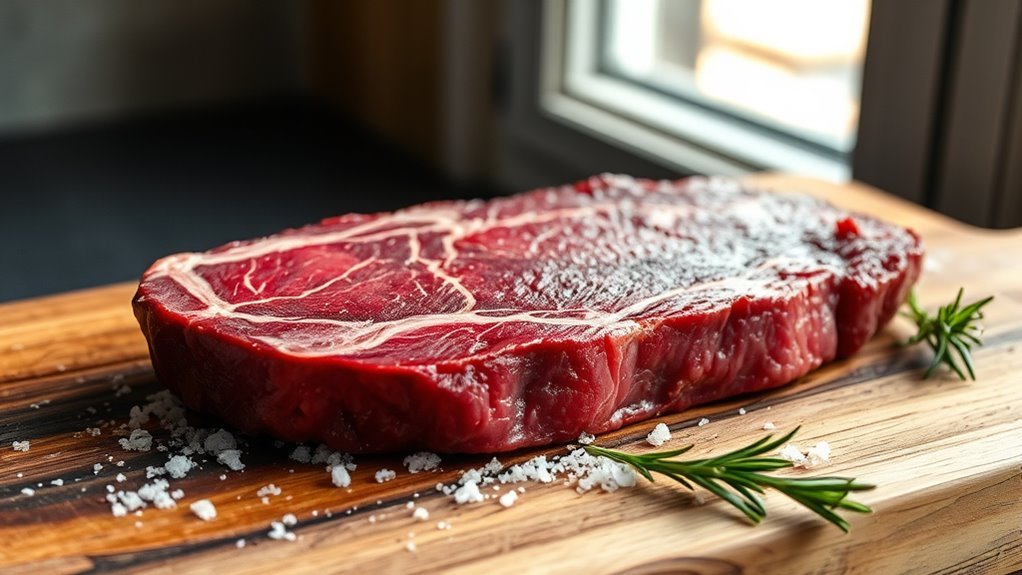
Although it might be tempting to cook the steak straight from the fridge, letting it sit at room temperature for 30 to 40 minutes guarantees a more even cook.
Bringing your flat iron steak to room temperature helps distribute even heat throughout, ensuring a consistent cook that prevents overcooking the outside while keeping the inside tender and juicy.
Before cooking, be sure to pat dry the steak with paper towels. This step is essential for achieving a proper sear and crust formation.
Skipping this preparation can compromise the steak’s tenderness and juiciness.
Prepare the Marinade and Seasoning
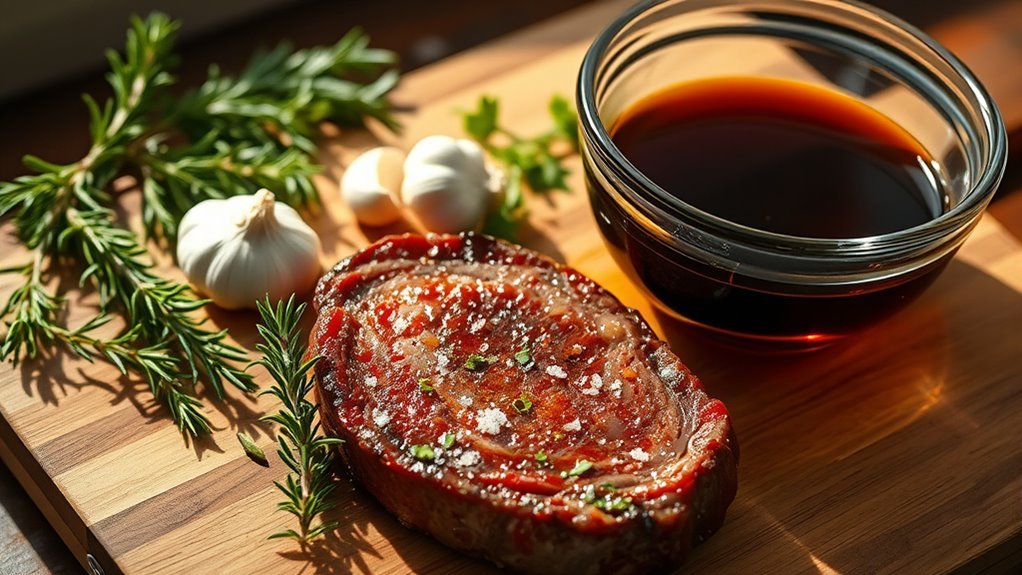
When you combine olive oil, minced garlic, fresh herbs like parsley, rosemary, and chives, along with red wine, salt, pepper, and mustard powder, you create a marinade that deeply enhances both flavor and tenderness.
To prepare the flat iron steak, mix these ingredients thoroughly to guarantee even seasoning.
Don’t forget to season both sides of the steak generously with kosher salt and cracked black pepper before marinating. This seasoning step is essential for developing a flavorful crust during cooking.
Allow the steak to marinate for at least 2-3 hours, which maximizes flavor enhancement and tenderizes the meat.
After marinating, bring the steak to room temperature before cooking to guarantee even heat distribution.
This preparation guarantees a deliciously seasoned and juicy flat iron steak every time.
Marinate the Steak Properly
Since marinating deeply influences both flavor and tenderness, make sure to refrigerate your flat iron steak for at least 2 to 3 hours.
To marinate properly, combine your marinade ingredients: olive oil, garlic, herbs, red wine, salt, pepper, and mustard powder thoroughly.
Place the steak in a resealable bag or covered dish, pour in the marinade, and turn occasionally for an even coating.
The marinating time allows the flavors to penetrate, enhancing both taste and tenderness.
For a deep flavor and maximum tenderness, consider marinating overnight.
Keep it in the refrigerator throughout to keep it safe and fresh.
Imagine this:
- Flat iron steak soaking in rich, aromatic marinade
- Garlic and herbs infusing every fiber
- Even coating glistening on the meat
- Steak resting chilled, ready for cooking
Preheat the Pan for Searing
Before you start cooking, make sure to preheat your cast iron skillet or heavy-bottomed pan over medium-high heat for at least five minutes. This step guarantees the pan reaches the ideal searing temperature of around 400-450°F, vital for developing a flavorful crust on your flat iron steak.
To check if your pan is hot enough, perform the water test: sprinkle a few drops of water onto the surface. If they dance and evaporate immediately, your pan is ready.
Proper preheating triggers the Maillard reaction, creating that delicious caramelized crust that locks in juices and enhances flavor.
Add Oil or Butter to the Pan
Although your pan is already hot, you’ll want to add a high-smoke-point oil like canola or avocado to coat the surface evenly. This prevents burning during searing and guarantees an even cook.
Add enough oil or a combination of oil and butter for flavor, but wait to add butter after the oil has heated to avoid burning its milk solids.
Heat the oil over medium-high heat until it’s shimmering or just starting to smoke, signaling it’s ready for the steak. Visualize this process:
- A thin, glossy coating of oil spreading across the pan’s surface
- The oil shimmering, reflecting light like a mirror
- Small wisps of smoke rising gently at the oil’s smoke point
- Butter melting smoothly into the oil, enhancing flavor and crust formation
This careful preparation sets the stage for perfect searing.
Sear the Steak on the First Side
Once your skillet is scorching hot and the oil shimmers, place the dry flat iron steak carefully in the pan. Using medium-high heat ensures the hot skillet reaches the right temperature for pan-frying.
Press the protein gently to make full contact with the surface.
Don’t move the steak during this stage—you want to sear the first side properly. This allows caramelization to occur, developing a deep brown, caramelized steak crust.
The sear locks in juices and creates a flavorful crust that’s key to a great flat iron steak.
Wait 1 to 2 minutes until the crust forms; this step is essential for that perfect caramelized texture and rich flavor from the Maillard reaction.
Avoid flipping too early to ensure a well-formed crust.
Flip and Sear the Second Side
After the first side has developed a rich, caramelized crust, carefully flip the flat iron steak using tongs to keep the juices sealed inside.
Now, sear the second side in the hot pan for another 3-4 minutes, allowing a deep, golden crust to form. Keep the steak steady and avoid moving it around to ensure even cooking.
During this searing stage, the meat’s temperature rises as the crust seals in flavors.
For extra taste, baste the steak with butter and herbs in the final moments.
Sizzling sound as the second side hits the pan
Aromatic butter melting over the steak
Rich brown crust forming evenly
Steam rising gently from the hot pan
This careful flip and sear technique guarantees perfectly cooked meat with a flavorful crust.
Check Steak Doneness Using a Thermometer
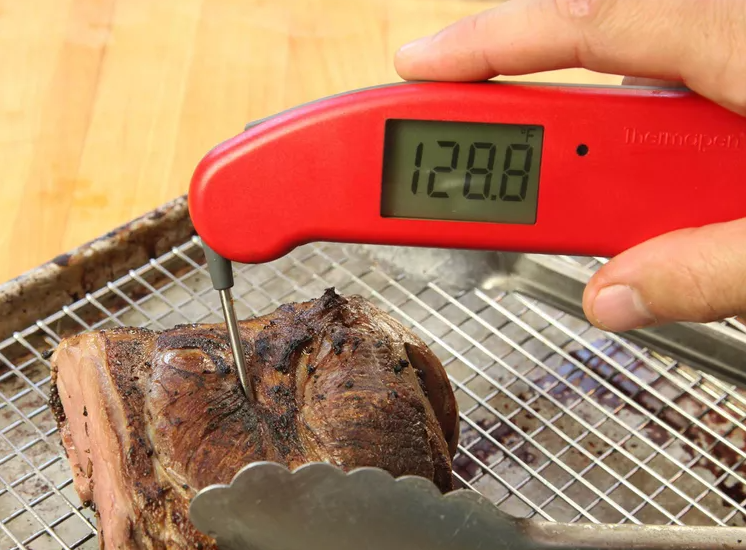
To guarantee your flat iron steak reaches the perfect doneness, use an instant-read thermometer to check its internal temperature at the thickest part. Insert the meat thermometer carefully after searing on your hot skillet to get an accurate temperature reading.
For medium-rare, aim for about 125°F, knowing carryover cooking will raise the resting temperature by roughly 5°F to reach the desired doneness of 130°F. Perform frequent temperature checks as you near your target to avoid overshooting, especially with thinner cuts.
Record the internal temperature to match your preference—145°F for medium or 160°F for well done.
This precise temperature check helps you manage cooking time effectively and ensures your steak doneness is just right without cutting into the meat prematurely.
Rest and Slice the Steak Against the Grain
Although the steak looks ready, you should rest it under foil for at least 5 minutes to let the juices redistribute. Resting guarantees your steak stays juicy by preventing the juices from spilling out when you slice it.
Rest your steak under foil for 5 minutes to keep it juicy by allowing juices to redistribute.
Before cutting, identify the muscle fibers’ direction to slice against the grain. Cutting against the grain shortens these fibers, making each bite tender and easier to chew.
Use a sharp knife and cut on a slight bias (about 45 degrees) for clean, tender slices. Visualize this:
- Juices pooling inside the meat
- Muscle fibers running lengthwise
- Knife gliding smoothly through the steak
- Even, thin slices revealing a juicy, tender interior
Frequently Asked Questions
What Is the Best Cooking Method for Flat Iron Steak?
You should pan-sear your flat iron steak in a hot cast iron skillet, cooking 3-4 minutes per side for a crusty exterior while keeping it juicy.
Don’t forget to rest it before serving for the best flavor.
What Is the 3 3 3 3 Rule for Steaks?
The 3-3-3-3 rule means you cook your steak 3 minutes per side, rest 3 minutes, cook or rest another 3 minutes, then wait 3 minutes before serving.
It helps balance doneness and juiciness perfectly.
Is It Best to Fry a Steak in Butter or Oil?
It’s best to fry your steak in oil for a high-heat sear without burning. Add butter toward the end to boost flavor and aroma without risking the butter burning during cooking.
How to Cook a Steak in a Pan for Beginners?
You’ll want to preheat your pan, season your steak well, and use oil with a high smoke point.
Sear each side without moving it for a few minutes, then check doneness and let it rest before slicing.
Conclusion
Now that you’ve mastered the dance of heat and flavor, your flat iron steak is ready to shine like a perfectly painted masterpiece. Let it rest, allowing juices to settle like a calm sunset, before slicing against the grain to reveal tender ribbons of deliciousness.
With each bite, you’ll savor the rich crust and juicy interior—a simple symphony of taste that proves great steak doesn’t need to be complicated. Enjoy every mouthwatering moment of your perfectly cooked flat iron steak!