10 Steps to Cook Flank Steak Perfectly in a Cast Iron Pan
If you want to cook flank steak that’s tender, juicy, and packed with flavor, you need more than just heat and time. Cooking flank steak perfectly in a cast iron pan requires choosing the right cut, marinating it well, and mastering your skillet’s heat.
Skipping any step can leave you with a tough or bland result. But when done right, you’ll get a meal that’s worth the effort—here’s how to make it happen.
Selecting the Right Flank Steak
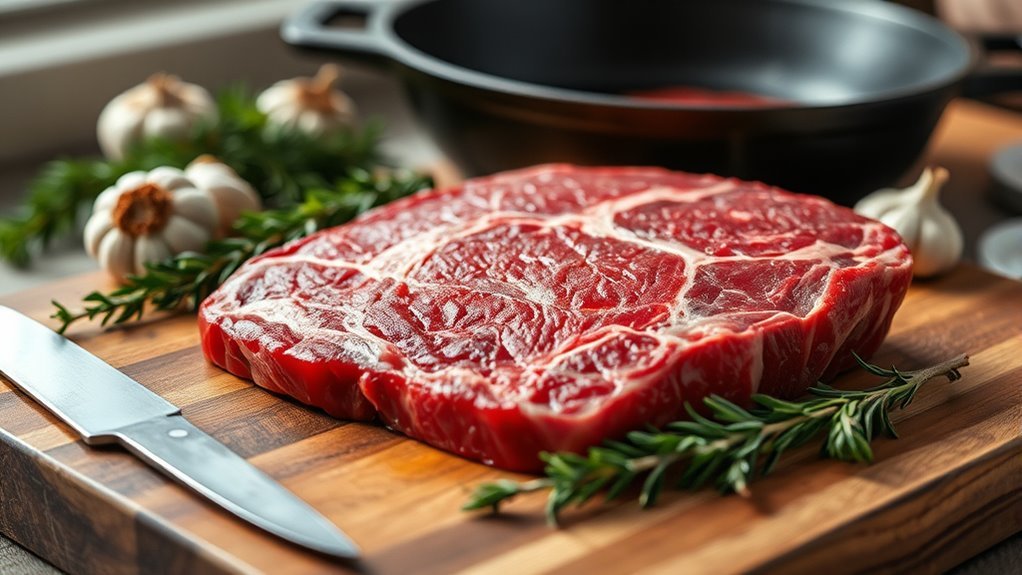
When selecting the right flank steak, focus on one that’s bright red with fine marbling and consistent thickness to guarantee even cooking.
You’ll want a piece weighing between 1 to 1.5 pounds for uniform marinating overnight and cooking.
Aim for a 1 to 1.5-pound flank steak to ensure even marinating and cooking.
Check the steak for minimal visible connective tissue or thick fascia, as these can reduce tenderness.
A flank steak with a tight grain will make slicing against the grain easier, resulting in tender bites.
Before you start, make sure it feels firm with a fresh smell, signaling quality.
When you’re ready to marinate, place the steak on a clean cutting board and be mindful of the grain to ensure you cut correctly after cooking, maximizing tenderness and flavor.
Preparing the Marinade
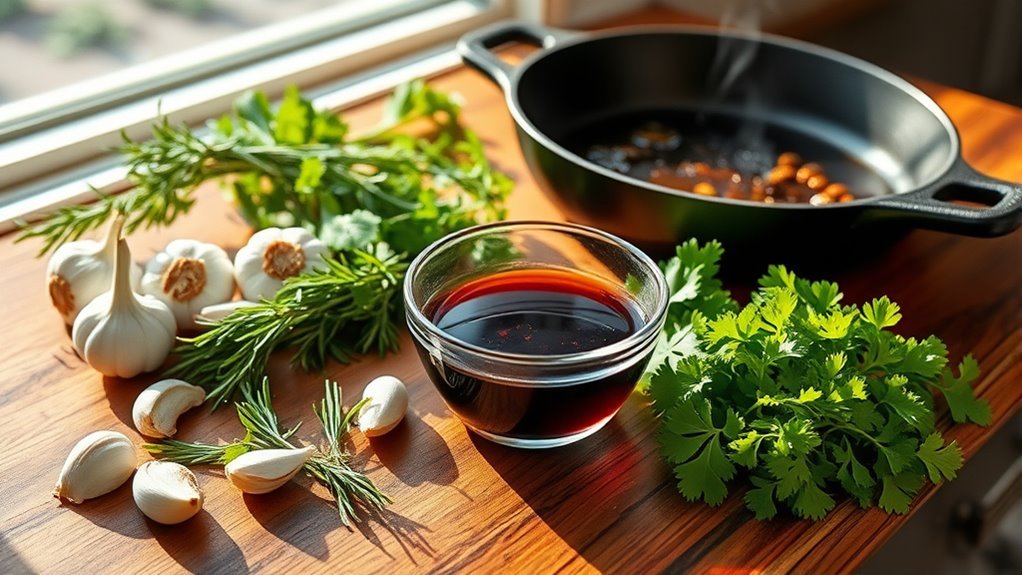
Although marinating takes some time, it’s essential for infusing your flank steak with bold flavors and tenderizing the meat.
To prepare the marinade, whisk together olive oil, Worcestershire sauce, lime juice, minced garlic, cumin, chili powder, red pepper flakes, sugar, salt, and pepper. This seasoning blend complements the flavorful cut perfectly.
Place your flank steak in a gallon-sized zip-top bag and pour the marinade over it, ensuring the meat is fully coated. Seal the bag tightly and refrigerate for at least 30 minutes, but no longer than 8 hours for ideal marinating time.
This step preps your steak for cooking in the cast iron skillet by allowing the flavors to penetrate deeply, enhancing both taste and tenderness.
Marinating the Steak Properly
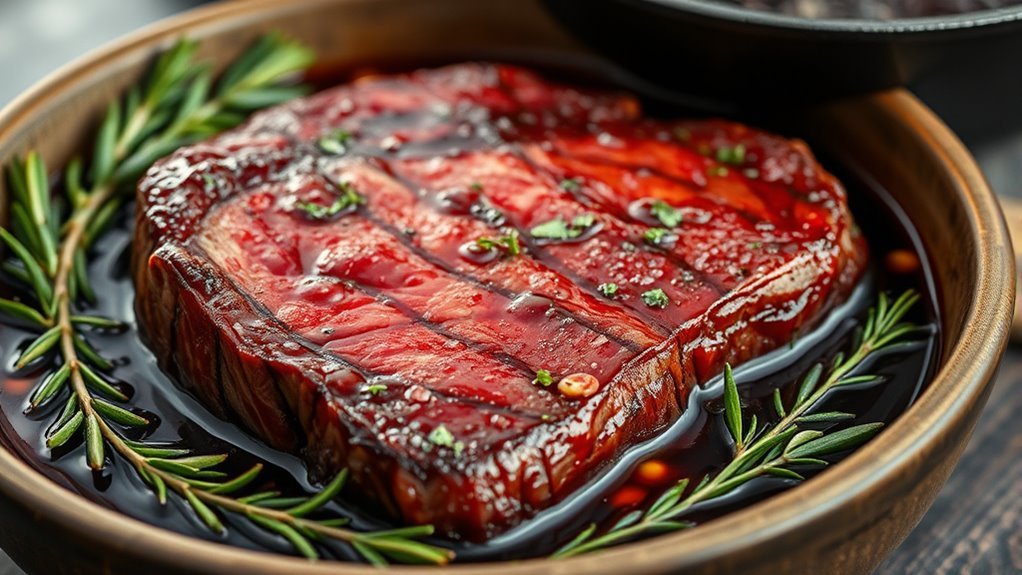
Since proper marinating is key to maximizing flavor and tenderness, you’ll want to keep your flank steak fully submerged in the marinade while it chills in the refrigerator.
Use a mix of olive oil, lime juice, Worcestershire sauce, garlic, cumin, chili powder, red pepper flakes, sugar, salt, and pepper to marinate your flank steak.
Aim for a marinating time between 30 minutes and 8 hours; this balance ensures ideal flavor absorption and meat tenderness without compromising texture.
Place the steak and marinade in a zip-top bag or shallow dish, turning occasionally to coat all surfaces evenly.
Always refrigerate during marination to keep the meat safe and fresh.
Avoid exceeding 8 hours, as over-marinating can make the meat mushy and affect the final dish’s quality.
Bringing the Steak to Room Temperature
Before cooking, let your flank steak sit out for about 30 minutes to reach room temperature, which helps it cook evenly and develop a better sear. Bringing the steak to room temperature prevents cold centers, ensuring even cooking and a juicy interior.
To prepare your flank steak properly:
- Pat dry with paper towels to promote a crispy crust and avoid steaming.
- Use a meat thermometer to check the internal temperature; aim for about 70°F before searing.
- Allow the steak to feel just slightly cooler than ambient, usually 15-30 minutes depending on thickness.
Preheating the Cast Iron Skillet
When you preheat your cast iron skillet over medium-high heat for 3 to 5 minutes, you create the perfect environment for searing your flank steak. The skillet needs to get very hot, just below smoking point, to ensure a proper sear.
To check if it’s ready, sprinkle a few drops of water on the hot skillet; they should sizzle vigorously and evaporate immediately.
For accuracy, use an infrared thermometer to confirm the surface temperature hits between 400-450°F.
Avoid adding oil until the skillet is fully preheated to prevent sticking and help form a delicious crust.
This intense heat jumpstarts the Maillard reaction, giving your steak a rich, caramelized exterior that locks in flavor and juices.
Seasoning the Steak Before Cooking
Once your cast iron skillet is preheated to the right temperature, turn your attention to seasoning the flank steak. Proper seasoning is key to unlock deep flavor before it hits the cast iron pan.
Start by generously applying kosher salt and freshly ground black pepper to both sides.
Next, spread a thin layer of dry mustard to add tang and enhance the crust later.
Finally, rub about a tablespoon of softened butter over the surface to seal in moisture and richness.
For an extra kick, you can mix in garlic powder or smoked paprika.
After seasoning, let the steak rest at room temperature for 10-15 minutes. This step guarantees even cooking and better searing results, setting the stage for a perfectly cooked flank steak.
Searing the Steak to Develop a Crust
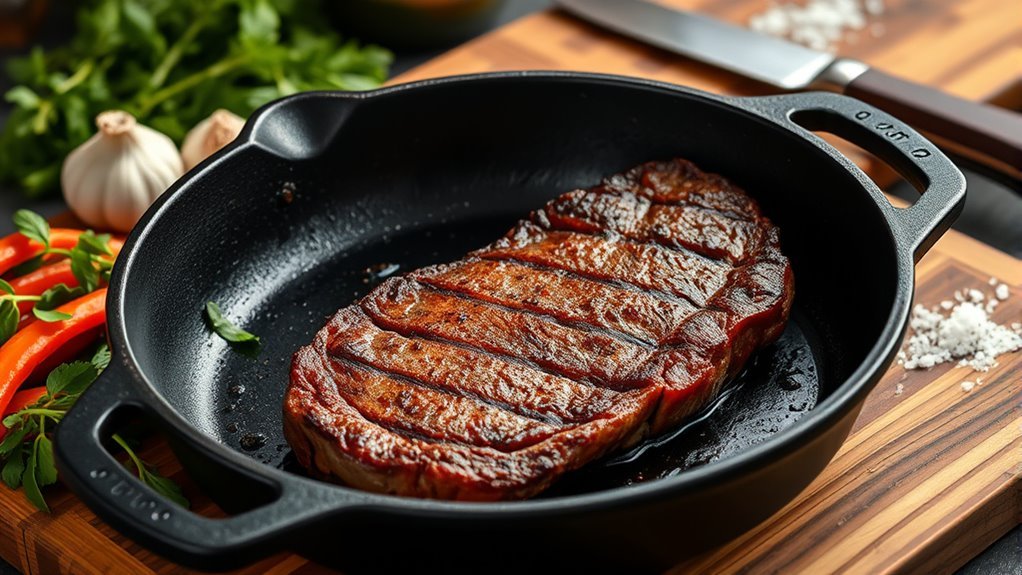
Although your skillet is already hot, give it a few more minutes to reach just below smoking point for the ideal searing temperature. Add a thin layer of high smoke point oil to your cast iron pan.
Place the flank steak gently in the hot skillet, pressing it for full contact. Sear without moving for 2-3 minutes per side to develop a deep brown crust through the Maillard reaction.
Avoid overcrowding and adjust heat to prevent burning. This process locks in juices, ensuring a perfectly cooked steak.
| Step | Action | Result |
|---|---|---|
| Preheat | High heat in pan | Hot skillet |
| Oil | Thin, even coating | Prevents sticking |
| Searing time | 2-3 minutes per side | Crust from Maillard reaction |
Monitoring Internal Temperature for Doneness
To guarantee your flank steak reaches the perfect doneness, use an instant-read thermometer to check the internal temperature at the thickest part. This tool helps you avoid overcooking by giving accurate readings as the steak cooks.
Aim for your desired temperature: about 130°F for medium rare is ideal for tender, juicy results.
Check the temperature frequently as you approach this mark to pull the steak at just the right time.
Keep these tips in mind:
- Insert the instant-read thermometer into the thickest part for accuracy.
- Remove the steak once it hits the target internal temperature to prevent overcooking.
- Remember that the steak will continue cooking slightly during resting, so factor that in when deciding your desired temperature.
Resting the Steak After Cooking
While the steak rests after cooking, its juices redistribute throughout the meat, making each bite more tender and flavorful. The resting process is essential for ideal juice retention, preventing the meat from drying out when sliced.
You should let the resting steak sit for 5 to 10 minutes, loosely covered with aluminum foil to keep heat without trapping moisture. During this rest time, carryover cooking raises the internal temperature by about 5°F, enhancing your desired doneness.
This resting meat becomes juicier and more tender because the fibers relax, allowing the redistributed juices to settle evenly.
Skipping this resting step risks losing flavorful juices, so be patient. It’s a vital part of cooking the perfect flank steak in your cast iron pan.
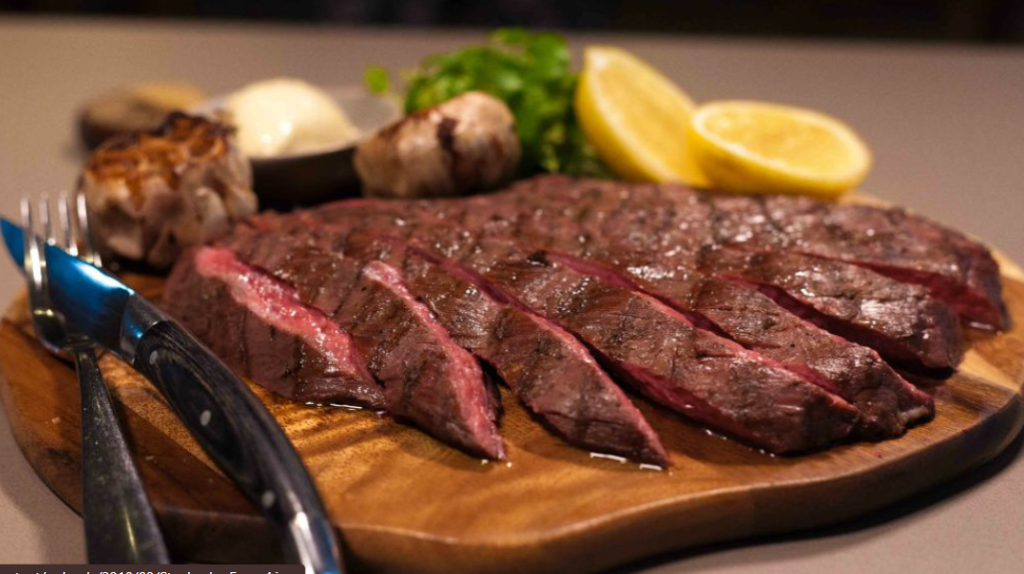
Slicing the Steak Against the Grain
Two simple steps can make your flank steak noticeably more tender: identifying the grain and slicing against it. First, look for the muscle fibers running through the steak. These lines show you the grain direction.
When you slice against the grain, you’re cutting muscle fibers perpendicular, which shortens them and boosts meat tenderness.
To slice your steak perfectly:
- Use a sharp knife to make clean, precise cuts.
- Cut thin slices to maximize tenderness and texture.
- Slice only after resting steak to keep juices locked in.
Frequently Asked Questions
Can You Cook Flank Steak in Cast Iron?
Yes, you can cook flank steak in cast iron. Just preheat the pan until it’s very hot, sear each side for a few minutes, then rest the steak to keep it juicy and flavorful.
What Is the 3 3 3 3 Rule for Steak?
Think of the 3-3-3-3 rule like a well-timed dance: you sear each steak side for 3 minutes,
then rest and slice it for 3 minutes each, ensuring a perfect medium-rare without guesswork or stress.
What Are the Common Mistakes When Cooking Flank Steak?
You often overcook flank steak, skip resting it, slice with the grain, don’t preheat your pan properly, or pierce the meat too much.
Avoid these to keep your steak tender, juicy, and flavorful every time.
How Long Do You Cook Flank Steak in a Skillet?
You’ll cook flank steak about 4-6 minutes per side for medium-rare, adjusting time based on thickness. Use an instant-read thermometer for accuracy, then rest the steak for 5-10 minutes before slicing to keep it juicy.
Conclusion
By following these steps, you’ll master cooking flank steak in your cast iron skillet every time. Did you know that resting meat can improve juiciness by up to 30%? Letting your steak rest after cooking allows the juices to redistribute, making each bite tender and flavorful.
So, don’t rush—patience pays off with a delicious, perfectly cooked flank steak you’ll want to make again and again. Using a cast iron skillet enhances the sear and flavor, ensuring your flank steak turns out juicy and tender every time.