How to Cook Filet Mignon in a Pan: 7 Simple Steps for Restaurant-Quality Steak
If you want to cook filet mignon in a pan with restaurant-quality results, you’ll need more than just heat and time. Achieving the perfect crust and tender interior requires key steps that are easy to overlook. Cooking filet mignon in a pan properly can elevate your steak to a whole new level.
By following a straightforward process, you can master how to cook filet mignon in a pan without complicated techniques. This method ensures a juicy, flavorful steak every time. Let’s explore what it takes to transform a simple cut of beef into a memorable meal.
Selecting and Preparing Your Filet Mignon
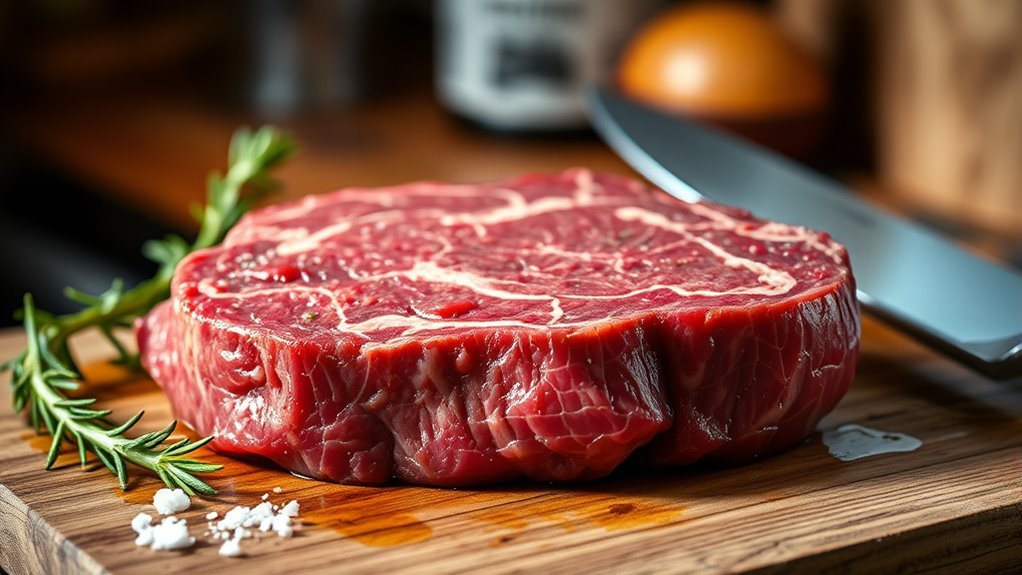
When selecting your filet mignon, choose steaks that are 1.5 to 2 inches thick with a deep red color and minimal marbling to guarantee tenderness and even cooking.
Opt for a high-quality steak from a trusted source to assure freshness and flavor.
Before cooking, trim any excess connective tissue or silver skin with a sharp knife for a clean presentation.
While you shouldn’t bring your steak to room temperature just yet, it’s important to prepare it properly by seasoning generously with coarse sea salt and freshly ground black pepper.
This seasoning enhances the crust and overall taste.
Selecting a thick cut filet mignon and preparing it carefully sets the foundation for a perfectly cooked, tender steak every time.
Bringing the Steak to Room Temperature
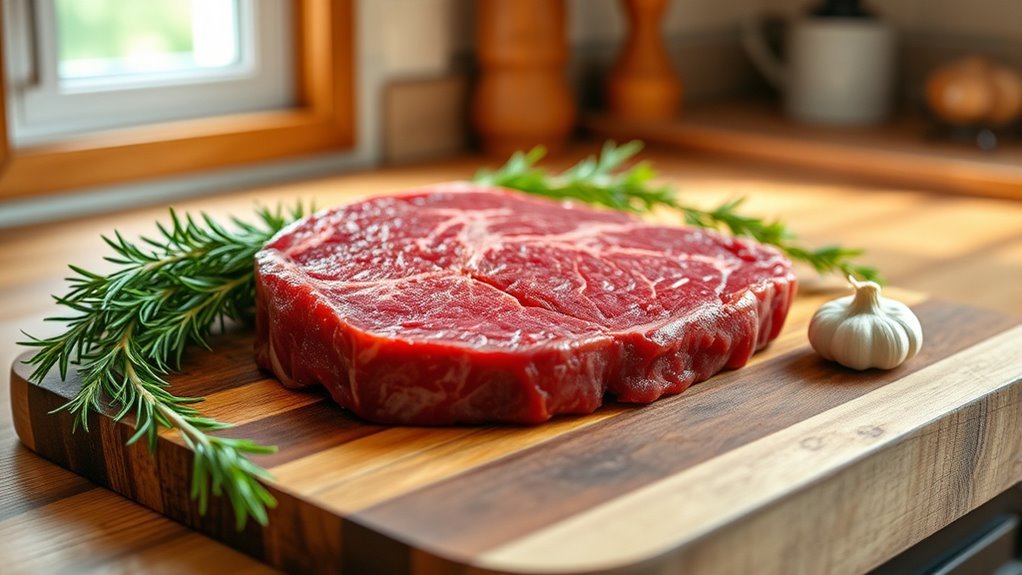
Although it might be tempting to cook your filet mignon straight from the fridge, letting it sit at room temperature for 30 to 60 minutes guarantees more even heat distribution.
Resting steak at room temp helps avoid cold steaks that cook unevenly, preventing the exterior from overcooking while the interior remains underdone.
By allowing the initial temperature to rise, you break down muscle fibers, making your steak more tender.
Before you preheat the skillet, perform a temperature check using a meat thermometer or your finger; aim for about 70°F (21°C).
This step ensures you bring the steak to room temp properly, promoting consistent cooking and a perfect crust.
Skipping this can result in uneven cooking and less desirable results.
Seasoning and Dry Brining the Steak
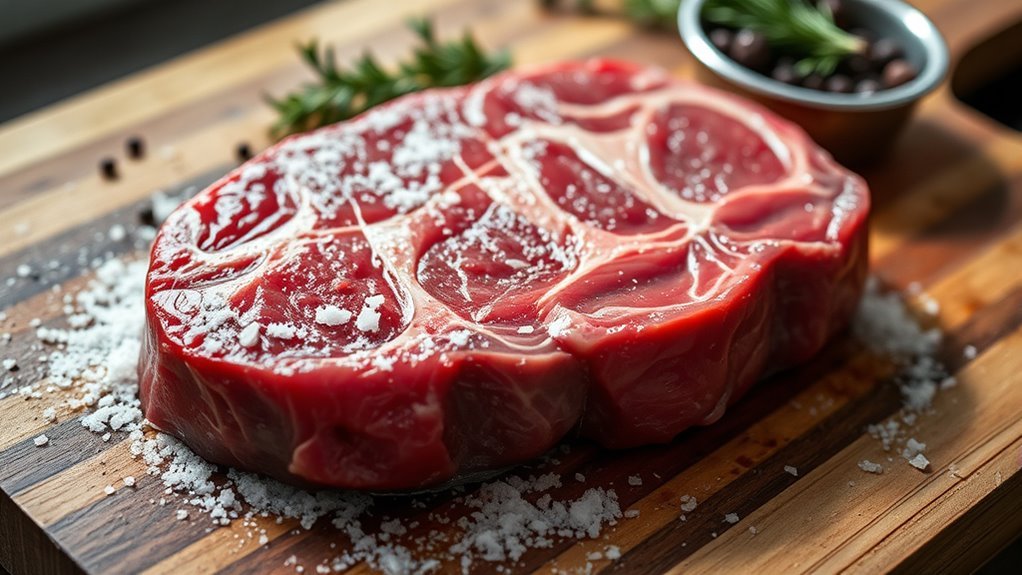
Since seasoning is key to revealing your filet mignon’s full flavor, start by generously applying coarse sea salt or kosher salt on all sides. This guarantees even seasoning, essential for flavor enhancement and crust development.
For best results, dry brine your steak by placing it on a wire rack over a baking sheet and refrigerate uncovered for at least an hour or overnight. This dry brining process allows the salt to penetrate deeply, improving seasoning penetration and texture.
When ready, let the steak rest at room temperature for 30-45 minutes; this resting period promotes even seasoning throughout the meat. Avoid rinsing off the salt after dry brining. Just gently pat dry to prepare for cooking.
Don’t add more salt afterward, as the dry brine has perfectly seasoned your steak already.
Preheating the Skillet and Adding Oil
Before you add your filet mignon, make sure to preheat your skillet over medium-high to high heat for at least five minutes to reach the perfect searing temperature.
A properly preheated skillet guarantees even cooking and a beautiful crust.
Once the pan is hot, add 1-3 tablespoons of a high-smoke-point oil like canola, grapeseed, or avocado oil.
Wait until the oil shimmers or just begins to smoke slightly. This indicates the right temperature for searing.
Tilt the skillet carefully to spread the oil evenly, preventing sticking and promoting a uniform sear.
Maintaining high heat is essential; avoid overcrowding the pan to keep the temperature consistent.
Following these steps sets you up for a flawless cooking process and a perfectly seared filet mignon.
Searing the Filet Mignon on the Stove
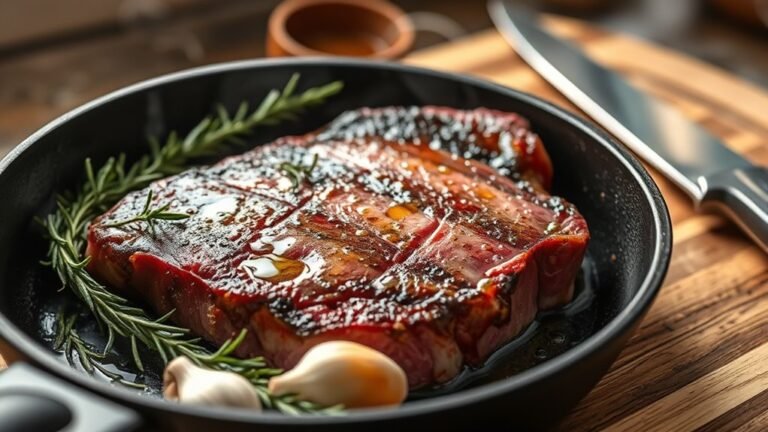
With your skillet properly heated and oil shimmering, you’re ready to sear the filet mignon. Use a cast iron skillet over high heat, adding a high smoke point oil like canola or grapeseed to prevent burning.
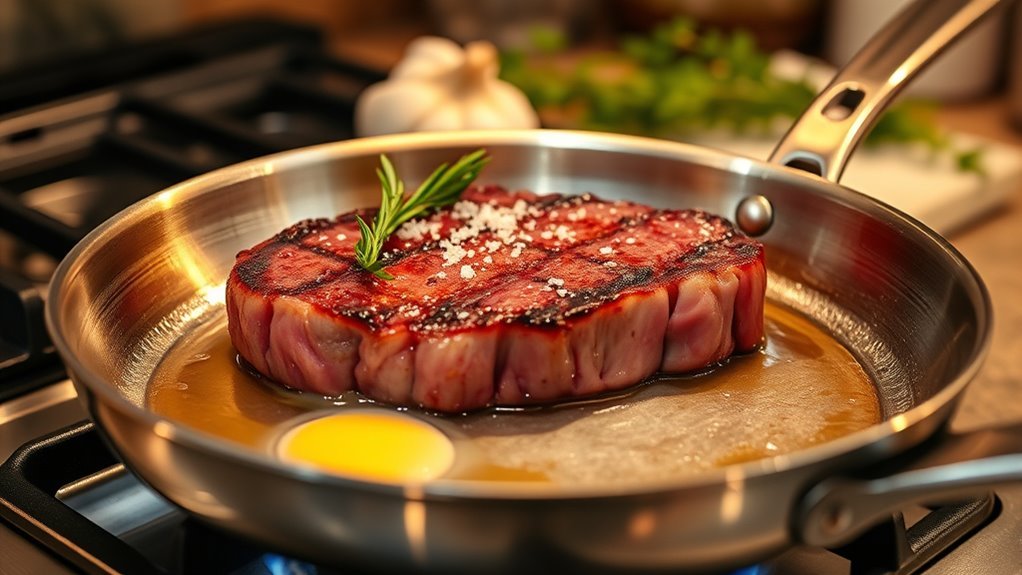
Carefully place the steak in the hot skillet, leaving space between pieces to avoid steaming. Let the filet mignon sear each side for 2-3 minutes without moving it.
This pan searing creates a rich, caramelized crust.
After the first side is browned perfectly, flip the steak using tongs and repeat on the other side. Maintaining high heat guarantees a perfect sear that locks in juices without burning. This step is essential to developing the deep flavor and texture that make filet mignon so special.
Finishing the Steak in the Oven
After searing both sides of your filet mignon, transfer the skillet to a 415°F oven to finish cooking evenly. Make sure you use an oven-safe skillet to maintain even heat distribution; if your pan isn’t oven-proof, transfer to a preheated baking sheet.
The oven time depends on your desired doneness: about 4 minutes for rare, 5-6 for medium rare, and up to 8-9 for medium well. To monitor the internal temperature accurately, insert a meat thermometer into the thickest part of the steak.
Aim for 120°F for rare or 130°F for medium rare before removing from the oven. Once done, take your filet out and remember to rest after cooking to lock in the juices and finish your steak perfectly.
Resting and Serving Your Perfect Filet Mignon
While your filet mignon rests, you let the juices redistribute evenly, ensuring each bite stays moist and tender. To maximize juice retention, rest your steak for 5 to 10 minutes, adjusting resting time based on thickness, about 5 minutes per inch.
Tent foil lightly over the steak to preserve temperature without trapping excess moisture. Avoid cutting or piercing during this phase to maintain internal moisture and enhance tenderness.
Once the internal temperature stabilizes, you’re ready to serve. When cutting, slice against the grain to keep your steak tender.
This careful resting and serving process guarantees moisture preservation and ideal flavor in every bite, making your perfectly cooked filet mignon a true delight at the table.

Frequently Asked Questions
What’s the Best Way to Cook Filet Mignon in a Frying Pan?
Sear your filet mignon in a hot cast iron skillet with oil until browned, then add butter, garlic, and herbs. Baste continuously, finish in the oven, and rest before slicing for tender, juicy results every time.
How Does Gordon Ramsay Cook Filet Mignon in a Pan?
You’ll season the filet generously, sear it in a hot, oiled pan until golden, then add butter, garlic, and herbs, basting continuously.
Finish in the oven, rest it, and serve with herb butter for perfection.
Is It Better to Bake or Pan Fry Filet Mignon?
Choosing between baking or pan frying filet mignon is like picking a paintbrush; you’ll want to pan fry for a quick, flavorful crust but combine it with baking for even cooking and perfect doneness every time.
What Is the Best Way to Have a Filet Mignon Cooked?
You’ll get the best filet mignon by pan-searing it in a hot skillet, then finishing it in the oven.
Don’t forget to rest the steak afterward for juicy, tender results every time.
Conclusion
Cooking filet mignon in a pan is like crafting a masterpiece—each step adds a brushstroke to your culinary canvas. By choosing the right cut, seasoning well, searing with care, and finishing in the oven, you transform simple ingredients into a delicious work of art.
Letting it rest is the final flourish, allowing flavors to harmonize. With patience and attention, your kitchen becomes a gallery where every bite tells a story worth savoring. Mastering how to cook filet mignon in a pan ensures a tender, juicy steak that impresses every time.