
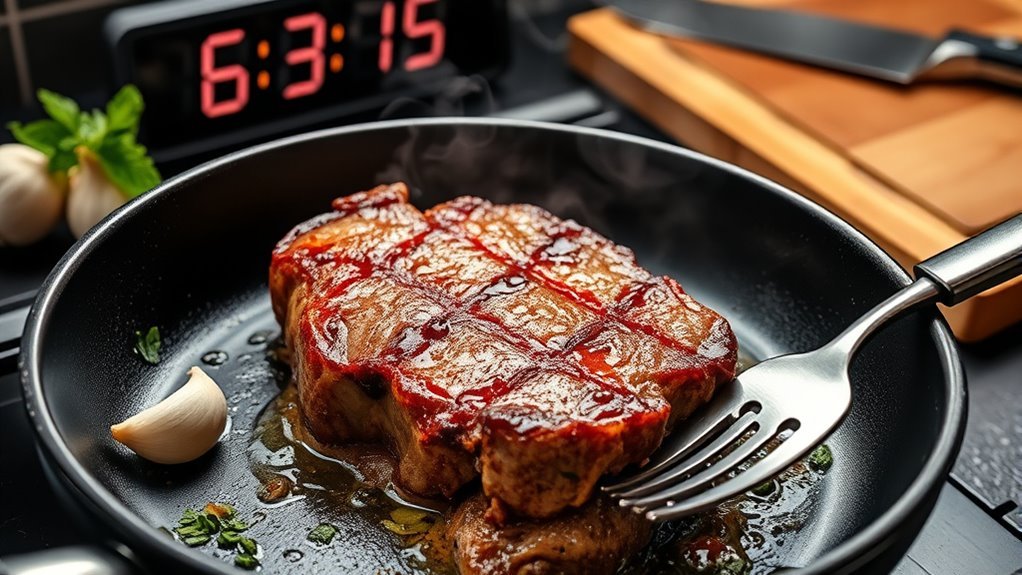
How to Cook Steak in a Nonstick Pan in 10 Easy Steps
You might not realize that cooking a perfect steak in a nonstick pan is not only possible but also straightforward when you follow the right steps. Many assume nonstick pans can’t achieve a good sear, but that’s a common misconception.
If you want a juicy, flavorful steak without firing up the grill or using cast iron, there’s a method that’ll change how you approach your next dinner. Ready to learn what it takes?
Select the Right Cut of Steak
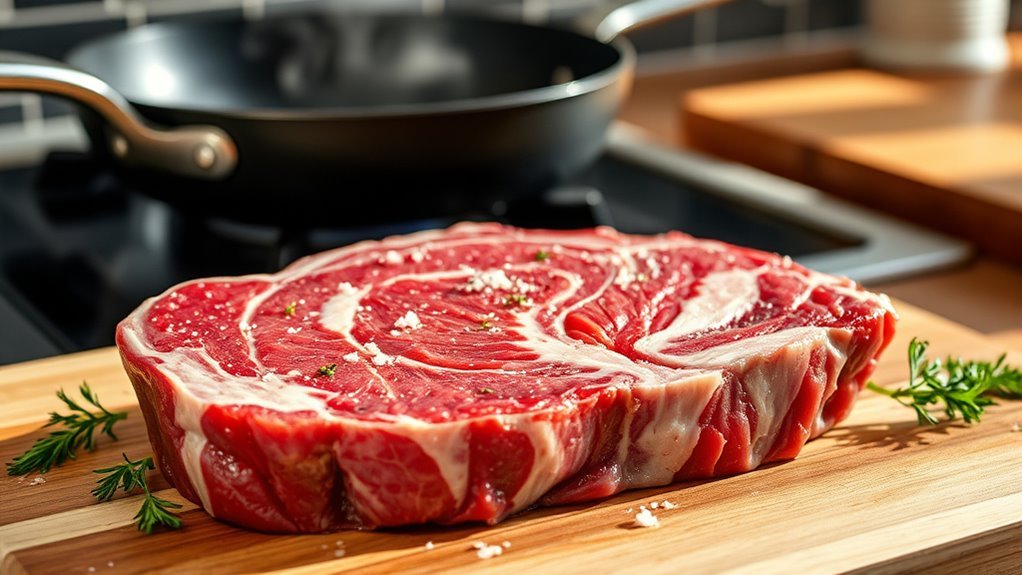
Although you can cook various steaks in a nonstick pan, choosing a thicker cut, at least one inch thick, ensures better searing and even cooking.
When selecting your cut of meat, opt for well-marbled options like ribeye or New York strip to enhance flavor and juiciness during cooking.
Avoid very thin steaks because they tend to overcook quickly and are harder to manage in a nonstick pan.
Look for a steak that’s fresh, bright in color, and has a firm texture to guarantee quality results.
While bone-in steaks are suitable for pan cooking, keep in mind they may need longer cooking times to reach even doneness.
Picking the right cut of meat is the first step toward a perfectly cooked steak.
Thaw and Bring Steak to Room Temperature
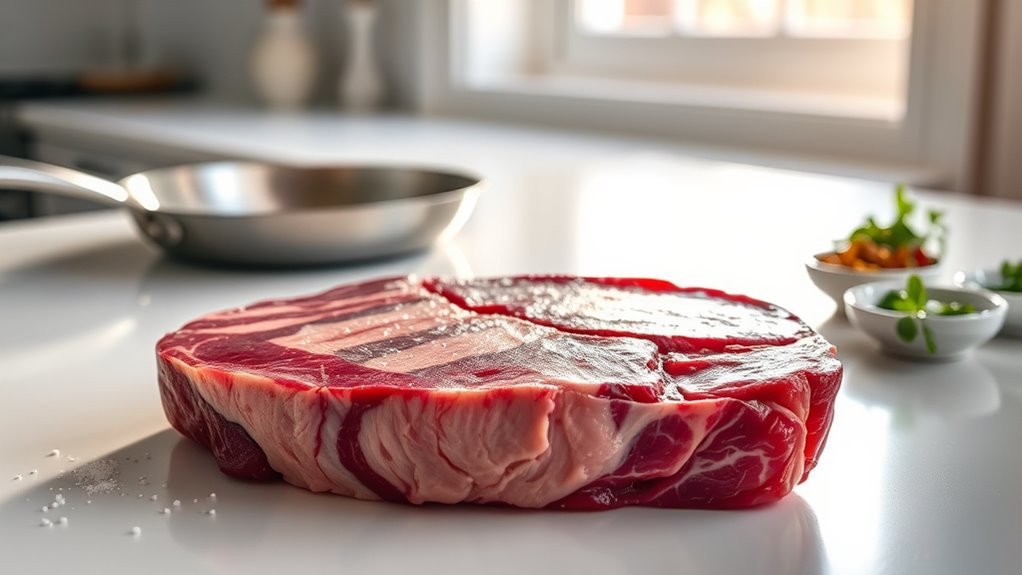
Before cooking your steak, make sure to thaw it in the refrigerator for at least 24 hours. This guarantees even heat distribution during cooking.
Once thawed, remove the steak from the fridge and let it sit at room temperature for 30 to 40 minutes. Bringing the steak to room temperature helps prevent the outside from overcooking while the inside reaches your desired doneness.
Before cooking, pat dry the steak with paper towels to remove any excess moisture, which promotes better searing and a delicious crust. Avoid cooking a frozen or partially frozen steak, as this leads to uneven cooking and a poor crust.
Taking these steps will set you up for a perfectly cooked steak in your nonstick pan.
Season Your Steak Generously
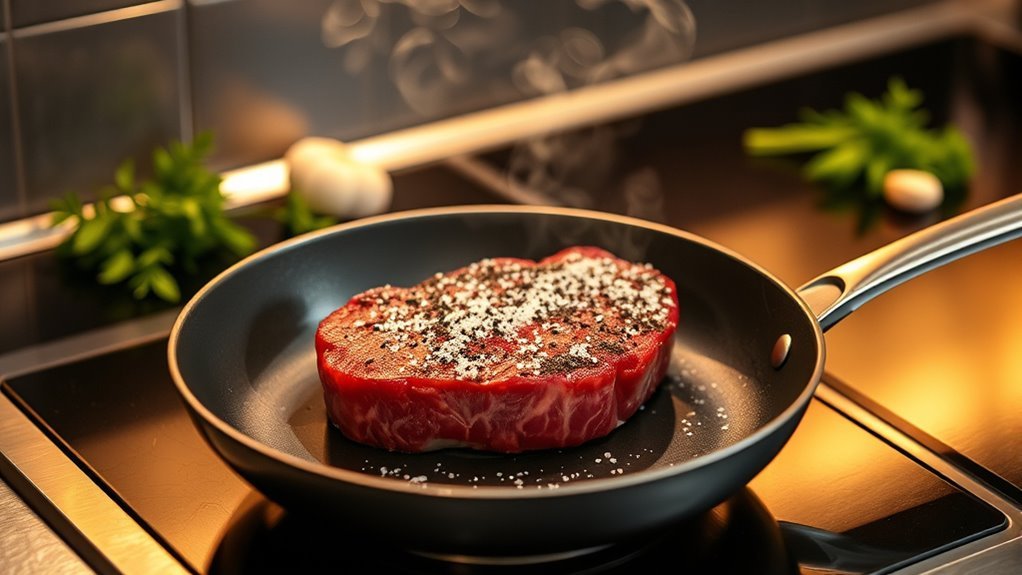
When you season your steak generously with salt and pepper, you boost its flavor and help form a savory crust during cooking. To properly season your steak, sprinkle about one teaspoon of kosher salt per side at least 45 minutes before cooking, up to 24 hours if possible, for optimal flavor enhancement.
Pat the steak dry with paper towels after seasoning to ensure proper searing and avoid steaming.
Besides salt and pepper, you can add garlic powder, onion powder, or your favorite steak rub to elevate the taste.
If you’re using fine salt or salt substitutes, season lightly just before cooking to prevent oversalting.
Prepare Your Nonstick Pan for Cooking
To get the best sear on your steak, make sure you use a high-quality nonstick pan that’s in good condition and preheat it over medium-high heat for 2 to 3 minutes.
Before placing your steak in the nonstick skillet, pat dry the surface thoroughly with paper towels. Removing excess moisture is key to preventing steaming and achieving a perfect crust.
Avoid adding oil before you preheat the pan; instead, wait until it’s hot to add a small amount of oil, which helps prevent smoking.
You can test if your pan is ready by flicking a drop of water onto the surface. It should sizzle immediately.
Preparing your pan correctly sets the stage for a delicious, evenly cooked steak with a beautiful sear.
Preheat the Pan Over Medium-High Heat
Getting your nonstick pan properly heated sets the foundation for a perfect steak sear. To preheat, place your pan over medium-high heat and let it warm for about 5 minutes.
You’ll know it’s ready when a few drops of water sprinkled in dance and evaporate instantly. Avoid adding oil before preheating since doing so can cause smoking and uneven cooking.
If you want to be precise, use a thermometer or cautiously test the pan’s temperature by holding your hand at a safe distance above the surface.
Properly preheating the pan guarantees your steak develops a golden-brown crust quickly, locking in flavor and juices.
Add Oil and Place the Steak in the Pan
Although the pan should still be warm, pour a small amount of oil, like vegetable or canola, into the cold nonstick surface to lightly coat the bottom. This layer of oil will help conduct heat evenly and prevent the steak from sticking. Next, carefully place your seasoned steak into the pan, laying it away from you to avoid any oil splatters. Make sure the steak makes full contact with the pan’s surface but don’t overcrowd it, as this will steam rather than sear the meat.
Sear the Steak Without Moving It
Once your steak is gently placed in the hot pan, resist the urge to move it. To sear the steak properly, keep the heat high so the surface sizzles instantly, promoting a rich caramelized crust.
Prevent moving the steak for at least 2-3 minutes; this stillness allows a golden-brown sear to form without tearing the meat or losing juices. If you move or flip the steak too soon, the crust won’t develop well, and it may stick to the pan.
Wait until the steak releases easily on its own before you consider turning it. Also, avoid pressing down with your spatula, which can disrupt the searing and squeeze out flavorful juices. Patience here is key for a perfect crust every time.
Flip the Steak at the Proper Time
To guarantee even cooking and a perfect crust, flip the steak about halfway through the total cooking time. You should turn the steak roughly one minute before this halfway point to achieve your desired doneness.
Use tongs to flip the steak gently, never pierce it, to keep the juices locked in. Flipping every 1-2 minutes helps promote uniform heat distribution and a consistent crust.
| Step | Timing | Tips |
|---|---|---|
| Initial Sear | First half of cooking | Don’t move steak |
| Flip First Time | ~1 min before halfway | Use tongs, flip gently |
| Flip Regularly | Every 1-2 minutes | Ensures even cooking |
| Final Check | Near target doneness | Flip if needed for crust |
Use a Thermometer to Check Doneness
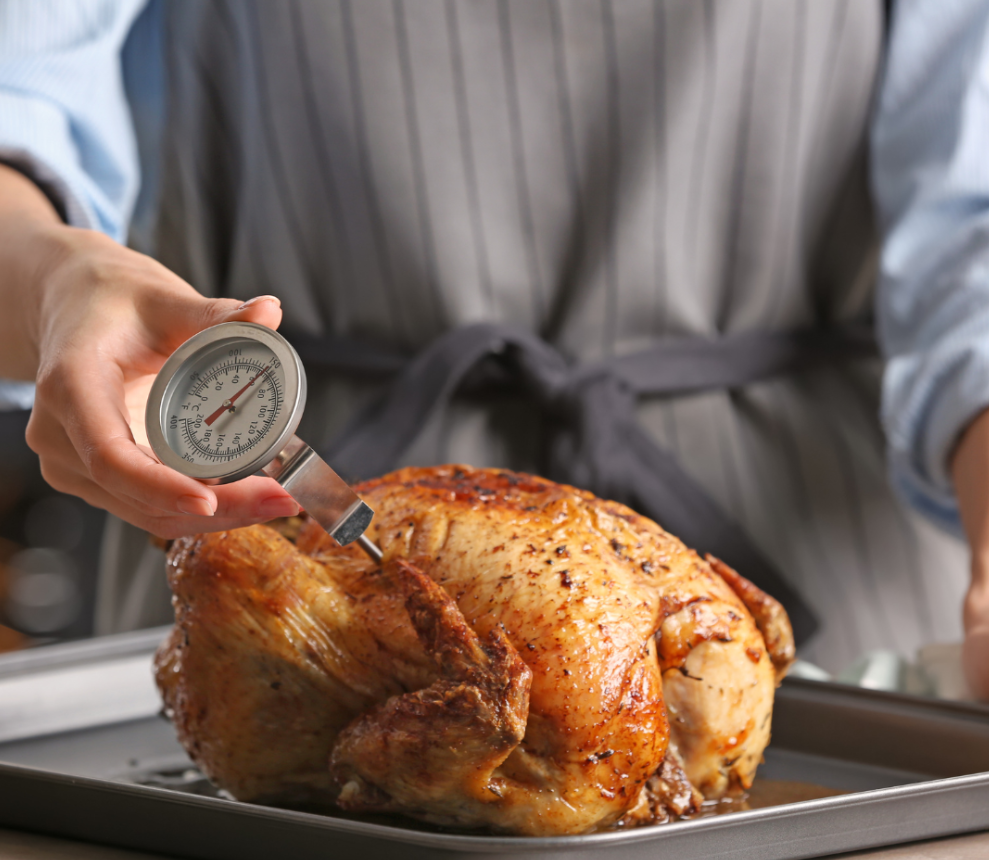
Keeping a close eye on your steak’s temperature guarantees you hit your preferred level of doneness every time. Use a digital meat thermometer by inserting it into the thickest part of the steak, steering clear of bone or fat for an accurate internal temperature reading.
Here’s how to get it right:
- Check the internal temperature frequently as the steak cooks, especially when it nears your target doneness.
- Remove the steak from the pan when the thermometer reads about 5°F below your desired doneness since carryover heat will raise it.
- Aim for these internal temperatures: 125°F for rare, 135°F medium-rare, 145°F medium, 155°F medium-well, and 165°F well done.
Using the instant-read feature ensures you cook your steak perfectly every time.
Rest the Steak Before Serving
Although the steak looks ready to eat right off the pan, you should let it rest for at least 5 minutes to let the juices redistribute evenly, ensuring every bite stays juicy and flavorful. When resting steak, loosely cover it with foil to keep it warm without losing moisture.
This resting period also allows carryover cooking, raising the internal temperature by about 5°F for even doneness. Avoid slicing immediately to keep those precious juices inside.
| Step | Purpose | Result |
|---|---|---|
| Rest for 5 minutes | Redistribute juices | Juicy, tender steak |
| Loosely cover foil | Retain warmth, prevent drying | Warm and moist steak |
| Allow carryover cooking | Increase internal temp | Evenly cooked steak |
Frequently Asked Questions
How Do You Cook Steak in a Non Stick Pan?
You heat your nonstick pan, season your steak, and sear it on each side until golden. Flip often, check doneness with a thermometer, then let it rest before slicing to enjoy juicy, tender steak.
What Is the 3 3 2 2 Rule for Steak?
You might think timing’s tricky, but the 3-3-2-2 rule simplifies it: sear 3 minutes per side, rest 3 minutes, sear 2 minutes, then rest 2 minutes.
This locks in juices and perfect doneness.
How Long to Heat a Nonstick Pan for Steak?
You should heat your nonstick pan for about 2 to 3 minutes over medium-high heat. Check by flicking a few drops of water; if they sizzle immediately, your pan’s ready to sear your steak perfectly.
How to Cook a Steak in a Pan for Beginners?
Did you know 70% of home cooks overcook steak? You’ll want to sear your steak 4-6 minutes, flipping every minute for even cooking.
Use a thermometer to hit your desired doneness and always let it rest.
Conclusion
By choosing the right cut, seasoning well, and heating your pan just right, you set the stage for steak success. You sear without rushing, flip with timing, and check doneness like a pro.
Then, you let it rest—because patience makes all the difference. It’s not just cooking; it’s crafting flavor, texture, and that perfect crust.
So, don’t just cook steak—own every step, and enjoy every bite of your perfectly cooked steak in a nonstick pan.