How Long to Cook Bratwurst in a Pan in 10 Essential Steps
You might think cooking bratwurst in a pan is straightforward, but getting that perfect balance of juicy inside and crisp outside takes a bit more care. Cooking bratwurst in a pan requires attention to heat and timing to avoid bursting or uneven cooking. If you rush or skip steps, the sausages can burst or cook unevenly.
By following these 10 essential steps, you’ll learn how to achieve consistent results every time, ensuring your bratwurst is cooked just right without fuss or guesswork.
Choosing the Right Bratwurst for Pan Cooking
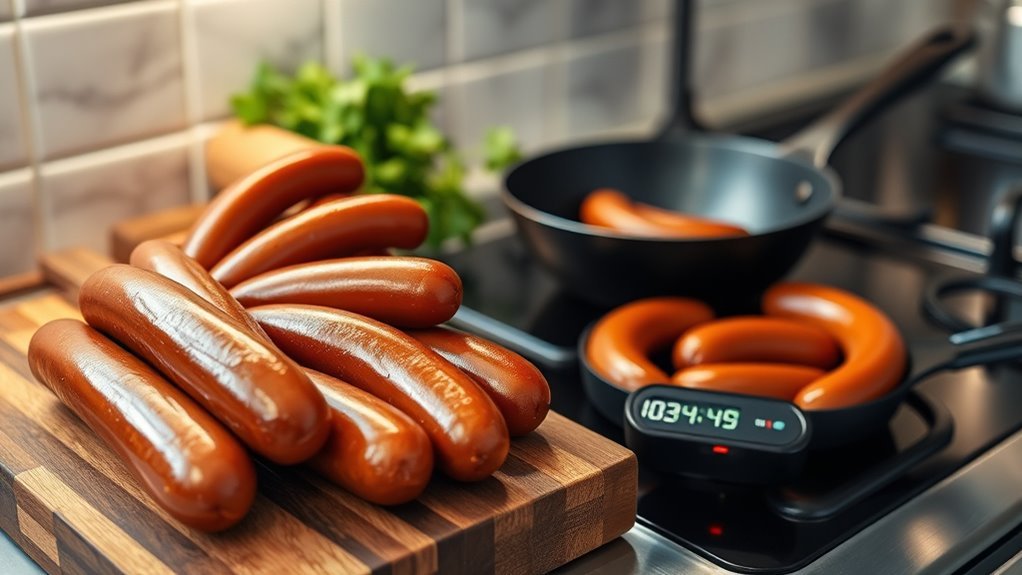
When you’re preparing to cook bratwurst in a pan, choosing high-quality sausage is essential for the best flavor and texture. Look for fresh bratwurst that’s plump and firm, with a natural casing that feels slightly elastic to the touch. Checking the ingredient list helps you avoid bratwurst packed with fillers or preservatives, ensuring a more authentic taste.
For pan cooking, pick sausages with consistent size and thickness to guarantee uniform cooking throughout. Whether made from pork, veal, beef, or a blend, quality matters.
While selecting, consider bratwurst with a casing that holds well during cooking to prevent splitting. This careful choice sets the foundation for a perfectly cooked, delicious bratwurst every time you use your pan.
Preparing Your Equipment and Ingredients
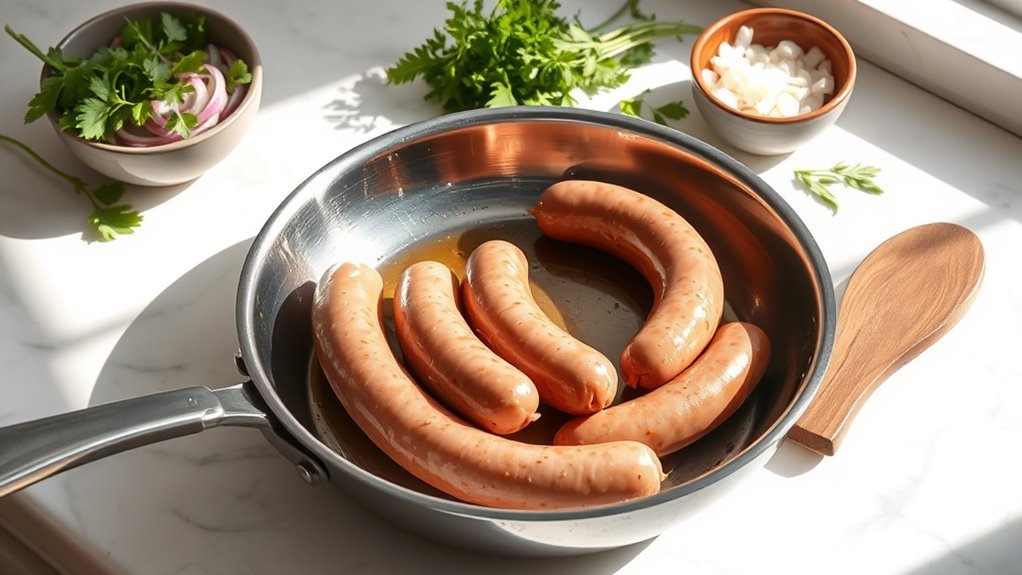
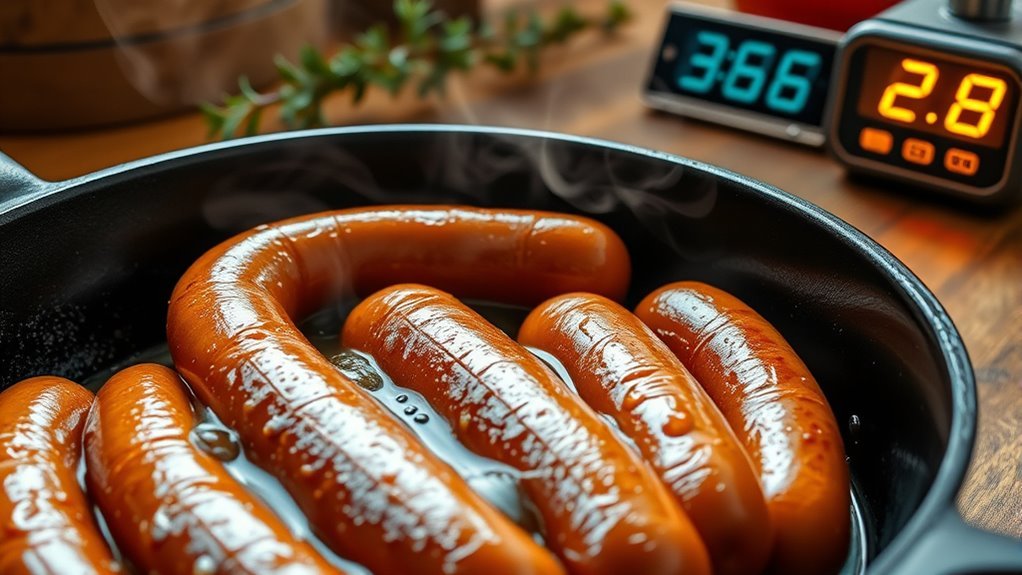
Before you start cooking bratwurst, gather the right equipment and ingredients to guarantee even heat and perfect searing. Use a 12-inch cast-iron skillet for excellent heat distribution.
Prepare your bratwurst by poking small holes in the casings to prevent bursting.
Poke small holes in bratwurst casings before cooking to avoid bursting and ensure even heat distribution.
Have a lid or cover nearby to trap moisture and help steam the sausages gently during cooking.
Measure the skillet’s temperature as you preheat it over medium-high heat, aiming for about 325-350°F.
Once hot, add 2 tablespoons of butter and let it melt, turning light brown to boost flavor.
These ingredients and tools will ensure your bratwurst cooks evenly, with a deliciously browned exterior and juicy interior.
Being ready with everything upfront sets you up for success.
Preheating the Skillet Properly
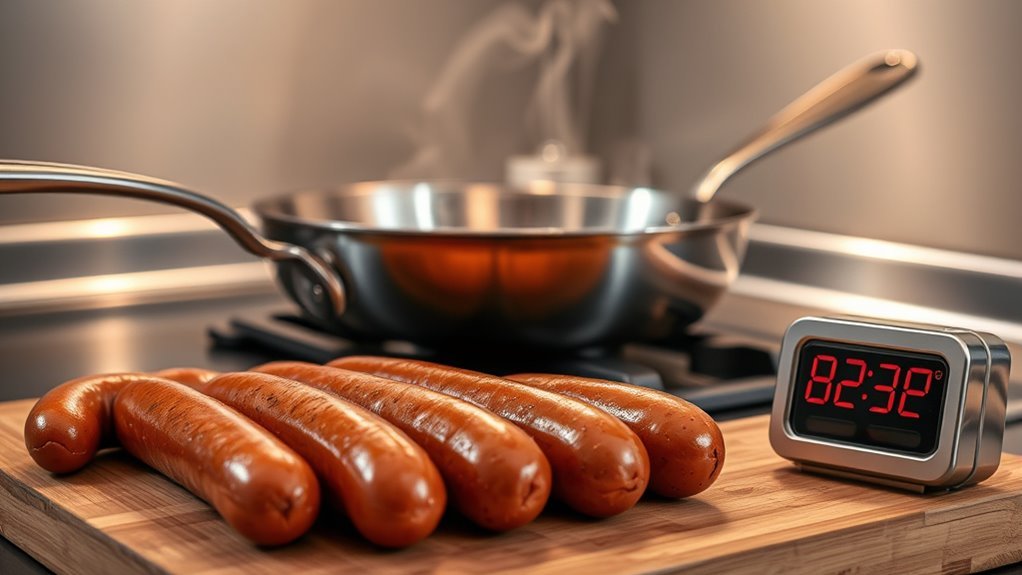
With your equipment and ingredients ready, focus on preheating the skillet to the right temperature for perfect bratwurst cooking.
Start by setting your cast iron skillet over medium-high heat, aiming for about 325-350°F. This temperature ensures ideal searing and browning.
Let the skillet heat fully for 2-3 minutes to achieve even heat retention. You’ll know it’s ready when the surface is hot enough that oil sizzles immediately upon contact.
Although cast iron is preferred for its heat control, stainless steel or nonstick pans work if you adjust heat carefully.
Preheating properly prevents sticking and promotes a beautifully browned bratwurst crust. Avoid adding fat too early; wait until the skillet reaches the right temperature to maintain that perfect sear and enhance flavor.
Adding Fat for Browning and Flavor
Although your skillet is properly preheated, you’ll want to add fat like butter or oil to create a crispy, golden-brown crust on your bratwurst. About 2 tablespoons per 12-inch pan guarantees even browning and prevents sticking.
Melt the fat over medium-high heat to promote caramelization and develop a savory crust from the rendered fat. This step enhances flavor and texture, giving your bratwurst that perfect sear.
| Fat Type | Amount (12-inch skillet) | Purpose |
|---|---|---|
| Butter | 2 tablespoons | Rich flavor, caramelization |
| Oil | 2 tablespoons | High smoke point, even browning |
| Butter+Oil | 1 tbsp each | Balanced flavor & browning |
Adding fat is essential for that ideal crust and delicious browning.
Poking the Bratwurst to Prevent Bursting
After adding fat to your skillet for that perfect sear, you’ll want to prepare your bratwurst to avoid any messy bursts while cooking.
To prevent sausage bursting, gently poke holes in each bratwurst using a fork or skewer.
Making 2-3 small holes allows steam to escape, reducing pressure buildup inside the casing. This step is essential, especially when cooking over high heat or in a pan with liquids, where trapped steam can cause the bratwurst to burst.
Poke 2-3 small holes to release steam and prevent bratwurst from bursting during high-heat cooking.
However, be careful not to poke too many holes, as excessive piercing bratwurst can lead to moisture loss and dry sausages.
Searing the Bratwurst on Each Side
When you place the bratwurst in a hot pan, sear each side for about 3 minutes to develop a rich golden-brown crust. Use medium-high heat, around 325-350°F, to cook the bratwurst evenly without burning the casing.
Avoid overcrowding the pan to maintain consistent heat, which is essential for proper searing.
Flip the bratwurst carefully only once or twice during the process to ensure each side browns evenly. This searing technique enhances flavor and creates a crispy exterior while keeping the interior juicy.
Adding Liquid for Steaming and Moisture
Once you’ve seared the bratwurst to a golden brown, adding liquid to the pan helps finish cooking them through while locking in moisture. Pour half a cup to one cup of water, beer, or stock into the pan, creating steam that gently cooks the sausages without drying them out.
Searing bratwurst first, then simmering with liquid locks in moisture and finishes cooking them perfectly.
Choosing a lighter beer like lager or pilsner adds subtle flavor without overpowering the bratwurst’s seasoning.
As the liquid begins to simmer, covering the pan traps the moisture, keeping the bratwurst tender and juicy.
This simmering process usually takes about 10 minutes, ensuring the internal temperature reaches 160°F.
Covering the Pan to Cook Through Evenly
Although searing gives bratwurst a flavorful crust, covering the pan traps heat and moisture, helping the sausages cook evenly all the way through. When you cover the pan with a lid, you create a steamy environment that speeds up cooking and raises the internal temperature efficiently.
Here’s what you should keep in mind when covering the pan:
- Use a lid to trap moisture and heat during cooking
- Cover for 8-10 minutes after searing for thorough cooking
- The lid prevents bratwurst casings from splitting
- Retains moisture, keeping sausages juicy
- Remove the lid in the last few minutes to let excess moisture evaporate and crisp the exterior
This method ensures your bratwurst cooks evenly without drying out, delivering perfect results every time.
Checking Internal Temperature for Doneness
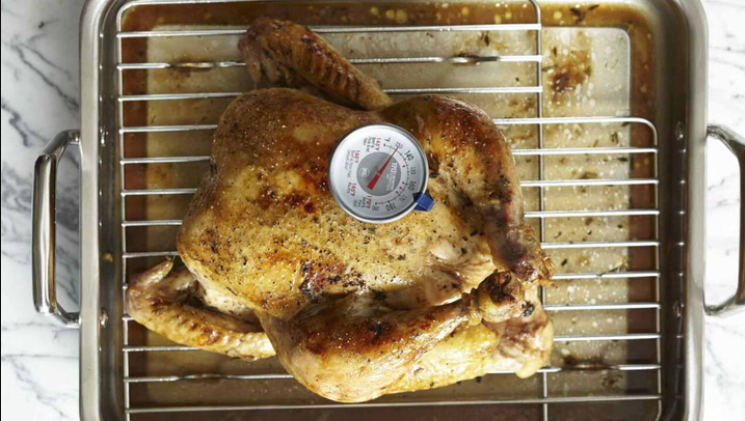
Because bratwurst can look cooked on the outside before it’s done inside, you should always check the internal temperature to guarantee safety and juiciness. Use an instant-read thermometer, inserting it into the center of the sausage after it’s been cooking for several minutes.
This ensures you accurately check temperature and confirm doneness. The recommended internal temperature for fully cooked bratwurst is 160°F (71°C).
Monitoring the internal temperature not only ensures sausage safety but also helps you avoid overcooking, which can cause the sausage to burst or dry out.
Resting and Serving Your Perfect Bratwurst
After cooking your bratwurst to the perfect temperature, let it rest for about five minutes to allow the juices to redistribute and the flavors to deepen. This resting period stabilizes the internal temperature, preventing hot juices from spilling when you cut into it.
To maximize juiciness and tenderness, loosely cover the bratwurst with foil during rest time. Adjust resting from 3 to 10 minutes depending on size.
Loosely cover bratwurst with foil while resting 3 to 10 minutes for maximum juiciness and tenderness.
When ready, serve hot for the best flavor experience. Keep these tips in mind:
- Rest bratwurst for at least five minutes after cooking
- Cover loosely with foil to retain warmth
- Allow internal temperature to stabilize
- Adjust rest time based on sausage size
- Serve hot to enjoy supreme juiciness and tenderness
Following these steps ensures your bratwurst is flavorful and perfectly tender.
Frequently Asked Questions
How Long Does Bratwurst Take to Cook in the Pan?
You’ll cook bratwurst in a pan for about 13-15 minutes. Sear each side 3-4 minutes, then add liquid and cover to steam for 10 minutes until the internal temperature hits 160°F.
How Many Minutes per Side for Brats?
You’ll want to give each brat 3 to 4 minutes per side, letting them brown like autumn leaves sizzling on a skillet.
Flip gently so every side crisps perfectly, reaching that juicy, savory finish you crave.
How to Know When Bratwurst Is Fully Cooked?
You’ll know bratwurst is fully cooked when its internal temperature hits 160°F, the sausage feels firm, juices run clear, and the casing is evenly browned and slightly crispy without any burnt spots.
Is It Better to Pan Fry or Boil Brats?
You’ll get juicier, evenly cooked brats by boiling first, then pan-frying for a crispy finish. Skipping boiling risks uneven cooking and bursting casings, so combining both methods is definitely the better choice.
Conclusion
Now that you’ve mastered the art of pan-cooking bratwurst, you’re basically a kitchen superhero—bratwurst sizzling perfectly golden, juicy enough to make angels sing! With just a few simple steps, you’ve transformed humble sausages into a mouthwatering masterpiece that could win awards.
So grab your skillet, channel your inner chef, and get ready to wow everyone at the table with bratwurst so good, it might just change your life forever! Cooking bratwurst in a pan is easier than you think, and the results are absolutely delicious.
Remember, knowing how long to cook bratwurst in a pan is key to achieving that perfect balance of crispy outside and juicy inside. Follow these essential steps, and your pan-cooked bratwurst will be the highlight of any meal.