
How Long to Bake Salmon in Foil for Perfect Results
You want your salmon tender, flaky, and flavorful; you want it perfectly cooked without drying out. Baking salmon in foil is a popular method that helps lock in moisture and enhance taste. Knowing how long to bake salmon in foil is essential for achieving these perfect results.
Timing is the key—too short, and the salmon will be underdone; too long, and it will become dry. This balance ensures your fish stays juicy and delicious every time. There’s more to it than just setting a timer; understanding the nuances of baking salmon in foil makes all the difference.
Benefits of Baking Salmon in Foil
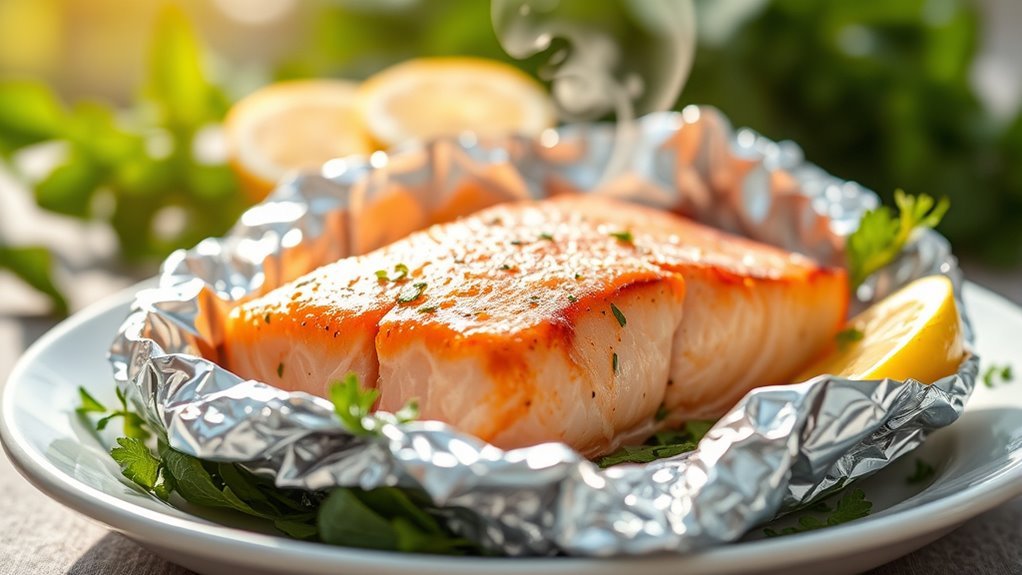
When you bake salmon in foil, you lock in moisture that keeps the fish tender and flaky. The foil acts as a seal, preventing the salmon from drying out and maintaining a consistent, moist texture.
As the salmon cooks, the foil traps steam and heat, infusing the fish with your chosen seasonings, herbs, and lemon slices. This method enhances flavor while shortening baking time, often finishing in less than 25 minutes.
You’ll appreciate how the foil not only improves taste and texture but also simplifies cleanup. Just toss the foil away when you’re done.
Whether you’re aiming for an easy weeknight dinner or an elegant meal, baking salmon in foil delivers moist, flaky results with minimal effort and maximum flavor infusion.
Selecting the Best Salmon for Baking
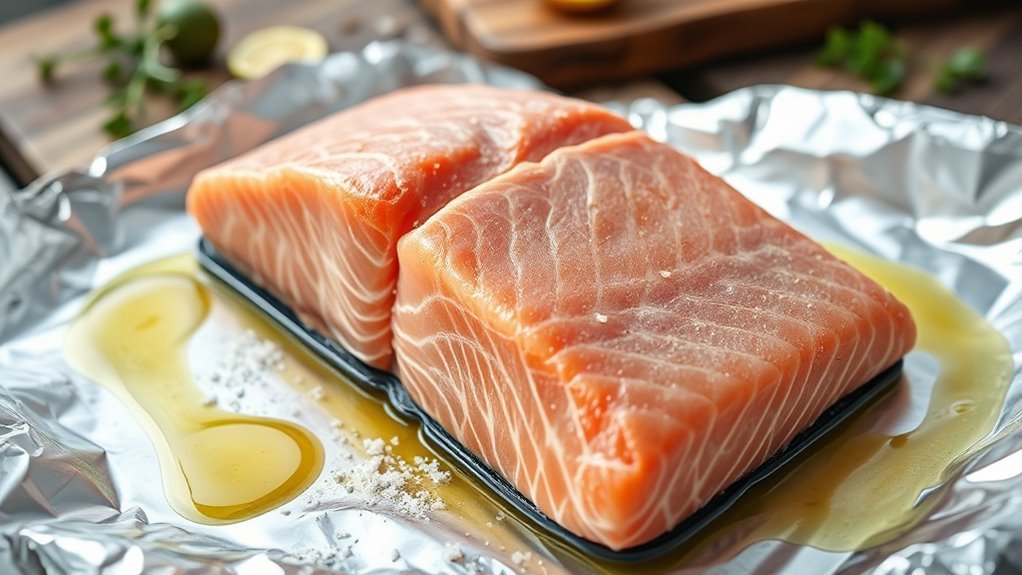
Choosing the right salmon can make all the difference in your baked dish’s flavor and texture. Opt for wild salmon like sockeye, king, or coho for richer taste and better nutrients.
Selecting wild salmon varieties like sockeye, king, or coho elevates flavor and nutritional value in baked dishes.
When picking your salmon fillet, prioritize freshness. Look for firm flesh and a bright, moist appearance.
Selecting fillets with skin on helps retain moisture during baking, enhancing flavor.
If you choose frozen wild-caught salmon, make sure it’s properly thawed in the refrigerator before cooking. This ensures even baking time and consistent texture at your chosen oven temperature.
Your fillet selection impacts the final dish, so focus on freshness and quality to achieve perfect results every time you bake salmon in foil.
Preparing and Seasoning Your Salmon
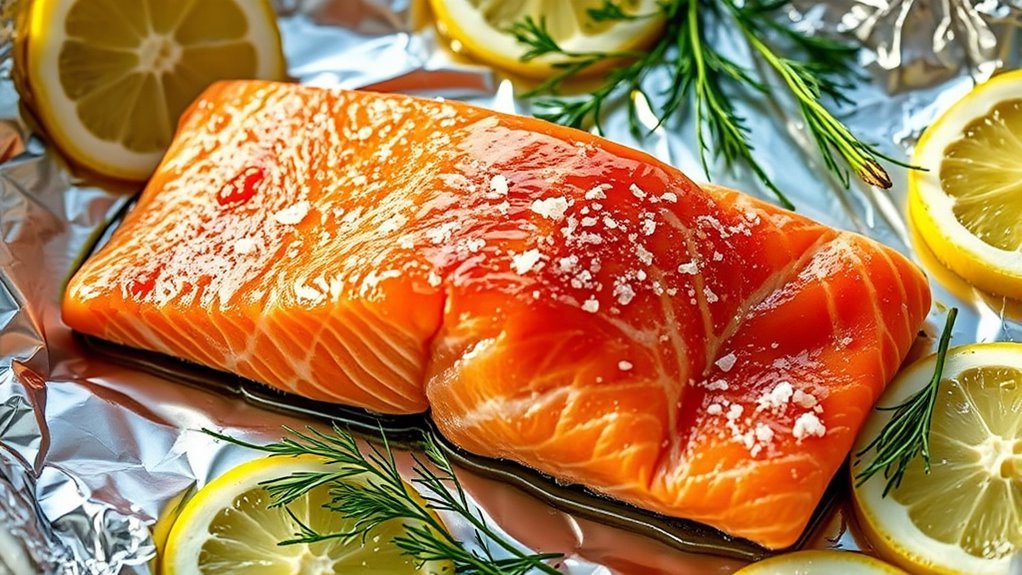
Although selecting the best salmon is essential, properly preparing and seasoning your fillet guarantees every bite bursts with flavor. Start your salmon preparation by marinating the fillet in lemon juice, garlic, and herbs for 15-30 minutes to ensure deep flavor infusion.
Next, place the salmon on a foil packet, drizzle olive oil over it, and season salmon with salt, pepper, and fresh herbs like dill or parsley. Add lemon slices on top or inside the foil packet for a bright, fresh taste that complements the baking temperature’s effect.
| Preparation Step | Purpose |
|---|---|
| Marinate fillet | Enhance flavor infusion |
| Drizzle olive oil | Retain moisture, add richness |
| Add lemon slices & herbs | Brighten taste, aromatic |
This method guarantees your salmon is juicy and flavorful after baking.
Optimal Oven Temperatures for Baking Salmon
Since oven temperature directly affects cooking time and texture, selecting the right heat level is essential for perfectly baked salmon. For oven baked salmon in a foil packet, 375°F is a reliable cooking temperature that yields tender, moist results.
At this temperature, a salmon fillet about 1 inch thick typically requires 15-20 minutes to reach ideal doneness, cooking evenly through the thickest part. Baking at lower temperatures risks uneven doneness and extended baking time, especially for thicker cuts.
If you prefer a shorter baking time or a slightly crispy exterior, you can increase the oven temperature, but watch carefully to avoid overcooking.
Following these temperature guidelines helps you balance baking time and doneness for delicious, perfectly cooked salmon every time.
Ideal Baking Times Based on Salmon Size and Type
When you bake salmon, the size and type play a big role in determining the ideal cooking time.
For a typical 6-ounce fillet wrapped in foil, set your oven to 400°F and bake for 12-15 minutes to reach perfect doneness.
If you’re cooking a 2-pound whole side, lower the temperature to 375°F and extend the cook time to 20-25 minutes.
Thicker cuts over 1 inch need an extra 4-5 minutes per half inch of thickness.
Wild salmon, which is leaner than farmed, cooks faster—about 15 minutes per inch at 400°F.
Regardless of size, use a meat thermometer to check the internal temperature, aiming for 145°F.
This guarantees your salmon is perfectly cooked, moist, and tender every time you bake it in foil.
How to Determine When Your Salmon Is Perfectly Cooked
Knowing the right baking time based on your salmon’s size and type sets you up for success, but recognizing when it’s perfectly cooked is just as important. Use a food thermometer to check the internal temperature; aim for about 137-140°F before pulling it from the oven since residual heat will bring it up to the FDA-recommended 145°F for fully cooked salmon.
Visual cues also help—look for an opaque color and check if the salmon flakes easily with a fork. The flesh should be firm but moist, showing proper doneness without translucency. Focus on the thickest part of the fillet during cooking time to ensure it’s properly cooked. Combining temperature checks with visual cues guarantees your salmon’s perfect doneness every time.
Serving Suggestions and Complementary Side Dishes
Although baked salmon shines on its own, pairing it with the right sides can elevate your meal to new heights. For a balanced meal, consider roasted vegetables like Brussels sprouts or asparagus as a side dish; they add texture and complementary flavors.
Lemon rice or creamy mashed potatoes provide a hearty base that enhances the salmon’s richness. A crisp green salad offers a light, invigorating contrast, balancing flavors perfectly.
Don’t forget to garnish with fresh herbs such as parsley, dill, or chives to add color and brightness. A squeeze of fresh lemon or a drizzle of olive oil can also serve as a simple yet effective garnish. These serving suggestions help you create a well-rounded, flavorful dining experience every time.
Storing and Reheating Leftover Baked Salmon
Pairing your baked salmon with tasty sides makes for a great meal, but you might have leftovers to enjoy later.
Store leftover salmon in an airtight container in the refrigerator, consuming it within 1-2 days for best freshness.
If you froze your salmon leftovers, thawing salmon overnight in the fridge guarantees even reheating.
When reheating salmon, use the skillet method by warming it over medium heat with a splash of water, covered, for 2-4 minutes to maintain moisture retention.
You can also opt for microwave reheating on medium-low, heating in short intervals to prevent drying out.
Proper refrigerator storage and careful reheating salmon techniques help preserve flavor and texture, making your leftover salmon a convenient and delicious option for future meals.
Frequently Asked Questions
How Long Does Salmon Take in the Oven in Foil?
You’ll bake salmon in foil for about 15-20 minutes at 375°F, depending on thickness.
Check it’s flaky and opaque or use a meat thermometer to verify it hits 145°F for perfect doneness.
Is It Better to Bake Salmon at 350 or 400 in Foil?
Think of baking salmon like a gentle hug. 350°F keeps it tender and moist, while 400°F crisps the edges faster.
Choose 350°F if you want a delicate texture; go 400°F for a quick, slightly crisp finish.
Should I Wrap My Salmon in Foil When Baking?
Yes, you should wrap your salmon in foil when baking to lock in moisture, enhance flavors, and simplify cleanup.
Just remember, foil softens the skin, so skip it if you want crispy salmon skin instead.
How Long Does It Take for Salmon to Cook at 400 Degrees?
Tick-tock, your salmon cooks in about 12-15 minutes at 400°F. Thicker fillets lean toward 15, thinner ones around 12.
Don’t forget to check for flaky, opaque perfection or use a thermometer for safety!
Conclusion
Baking salmon in foil makes cooking easy and mess-free, giving you tender, flavorful results every time. Remember, “good things come to those who wait”—taking the right time and temperature guarantees perfectly cooked fish that flakes easily and stays moist.
Use a thermometer to hit that ideal 137-140°F internal temp, then enjoy your delicious, healthy meal with your favorite sides.
With these tips, you’ll bake salmon like a pro every time! Mastering how long to bake salmon in foil is key to achieving perfect results every time you cook.