How Long to Bake Salmon at 375°F (Simple Oven Guide)
When baking salmon at 375°F, you might wonder how long to bake salmon at 375°F to get it perfectly cooked—moist yet flaky. The answer isn’t one-size-fits-all; it depends on factors like thickness and whether you’re using foil or seasoning it a certain way.
Getting the timing right can make all the difference, so understanding these details will help you avoid overcooking or undercooking your fish. Knowing the ideal bake time ensures your salmon turns out delicious every time.
Optimal Oven Temperature for Baking Salmon

Although you can bake salmon at various temperatures, setting your oven to 375°F provides the best balance between cooking speed and moisture retention.
Baking salmon at 375°F ensures optimal cooking speed while keeping the fish moist and tender.
When oven baking salmon at 375°F, expect a cooking time of about 10-15 minutes, depending on your salmon fillet’s thickness.
This baking temperature guarantees even cooking without drying out the fish, preserving its natural moisture retention.
To achieve perfect doneness, use a digital thermometer to check the internal temperature, aiming for the USDA-recommended 145°F.
Adjust your oven settings accordingly, but 375°F is ideal for consistent results.
Determining Baking Time by Salmon Thickness

Now that you know 375°F is the ideal temperature for baking salmon, the next step is to adjust your cooking time based on the thickness of the fillet.
For salmon fillets up to 1 inch thick, bake salmon for about 10-12 minutes.
If your fillet size increases by every half-inch, add 4-5 minutes to the baking time.
Thinner pieces, less than ½ inch thick, may only need 5-7 minutes.
To guarantee perfect doneness, use a digital thermometer to check the internal temperature; it should read 145°F for safely cooked seafood.
Keep in mind, thicker cuts or whole salmon can take 15-20 minutes at this oven temperature.
Adjusting baking time by salmon thickness guarantees a moist, perfectly cooked meal every time.
Preparing Salmon for Baking at 375°F

Before you bake salmon at 375°F, take it out of the refrigerator and let it rest at room temperature for 30 to 60 minutes to promote even cooking. This step is essential in proper salmon preparation, ensuring your oven baked salmon cooks uniformly.
Let salmon rest at room temperature 30-60 minutes before baking for even, uniform cooking.
Meanwhile, preheat the oven to the baking temperature of 375°F.
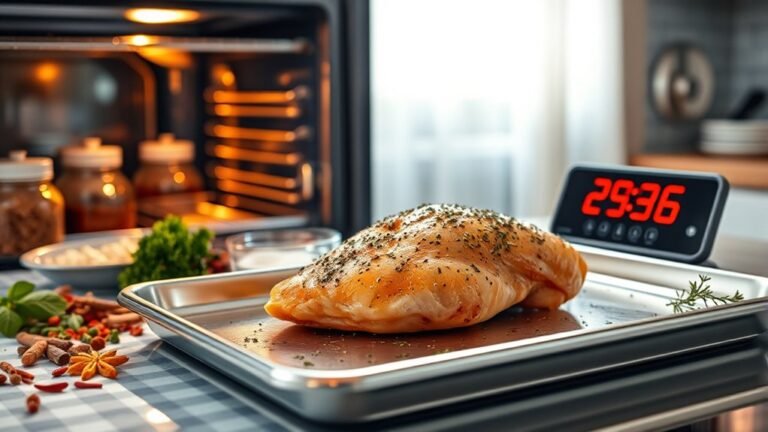
Line a baking sheet with foil lining to simplify cleanup and help retain moisture.
Next, season your salmon fillet with salt, pepper, and any herbs or spices you prefer.
Place the salmon skin-side down on the prepared baking sheet, spacing fillets evenly for consistent heat exposure.
Following these steps will set you up for perfectly cooked salmon with balanced texture and flavor every time you bake.
Wrapping Techniques to Retain Moisture
After seasoning and placing your salmon on the baking sheet, consider wrapping it in foil to lock in moisture during cooking. Foil wrapping creates a sealed environment that traps steam, enhancing moisture retention and ensuring a tender, flaky texture.
For best results, fold tightly around the fish to prevent steam from escaping. Using double-layered foil or placing parchment paper underneath helps avoid leaks and improves steam trapping.
Bake in a preheated oven at 375°F to maintain consistent heat, allowing the salmon to cook evenly without drying out.
Toward the end of baking, leave the foil partially open to let excess moisture escape, which prevents sogginess while keeping the fish juicy. These wrapping techniques make your baked salmon perfectly moist and flavorful every time.
Seasoning Ideas for Baked Salmon
Although baked salmon tastes great on its own, seasoning it thoughtfully can elevate its flavor markedly. You can use a variety of herbs, spices, and other ingredients to create a delicious profile that suits your palate.
Try combining lemon juice and olive oil with fresh herbs for a bright, aromatic touch. Garlic powder and a well-balanced seasoning blend add depth without overpowering the fish. Marinating the salmon beforehand also enhances its natural richness.
- Classic mix: salt, pepper, lemon juice, and dill (fresh or dried herbs)
- Spicy kick: paprika, garlic powder, onion powder, and cayenne
- Sweet-savory marinade: soy sauce, honey, ginger
- Mediterranean flair: chopped olives, sun-dried tomatoes, oregano
- Simple drizzle: olive oil with thyme or rosemary fresh herbs
How to Check Salmon for Doneness
When you want to make certain your salmon is perfectly cooked, checking for doneness is key. Start by using a meat thermometer to measure the internal temperature; salmon doneness is achieved at 145°F (63°C).
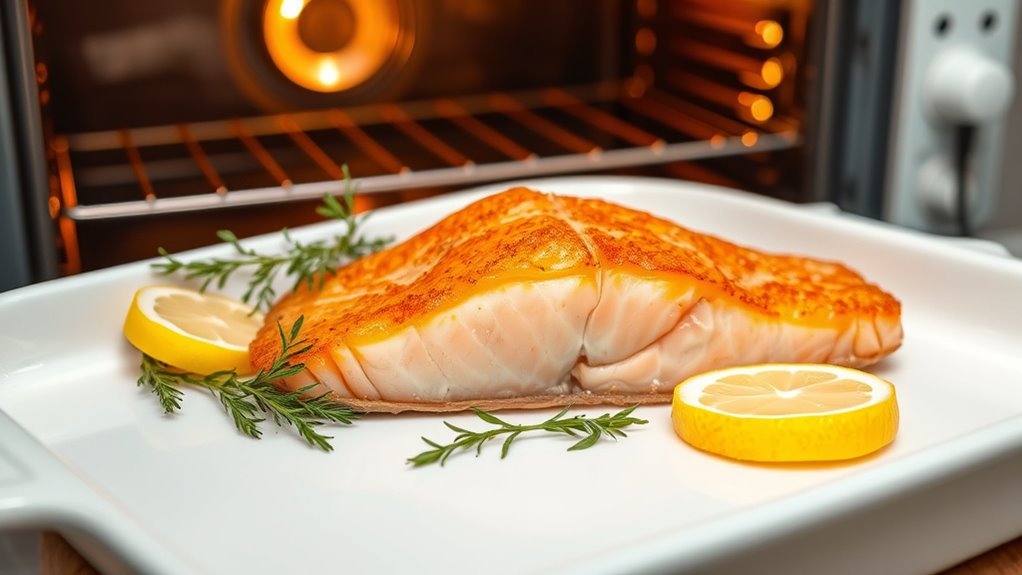
Next, observe visual cues: the fillet should have an opaque color with no translucent areas remaining. Gently press the top—it should feel firm yet moist.
Another sign is that the edges pull away slightly from the bone or pan. Finally, test if the flesh flakes easily with a fork, confirming it’s cooked through. These combined methods help you avoid guesswork and guarantee your salmon is juicy and safe to eat every time.
Tips to Prevent Overcooking and Dryness
To keep your salmon moist and tender, you’ll want to bake it at 375°F for just 10-15 minutes, depending on thickness. Perfect salmon doneness means removing it slightly before it hits an internal temperature of 145°F. Use a meat thermometer to monitor the cooking time precisely and avoid overcooking.
Here are key tips for overcooking prevention and moisture retention:
- Wrap salmon in foil to lock in moisture during baking.
- Check internal temperature early to ensure juicy salmon.
- Avoid baking too long by setting a timer.
- Rest the salmon after baking for juices to redistribute.
- Use a reliable meat thermometer to confirm doneness at the right oven temperature.
These baking techniques guarantee flavorful, tender salmon every time.
Best Salmon Varieties for Baking
Since the type of salmon you choose affects both flavor and texture, picking the right variety is key to a great baked dish. Atlantic salmon is popular for baking due to its consistent texture and mild flavor profile, making it a reliable choice at 375°F oven temperature.
If you prefer bolder flavors, try wild salmon like sockeye or coho; they’re leaner with a richer taste that shines through even with standard baking time. King salmon, with its high fat content, offers a moist, buttery texture perfect for baking.
Pink salmon is milder and smaller, suitable for shorter baking time but often found canned. Each salmon variety responds well to baking, so select based on your flavor preference and availability for the best results.
Serving Suggestions for Baked Salmon
Although baked salmon stands out on its own, you’ll want to pair it with sides that complement its rich flavor without overwhelming it. Light sides and grain-based options work best to balance the meal.
Don’t forget to garnish with fresh herbs and add a squeeze of lemon wedges for brightness. Garlic also pairs nicely without stealing the spotlight.
Consider these side dishes to round out your plate:
- Steamed vegetables tossed with garlic and herbs
- Fluffy rice or quinoa for a nutritious grain-based option
- A crisp, fresh salad to add texture and freshness
- Roasted potatoes seasoned simply to add heartiness
- A drizzle of lemon juice or serving lemon wedges on the side
These choices highlight the salmon’s flavor while creating a well-rounded, satisfying meal.

Storing and Reheating Leftover Salmon
When you have leftover baked salmon, storing it properly is key to maintaining its flavor and texture. Place your leftover salmon in an airtight container and refrigerate it for up to two days to guarantee the best quality.
If you’ve frozen it, thaw the salmon overnight in the refrigerator before reheating. To reheat, oven reheating at 275°F for 10-15 minutes helps preserve moisture retention and prevents drying out.
Alternatively, you can microwave the salmon on medium power in 30-second intervals, covering it loosely with a damp paper towel to keep it juicy. Always reheat until the internal temperature reaches 125°F to 130°F to avoid overcooking.
Choosing the right storage method and reheating technique will keep your salmon tasting fresh and delicious.
Frequently Asked Questions
How Long Should You Bake Salmon at 375 Degrees?
You should bake salmon at 375 degrees for about 10 to 12 minutes per inch of thickness. Check around 10 minutes and use a thermometer to guarantee it reaches 145°F for perfect, flaky results.
How Long Does It Take Fish to Cook at 375 Degrees?
It takes about 10 to 15 minutes to cook fish at 375 degrees, depending on thickness. You’ll want to check for doneness around 10 minutes to avoid overcooking and keep it moist and tender.
What Is the Best Time and Temperature to Cook Salmon in the Oven?
You’ll nail the perfect salmon by baking it at 375°F for 10-15 minutes. It’s like revealing the universe’s secret to juicy fish.
Just watch thickness and use a thermometer to hit 145°F inside.
Is It Better to Bake Salmon at 350 or 400 in the Oven?
You’ll want to bake salmon at 350°F for gentle, even cooking and tender texture, but choose 400°F if you prefer a crispy, caramelized crust. Just watch it closely to avoid overcooking.
Conclusion
Baking salmon at 375°F is like painting a delicate masterpiece—you just need the right timing and touch. By adjusting the cooking time based on thickness and aiming for that perfect 145°F internal temperature, you’ll create moist, flavorful fillets every time.
Remember to season well and avoid overcooking to keep your salmon tender and delicious. With these simple tips, you’ll turn your oven into a stage where salmon shines as the star of your meal.
In conclusion, how long to bake salmon at 375°F depends on the thickness of the fillet, but following these guidelines ensures perfectly cooked, juicy salmon every time. Proper seasoning and monitoring internal temperature are key to baking salmon at 375°F successfully.