
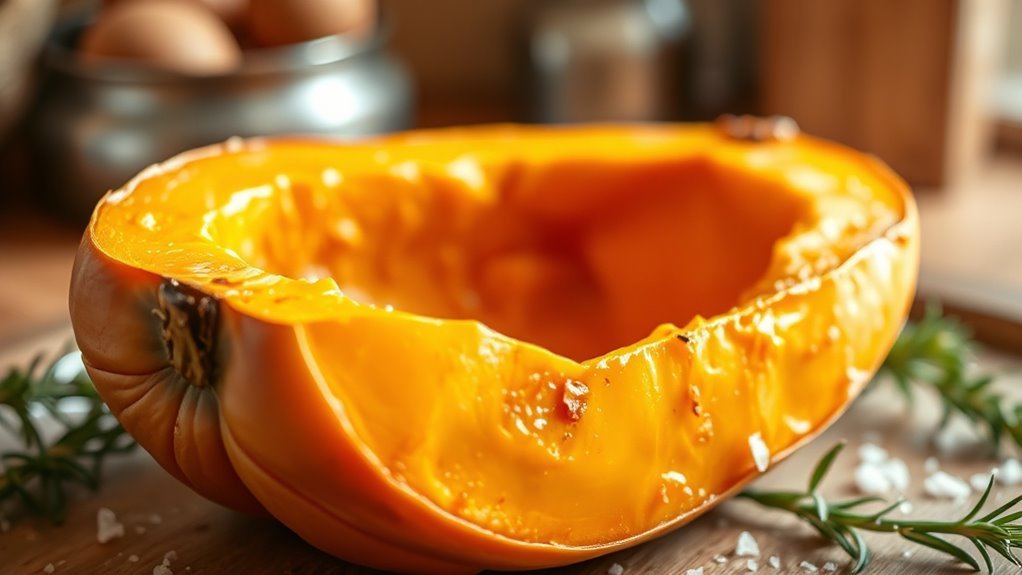
How Long to Bake Butternut Squash – Simple Guide for Sweet and Tender Results
Baking butternut squash is a bit like timing a perfect cup of tea—too short, and it’s underdone; too long, and it turns mushy. If you’ve ever pulled a squash from the oven only to find it still tough, you know the frustration. Getting the timing just right isn’t always straightforward, especially since size and cut matter.
Let’s explore how to bake your butternut squash simply and perfectly every time. Understanding the right baking time ensures your squash is tender and flavorful without becoming overly soft. By following easy steps, you can enjoy deliciously roasted butternut squash with minimal effort.
Selecting the Right Butternut Squash

How do you pick the perfect butternut squash for baking? When selecting one, focus on quality by choosing a squash that’s firm and heavy for its size. Check the skin—it should be smooth, tan-colored, and hard without any cracks or wrinkles.
Avoid shiny surfaces, as a matte finish usually signals better ripeness. The shape matters too; look for a plump, evenly shaped neck, which indicates good ripeness and flavor.
Size plays a role: smaller butternut squash tends to cook faster and more evenly, making it ideal for baking.
Preparing Butternut Squash for Baking
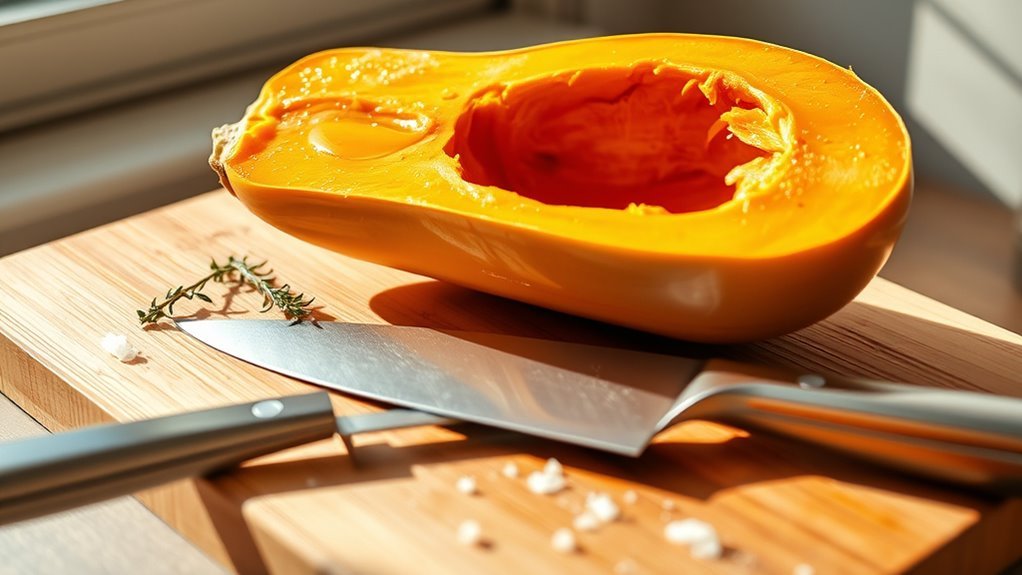
Before baking, you’ll need to prepare your butternut squash properly to guarantee even cooking and the best texture. Start by trimming the stem end and slicing the squash in half lengthwise.
Scoop out the seeds and stringy bits from the hollowed-out halves. You can peel the skin with a vegetable peeler or leave it on, as it’s edible. If the squash is too hard to slice, soften it by microwaving briefly.
Cut the squash into uniform cubes or slices to help it bake evenly.
| Step | Action | Tip |
|---|---|---|
| Trim | Cut off stem end | Use a sharp knife |
| Halve | Slice lengthwise | Creates hollowed-out halves |
| Scoop | Remove seeds and strings | Save seeds for roasting |
| Peel (optional) | Remove skin with peeler | Skin is edible, can be left on |
| Slice | Cut into uniform cubes | Ensures even baking |
Baking Temperature and Oven Settings
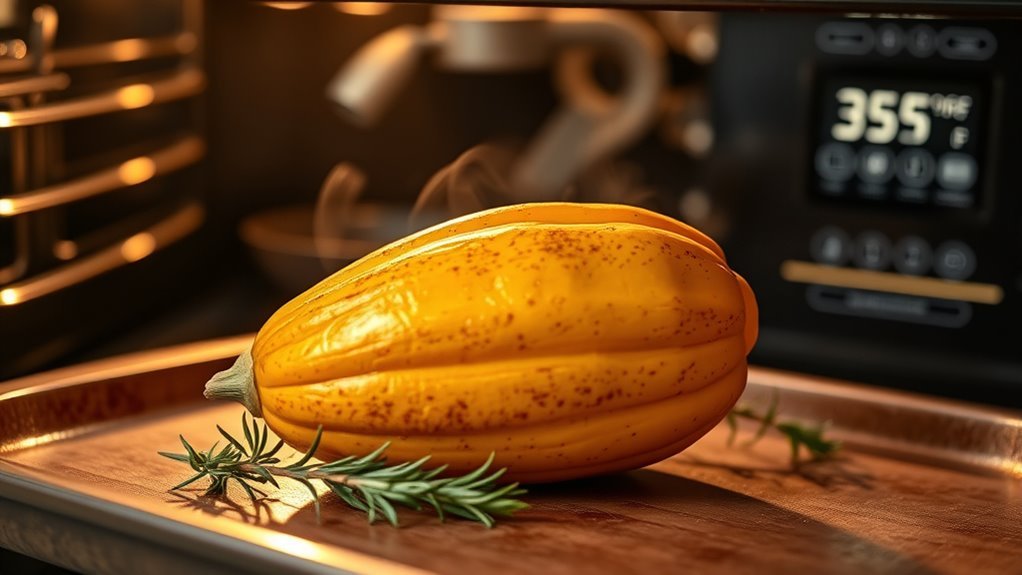
While baking butternut squash, choosing the right temperature and oven settings plays a crucial role in achieving the perfect texture and flavor. The ideal baking temperature usually sits around 400°F (204°C), delivering tender squash with excellent caramelization in about 30-35 minutes for cubes.
If you’re roasting halves, expect a longer bake time, closer to 45-60 minutes. You can adjust the temperature slightly higher to 425°F (218°C) for quicker roasting, but watch closely to avoid burning.
Lower temperatures like 375°F (190°C) offer gentle roasting, extending bake time but enhancing moisture retention.
Using a convection oven at the same temperature speeds things up by 5-10 minutes thanks to better air circulation. These oven settings help you create perfectly roasted butternut squash every time.
Baking Time for Whole and Halved Squash
Adjusting baking times based on the size and cut of your butternut squash will help you get the best results. When baking a whole squash, plan for about 1.5 to 2 hours at 375°F oven temperature to achieve tender flesh.
For halved squash, the baking time shortens to roughly 45 to 60 minutes at 400°F, allowing the edges to caramelize beautifully. Smaller or thinner halves may cook faster, so check after 30 to 40 minutes.
Use the fork test to determine doneness. Insert a fork into the flesh; it should slide in easily without resistance.
Avoid overbaking, as it can turn the squash mushy. Keeping these baking times in mind guarantees your butternut squash turns out perfectly tender and flavorful every time.
Baking Time for Cubed Butternut Squash
If you want tender, caramelized butternut squash cubes, plan to bake them at 400°F for about 20 to 30 minutes.
Start by tossing your cubed squash with olive oil and seasonings, then spread the squash cubes evenly on a parchment-lined baking sheet.
This spacing guarantees each piece will roast properly and become evenly cooked.
The oven temperature of 400°F is ideal for achieving that perfect caramelization without overcooking. Keep an eye on the baking time, as shorter times yield firmer cubes, while longer roasting enhances caramelization and flavor.
Checking Doneness and Texture
Because butternut squash varies in size and cut, you need to check its doneness by testing the texture. To do this, insert a fork or skewer into the thickest part of the squash. It should slide in easily without resistance, indicating the squash is fork-tender and ready.
Look for softness and slightly caramelized edges, which signal perfect doneness. If you can easily mash or scoop the flesh, it’s done. Be careful not to overbake, as this will cause the squash to become overly mushy and lose its ideal texture.
Start checking a few minutes before the minimum baking time to avoid this. Properly gauging doneness ensures your butternut squash has the right balance of softness and flavor.
Seasoning and Flavor Enhancements
Once your butternut squash reaches the perfect tenderness, it’s time to bring out its full flavor potential. Proper seasoning and flavor enhancements make all the difference.
When butternut squash is perfectly tender, thoughtful seasoning unlocks its full, delicious flavor potential.
Drizzle olive oil over the squash to help the spices and herbs adhere and deepen the taste.
A sprinkle of salt and freshly ground black pepper is essential to highlight the natural sweetness.
For a warm, aromatic touch, add cinnamon or other spices like nutmeg.
Fresh or dried herbs like rosemary, thyme, or sage complement the earthy flavor beautifully.
Imagine the cozy aroma of cinnamon mingling with roasted squash.
Feel the warmth from a pinch of smoky paprika or cayenne.
Savor the richness olive oil adds, coating every tender bite.
Use seasoning thoughtfully to elevate your dish instantly.
Serving Suggestions and Uses
How can you enjoy roasted butternut squash beyond a simple side dish? Roasted butternut squash, seasoned with salt and herbs, works great as a side dish, but you can also slice the squash into wedges to pair with roast chicken or pork chops.
If you mash the flesh with butter and seasonings, the cooked flesh makes a creamy, flavorful base for soups or dips.
Another excellent way is to add roasted squash cubes to a grain bowl, boosting texture and sweetness.
For more variety, incorporate it into fall pasta dishes, enchiladas, or tacos. These serving suggestions show just how versatile roasted butternut squash can be, letting you enjoy its natural sweetness and rich texture in many creative ways.

Frequently Asked Questions
How Long Should Butternut Squash Be in the Oven?
You should bake butternut squash for 30 to 40 minutes at 400°F if cubed or halved, or about 90 minutes at 350°F if whole.
Check tenderness by piercing with a fork to know it’s done.
How Long to Bake Squash in the Oven at 350 Degrees?
You’ll bake your butternut squash at 350°F for about 75 to 90 minutes, depending on size. You’ll know it’s done when a fork slides in easily, making the flesh tender and ready to enjoy.
How Many Minutes Do You Cook Squash For?
You’ll cook cubed squash for 20-30 minutes at 400°F, checking tenderness after 20 minutes.
Whole or halved squash takes 60-90 minutes at 375°F. Keep an eye to avoid mushy texture.
How Long Does It Take for Butternut Squash to Be Ready?
It takes about 30 to 40 minutes at 400°F for halved butternut squash to be ready.
If you cube it, check after 20 minutes. Adjust time based on size and tenderness you want.
Conclusion
Baking butternut squash might seem slow and simple, but that’s where its magic lies—you start with a tough, earthy gourd and end with tender, sweet goodness. Whether you roast it whole, halved, or cubed, patience pays off in every forkful.
Don’t rush the process; instead, embrace the quiet transformation happening in your oven. With just a bit of time and care, you’ll turn humble squash into a flavorful, comforting dish worth savoring.
To get the best results, understanding how long to bake butternut squash simply is key. This knowledge ensures you achieve that perfect balance of softness and sweetness every time.


