How Long to Bake Beef Ribs – Step-by-Step Guide
When you’re ready to bake beef ribs, understanding the timing is key to tender, flavorful results. Properly baking beef ribs involves prepping, seasoning, and knowing how long to bake beef ribs at each stage. You’ll start by prepping and seasoning properly, then adjust your oven temperature through different phases to ensure the meat cooks evenly.
The process isn’t quick, but the steps are straightforward—knowing exactly how long to bake at each stage makes all the difference. Let’s break down the timing so you can get it just right.
Selecting the Best Beef Ribs for Baking
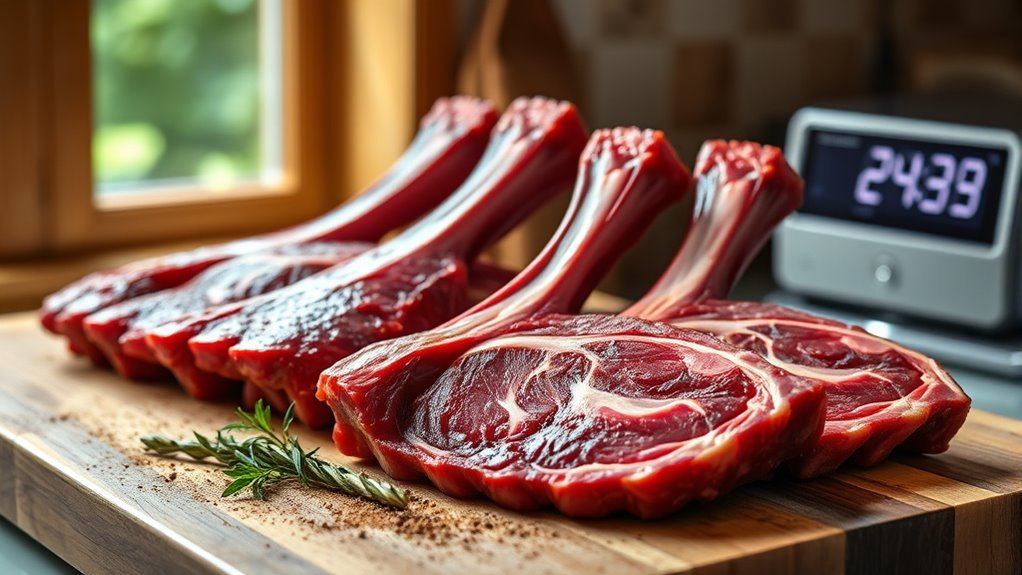
When selecting beef ribs for baking, you’ll want to focus on cuts that offer both flavor and tenderness, like beef back ribs or short ribs.
Pay close attention to the marbling, as this fat distribution enhances juiciness and taste.
Marbling is key, as the fat distribution boosts both juiciness and flavor in your beef ribs.
Your selection should feature ribs that are evenly cut with consistent thickness, ensuring they cook uniformly.
Fresh beef ribs have a bright, meaty appearance without any unpleasant odors or discoloration.
Avoid ribs that look dry or have excessive connective tissue, as those indicate lower quality.
Choosing ribs with a clean, attractive appearance and good marbling guarantees a better baking experience and a more delicious result.
Preparing and Seasoning Your Ribs
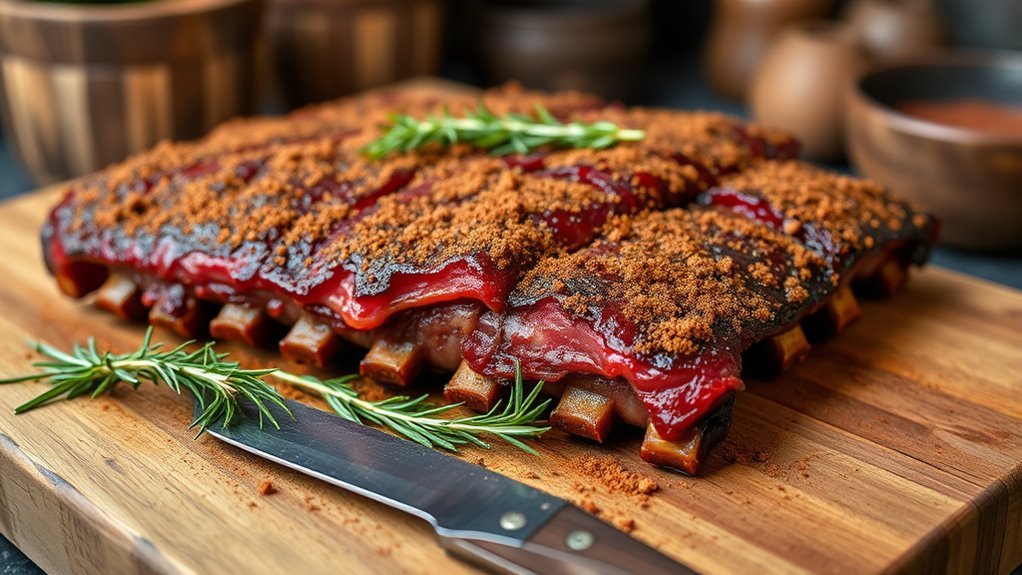
After choosing quality beef ribs, the next step is preparing and seasoning them to bring out their full flavor. Start by rinsing the beef ribs thoroughly and drying them with paper towels. Apply a generous dry rub or spice mixture, such as garlic powder, paprika, and brown sugar, massaging it in for even flavor infusion. For an extra smoky touch, rub liquid smoke before the dry rub.
Let your ribs marinate in the refrigerator for 1-2 hours to deepen taste and tenderize.
| Step | Action | Purpose |
|---|---|---|
| Rinse & Dry | Clean ribs & pat dry | Prep for seasoning |
| Apply Dry Rub | Coat ribs with spice mixture | Flavor infusion |
| Massage Rub | Work rub into meat | Even seasoning |
| Refrigerate | Marinate 1-2 hours | Tenderize & enhance |
Marinating Techniques for Enhanced Flavor
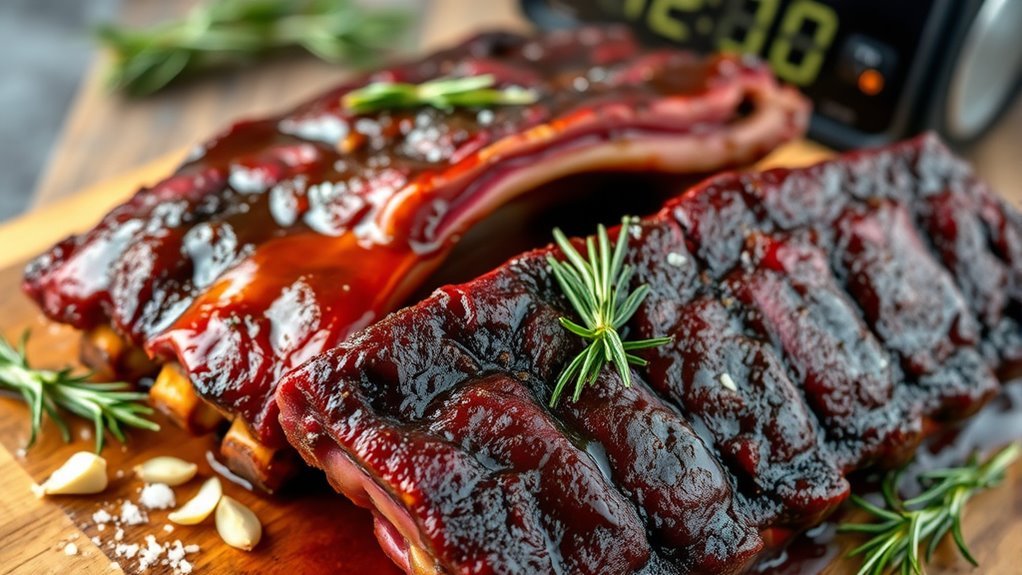
Although marinating beef ribs for just 1-2 hours can enhance their flavor and tenderness, you’ll get the best results by planning ahead and letting them soak overnight. The longer marinating time allows the seasonings to fully infuse, giving you a deeper flavor infusion.
Use acidic ingredients like vinegar or citrus juice in your marinade to help tenderize the meat by breaking down muscle fibers.
Before you marinate, massage a spice rub into the ribs, then coat them lightly with olive oil to help the rub stick evenly.
Adding liquid smoke to your marinade can also boost smoky notes without needing a grill.
Preheating Your Oven Correctly
Since even heat is essential for tender beef ribs, you’ll want to preheat your oven to between 250°F and 275°F before cooking. Proper preheating guarantees consistent heat and temperature stabilization, which are key for even cooking and ideal cooking time.
To do it right, keep these tips in mind:
- Set your oven to the desired oven temperature (250°F–275°F) before placing ribs inside.
- Use an oven thermometer to verify actual temperature accuracy.
- Allow the oven to fully reach and maintain the set temperature for 15–20 minutes.
- Avoid opening the oven door during preheating to maintain consistent heat.
- Ensure the oven temperature stabilizes before starting to cook for tender beef ribs.
Following these steps guarantees your ribs cook evenly and come out tender every time.
Initial High-Temperature Baking Phase
Once your oven reaches the right temperature, you’ll set it higher to 350°F (175°C) to kick off the cooking process. Begin by preheating your oven to guarantee the ideal oven temperature for initial baking.
Place the ribs meat side down on a lined baking sheet, leaving space between each piece. Bake uncovered for about 10 minutes at this high temperature to start rendering fat and allow seasoning absorption.
Afterward, flip the ribs to meat side down and bake for another 10 minutes to promote crust formation. This initial high-temperature baking phase jumpstarts meat tenderizing and enhances flavor, setting the stage for the next cooking step.
Following these precise steps ensures your beef ribs develop rich flavor and texture from the very beginning.
Slow Cooking at Low Temperature
When you lower the oven temperature to around 250°F, you let the beef ribs cook slowly, which helps break down the connective tissue and makes the meat tender and juicy. Slow cooking at this low temperature during oven baking ensures tender ribs that are fall-off-the-bone perfect.
To maximize moisture retention and tenderness, consider these tips:
- Wrap the ribs tightly in foil wrapping to trap moisture.
- Maintain a consistent low temperature to avoid drying out the meat.
- Cook for about 3.5 to 4 hours for ideal tenderness.
- Use a meat thermometer to check for an internal temperature of 190-200°F.
- Avoid opening the oven frequently to preserve heat and moisture. This method guarantees juicy, flavorful ribs every time.
Applying BBQ Sauce and Final Baking
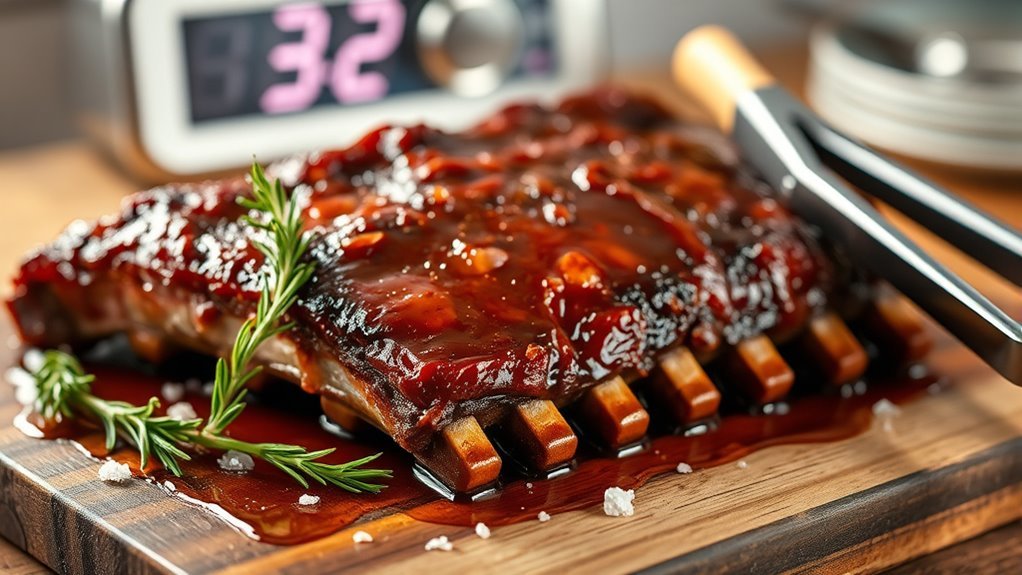
After the ribs have baked to tender perfection, you’ll want to brush them generously with your favorite BBQ sauce to add a rich, sticky glaze that enhances both flavor and appearance.
Return the ribs to the oven and broil uncovered on low heat for 3-5 minutes, watching closely as the BBQ sauce caramelizes and becomes slightly crispy.
Broil the ribs on low heat until the BBQ sauce caramelizes and crisps perfectly.
The broiling process intensifies the glaze, giving the ribs a delicious caramelized finish without burning the sugars.
For an even richer taste, apply a second layer of BBQ sauce and broil for another 1-2 minutes.
Once done, let the ribs rest for a few minutes. This resting period lets the glaze set and the juices redistribute, ensuring every bite is flavorful and juicy.
Broiling for a Perfect Caramelized Finish
Although the ribs are already tender, broiling them with a generous layer of BBQ sauce will give you that perfect caramelized finish you’re aiming for. Broiling caramelizes the sugars in the sauce, creating a sticky, flavorful crust.
To nail this finish, keep these tips in mind:
- Brush a thick coat of BBQ sauce before broiling.
- Position the oven rack 4-6 inches from the broiler element for even caramelization.
- Broil on low heat for 2-5 minutes per side, watching closely to avoid burning.
- Remember, sugar in sauce chars quickly, so don’t walk away.
- After broil time, let the ribs rest briefly to let the sauce set and finish flavor development.
This method ensures a beautifully caramelized, mouthwatering finish every time.
Resting and Serving Your Beef Ribs
To lock in juices and enhance tenderness, let your beef ribs rest for at least 10 minutes after baking, loosely covered with foil to retain heat and moisture.
This resting period allows the juices to redistribute evenly throughout the meat, preventing them from running out when you slice.
During this time, the internal temperature may rise slightly, ensuring your ribs are fully cooked and tender.
Resting also improves flavor absorption and keeps the meat from falling apart.
Once rested, serve your ribs immediately to enjoy maximum juiciness and the best flavor.
Frequently Asked Questions
How Long Should I Cook My Beef Ribs in the Oven?
You should cook your beef ribs at 250°F for about 3.5 to 4 hours. Check tenderness and internal temp around 190-200°F.
Cover ribs with foil to keep them moist and evenly cooked.
How Long Does It Take to Cook Beef Ribs at 350 Degrees?
You might think beef ribs take forever, but at 350°F, you’ll cook them in about 1.5 to 2 hours. Just cover with foil, and use a thermometer to hit 190-200°F for tender, juicy ribs.
How Long Does It Take to Cook Ribs at 350 in the Oven?
You’ll cook ribs at 350°F for about 45 minutes to 1 hour. Check tenderness and internal temperature; thicker ribs need closer to an hour.
Add sauce in the last 15 minutes for extra flavor and moisture.
What Temperature Should I Cook My Beef Ribs At?
You should cook your beef ribs at 250°F to 275°F for tender, slow-cooked results. This range guarantees juicy ribs without drying out, giving you that perfect, fall-off-the-bone texture you’re aiming for.
Conclusion
Now that you know how to bake beef ribs step by step, you might wonder if slow cooking really makes that big a difference. The truth is, it does—low and slow turns tough ribs tender and juicy, while that initial high heat locks in flavor.
So next time you bake your ribs, follow these steps closely, and you’ll enjoy a melt-in-your-mouth experience that proves patience pays off every time. Give it a try!
Mastering how long to bake beef ribs is key to achieving that perfect texture and taste. Remember, slow cooking beef ribs not only enhances flavor but also makes them incredibly tender and delicious.