How Long Should You Bake a Cake Step by Step? (Complete Guide)
You need to preheat the oven, prepare the batter, and set the timer—all vital steps to bake a perfect cake. But knowing exactly how long to bake your cake can be tricky, depending on the type, size, and even your oven’s quirks. Getting the timing right is essential to avoid undercooked centers or dry edges, so let’s explore how you can master cake baking with confidence and precision.
Understanding the right baking time is key to achieving a moist, fluffy texture. Different cakes require different baking durations, influenced by their ingredients and pan size. Plus, ovens vary, so adjusting your bake time might be necessary.
By following these steps and tips, you can ensure your cake comes out just right every time. Let’s dive into the details to help you become a pro at baking delicious cakes with perfect timing.
Understanding Oven Temperature Settings
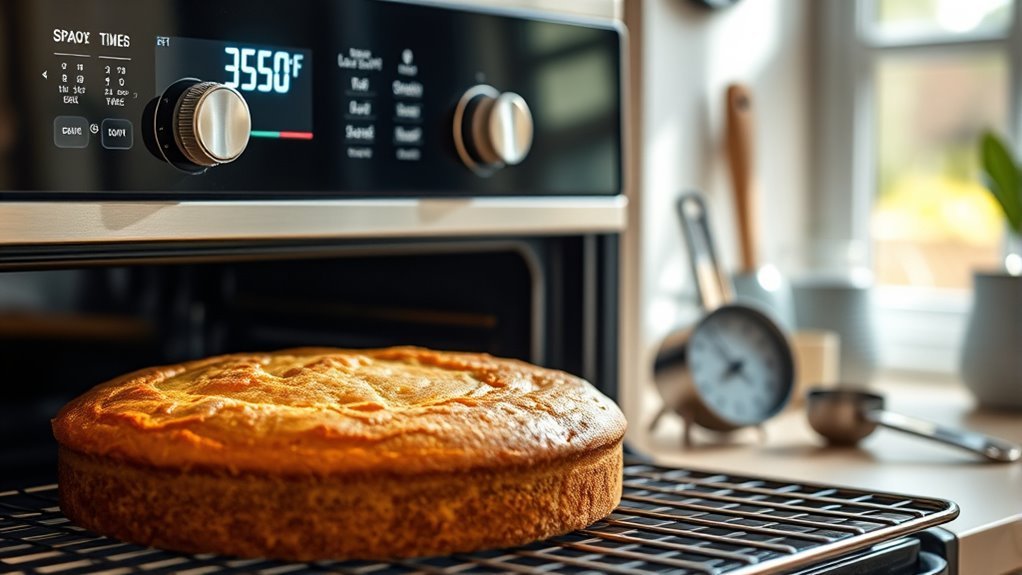
Although many cakes bake well at 350°F (175°C), you’ll need to adjust the temperature depending on the recipe and bakeware. Proper calibration of your oven temperature is vital to avoid burnt outsides and undercooked centers.
Many cakes bake best at 350°F, but adjusting for your recipe and bakeware ensures perfect results.
Always preheat your oven to ensure consistent oven heat and promote even baking.
If you use dark pans, expect them to absorb more heat; a temperature adjustment lowering the baking temperature by 25°F helps prevent overbrowning.
For delicate cakes or those requiring longer baking time, reduce the oven settings slightly and increase baking time to achieve even doneness.
Monitoring your oven’s actual temperature rather than relying solely on its dial guarantees your cakes bake perfectly every time.
Preparing Your Cake Batter and Pans
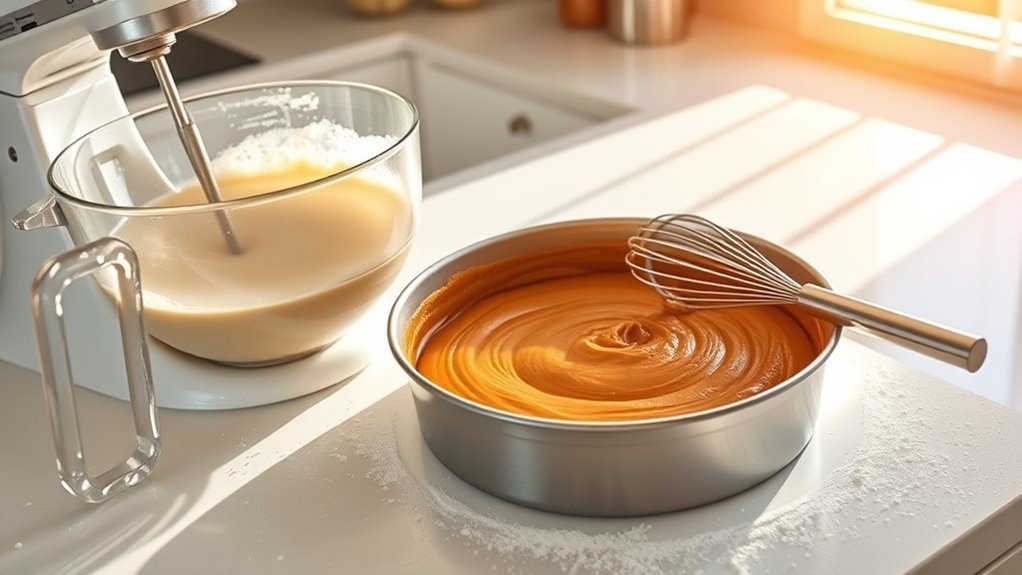
Three key steps set the foundation when preparing your cake batter and pans: measuring ingredients accurately, bringing butter and eggs to room temperature, and properly greasing your pans.
Start by measuring flour precisely using the spoon-and-level method or a kitchen scale to get the right batter consistency.
Next, ensure your butter and eggs reach room temperature. This helps you mix ingredients smoothly, producing a light, airy cake batter.
When preparing cake pans, always grease and flour them thoroughly to prevent sticking and ease cake removal.
Use a gentle mixing method, combining dry ingredients and liquids alternately to maintain batter structure. Mix ingredients just until combined to avoid overbeating, which can toughen your cake.
Proper ingredient preparation and pan readiness set you up for baking success.
Timing Guidelines for Different Cake Types

When baking different types of cakes, you’ll need to adjust your timing and temperature to get the best results. Each cake type has unique oven settings and baking durations to achieve perfect cake texture and doneness. Here’s a quick guide to help you with baking guidelines:
| Cake Type | Oven Temperature | Baking Time |
|---|---|---|
| Standard Cake | 350°F | 25-35 minutes |
| Pound Cake | 325°F | 75-90 minutes |
| Cupcakes | 350°F | 18-20 minutes |
| Sponge/Chiffon | 375°F | 20-30 minutes |
| Dense Cakes | 350°F | 40+ minutes |
How to Test Cake Doneness Correctly
To guarantee your cake turns out perfectly, you’ll want to test for doneness accurately before removing it from the oven. Start by inserting a toothpick or cake tester into the center; if it comes out clean or with a few crumbs, the cake is done.
Check for a golden-brown top and a springy texture when you press gently in the center. Also, notice if the edges are pulling away slightly from the pan.
For precision, use an instant-read thermometer to ensure the internal temperature hits about 200°F (93°C).
Since oven temperature and baking time can vary, avoid overbaking by testing every 5 minutes after the minimum baking time.
Proper testing helps you achieve the perfect bake without drying out your cake.
Adjusting Baking Time Based on Pan and Oven Variations
After you’ve mastered testing for doneness, it’s important to adjust your baking time based on the type of pan and oven you use. Dark pans absorb more heat, so they often require you to reduce the oven temperature by 25°F to prevent overbrowning and guarantee even baking.
Keep in mind that baking time can vary by 10-15 minutes depending on your cake pan material. Additionally, oven temperature fluctuations and hot spots may cause uneven baking, so it’s essential to monitor baking closely. Always check doneness 5-10 minutes before the expected baking duration and adjust oven settings if needed. By paying attention to these factors, you’ll achieve perfectly baked cakes every time, regardless of your pan or oven variations.
Frequently Asked Questions
How Long Are You Supposed to Bake a Cake?
You should bake a standard cake at 350°F for 25 to 35 minutes, but always check early with a toothpick.
Adjust time based on your oven and cake size to avoid under or overbaking.
How Long to Bake a Cake at 350 Degrees?
You should bake your cake at 350 degrees for about 25 to 35 minutes. Start checking at 25 minutes by inserting a toothpick; if it comes out clean, your cake’s perfectly baked and ready to enjoy!
How to Cook a Cake Step by Step?
Imagine your batter rising like a sunrise. Preheat your oven, pour batter gently, and bake until golden and a toothpick comes out clean.
Let it cool before revealing your delicious masterpiece, ready to delight your senses.
What Are the 7 Rules for Baking Perfect Cake?
You should preheat your oven, measure ingredients accurately, choose the right pan, and grease it well. Avoid overmixing, bake at the correct temperature, and use the toothpick test to make certain your cake’s perfectly baked every time.
Conclusion
Baking a cake is much like orchestrating a symphony—each temperature, time, and test plays a vital note. By understanding your oven’s temperament and following timing guidelines, you’ll master this sweet art.
Remember, just as a painter steps back to assess their work, you should check for doneness early and often. With practice, your cakes will rise to perfection, turning your kitchen into a stage where every bake tells a delicious story.
Mastering how long you should bake a cake step by step ensures consistent results. This knowledge helps you achieve the perfect texture and flavor every time, making your baking truly exceptional.