
How Long Is a Storage Container? Storage Container Size Guide
Think of storage containers as the building blocks of your logistics puzzle, each size fitting a specific piece of your needs. When considering storage container sizes, it’s important to recognize that they aren’t all roughly the same. The differences in length, height, and width can markedly impact your storage and transport plans.
Understanding these variations isn’t just helpful—it’s essential for efficient storage container use. Keep this in mind as we explore what container sizes really mean for your project’s efficiency and space management.
Importance of Considering Storage Container Sizes
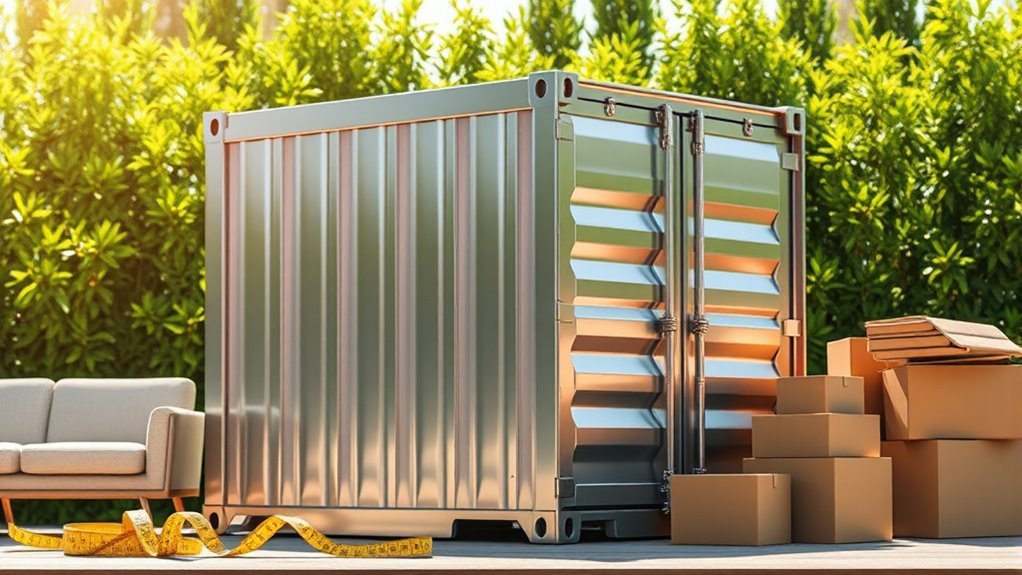
When you choose the right storage container size, you make the most of your space and avoid common issues like overpacking or wasted room. Understanding storage container sizes and container dimensions ensures your storage space fits your specific storage needs, whether you opt for standard units or high cube containers.
The right size impacts transportation costs, site accessibility, and ease of loading and unloading. Considering container dimensions carefully helps you protect your goods from damage and guarantees safety during handling.
Standard Lengths and Dimensions of Storage Containers
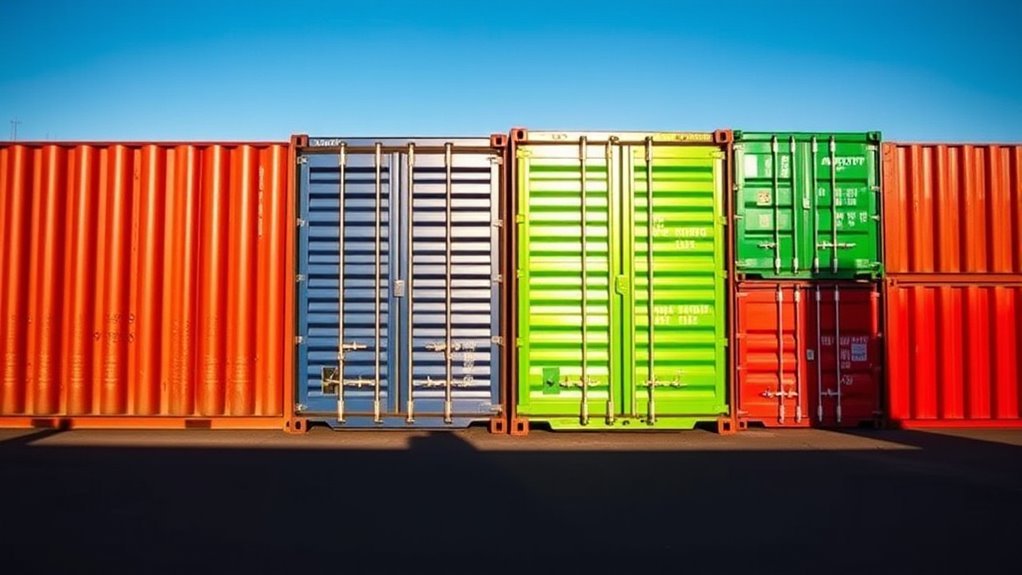
Choosing the right storage container size starts with understanding the standard lengths and dimensions commonly available. Shipping container sizes typically come in 10, 20, and 40 feet lengths, with specialized options like 45 and 53 feet.
Standard dimensions for these storage units usually include an 8-foot width and about 8.6 feet in height.
Most storage containers measure 8 feet wide and approximately 8.6 feet tall for standard use.
For example, a 10-foot container offers around 560 cubic feet of internal volume, while a 20-foot container provides approximately 1,170 cubic feet.
The popular 40-foot container expands this to about 2,390 cubic feet.
Among size options, the high cube container stands out by adding an extra foot in height, increasing storage capacity.
Knowing these external dimensions and container widths helps you pick the right unit for your needs efficiently.
Differences Between Standard and High-Cube Containers

Although both standard and high-cube containers share the same length and width, you’ll notice that high-cube containers offer an extra foot of height, increasing their internal volume by up to 15%. This difference in interior height markedly boosts storage capacity without altering container sizes’ length or width.
When comparing container dimensions, standard containers typically have an external height of 8’6”, while high-cube containers reach about 9’6”.
Keep in mind this extra height can affect your shipping setup, including stacking and transportation limits, as well as maximum weight considerations.
- Standard containers have 8’6” external height
- High-cube containers provide roughly 9’6” external height
- Both share identical length and width dimensions
- High-cube containers offer 13-15% more interior volume
- Increased height suits bulky cargo but may impact shipping logistics
Specialized Container Sizes and Their Uses
How do you handle cargo that doesn’t fit the mold of standard containers? That’s where specialized container types come in. Open-top containers, for instance, lack a roof, making them perfect for oversized or bulky items that require crane loading.
Reefer containers offer climate-controlled storage, ideal for perishable goods like food and pharmaceuticals.
Flat rack containers have no side walls, so you can transport heavy, oversized, or irregularly shaped cargo that won’t fit standard shipping container dimensions.
Tank containers, shaped cylindrically, safely carry liquids such as water, oil, and chemicals.
Understanding these specialized container sizes helps you choose the right storage solutions to meet your unique cargo needs, ensuring safe and efficient transport every time.
How Container Size Affects Storage Capacity and Transport
You’ll find that container size directly impacts how much you can store and transport. Length and height variations set limits on payload and handling, so choosing the right dimensions is key. Matching container size to your cargo needs helps you maximize efficiency and keep costs down.
Size Impact on Capacity
What determines the storage capacity of a container? Primarily, it’s the container sizes and their internal volume that dictate how much you can store.
Larger containers, like the 40ft and 45ft high cube, offer markedly greater storage capacity, enabling you to hold more or bulkier items.
The size impact also extends to the payload capacity and maximum load, with bigger containers supporting heavier cargo.
Dimensions and container length influence how many pallets you can fit inside, especially with pallet-wide models designed to maximize pallet storage.
Keep in mind, size affects not just storage but also handling efficiency.
- Internal volume varies from 560 to 3,860 cubic feet across sizes
- Larger dimensions increase maximum load and payload capacity
- Container length directly impacts pallet storage capacity
- Size influences how you organize and stack cargo inside
- Bigger containers require more space but offer greater storage flexibility
Transport Limitations by Length
Container length doesn’t just impact how much you can store; it also plays a big role in how easily you can move your goods. When choosing shipping container sizes, longer containers like 40 ft. and 45 ft. face more transport restrictions due to size limitations on roads and rail transport.
Road weight limits and clearance issues often reduce the maximum payload you can carry safely. Smaller containers, such as 10 ft. and 20 ft., offer greater flexibility and can navigate various transport modes more easily while complying with transport safety regulations.
Understanding these constraints helps you balance container capacity with logistics efficiency, ensuring your goods move securely without exceeding legal limits. Always consider container length alongside transport restrictions to optimize both storage and shipment.
Height Variations and Uses
Although height variations might seem minor, they substantially affect storage capacity and transport options. High-cube containers, with an extra foot of height compared to standard ones, boost internal volume by 15-20%. This increase lets you store bulkier items or customize interiors more easily.
However, these height variations influence transport options since taller containers may need special permits or handling for road and rail. When choosing storage solutions, consider how large containers and vertical space impact your needs.
Standard containers stand at 8’6”, while high-cube containers reach 9’6”.
Extra foot of height expands internal volume considerably.
High-cube containers fit taller or oversized goods.
Height variations may limit transport options due to regulations.
Maximizing vertical space boosts overall storage capacity.
Selecting the Right Container Length for Your Needs
When you choose a storage container, its length plays a crucial role in meeting your space and transport requirements. Storage container sizes typically range from 10 to 53 feet, with standard units like 10, 20, and 40 feet being the most common.
Choosing the right container length is key to meeting your space and transport needs efficiently.
The 10-foot container suits limited space or small-scale storage needs. Meanwhile, the 20-foot container offers versatile capacity for medium-sized storage or shipping containers. For larger projects, a 40-foot container provides ample room.
Understanding container dimensions helps you pick the right option for on-site storage or shipping. This container sizes guide ensures you select a container length that matches your storage needs without wasting space or money.
Choosing the right container length optimizes your container options effectively.

Overview of Container Width and Height Variations
After deciding on the right container length, you’ll want to contemplate width and height variations that impact storage capacity and usability.
Most containers have a standard size container width of 8 feet, ensuring uniformity in stacking and compatibility with handling equipment.
Container height varies more significantly, ranging from 7.9 feet in standard size units to about 9.6 feet in high cube models, which add extra internal volume for bulky cargo.
These external dimensions directly influence your storage capacity and how containers stack efficiently during transport.
Keep these points in mind:
- Standard container width remains consistent at 8 feet
- Container height options include standard (7.9 ft) and high cube (9.6 ft)
- High cube containers increase internal volume noticeably
- Width variations are rare and mostly specialized
- Uniform dimensions aid in handling equipment compatibility and stacking
Frequently Asked Questions
What Is the Length of a Storage Container?
A storage container’s length usually ranges from 8 to 53 feet. You’ll most often find 10, 20, or 40-foot options, but specialized containers can be longer.
Choose based on your space and storage needs.
How Long Is a 40FT Container?
A 40ft container measures exactly 40 feet long on the outside. Inside, you’ll get about 39.5 feet of usable length due to the wall thickness.
It’s perfect for transporting large or bulky items efficiently.
How Long Is a 20FT Container?
A 20ft container is about 20 feet long externally, giving you roughly 19.4 feet of usable internal length. It’s perfect for your storage or transport needs when you want a compact yet efficient space.
What Is the Main Difference Between a 20FT and a 40FT Container?
While both containers share width and height, you’ll find the main difference in length and capacity: a 20ft fits smaller loads, but a 40ft doubles space, perfect when you need much more storage or bigger shipments.
Conclusion
Choosing the right storage container size is like finding the perfect pair of shoes—it needs to fit your specific needs comfortably. By understanding standard lengths, width, height options, and capacity differences, you’ll optimize your storage and transport efficiency.
Whether you need a standard or high-cube container, knowing these details helps you avoid wasted space and extra costs. This knowledge ensures your items are stored securely and efficiently without overspending.
With this guide, you’re ready to pick the ideal container length that works best for you. Selecting the right storage container size is essential for maximizing space and minimizing expenses.