
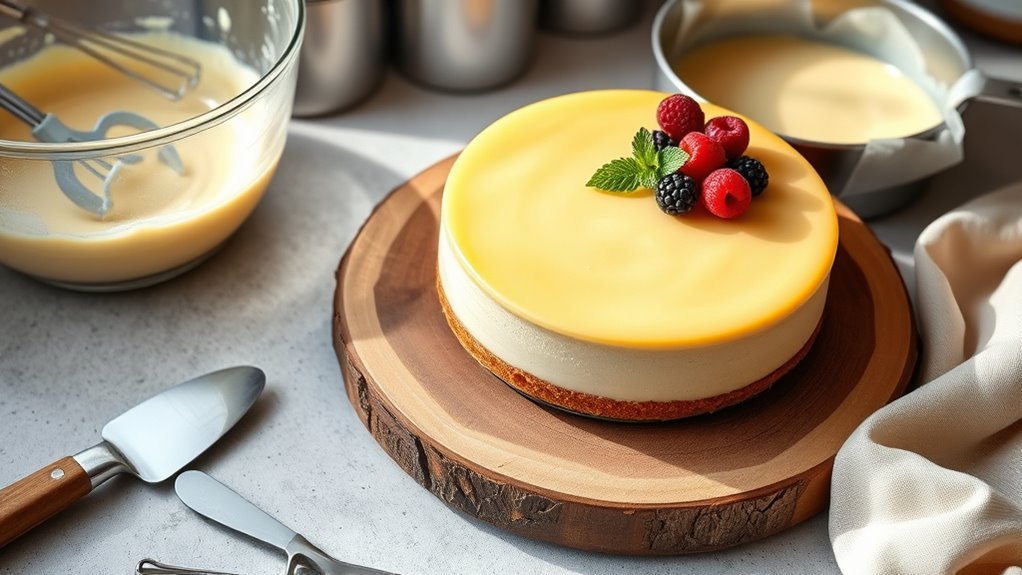
How You Can Make Cheesecake Without a Springform Pan
Imagine you’ve just realized your springform pan is missing right as you’re about to bake a cheesecake for guests. Making cheesecake without a springform pan might seem tricky, but it’s entirely possible with the right approach. Instead of stressing, you can use a cast-iron skillet or a simple round cake pan lined with parchment paper.
This method keeps your cheesecake intact and makes removal easier than you might expect. If you’re curious about mastering this technique and ensuring a smooth finish, keep exploring how to adapt your process without specialized equipment.
Understanding Basque Cheesecake and Dish Options
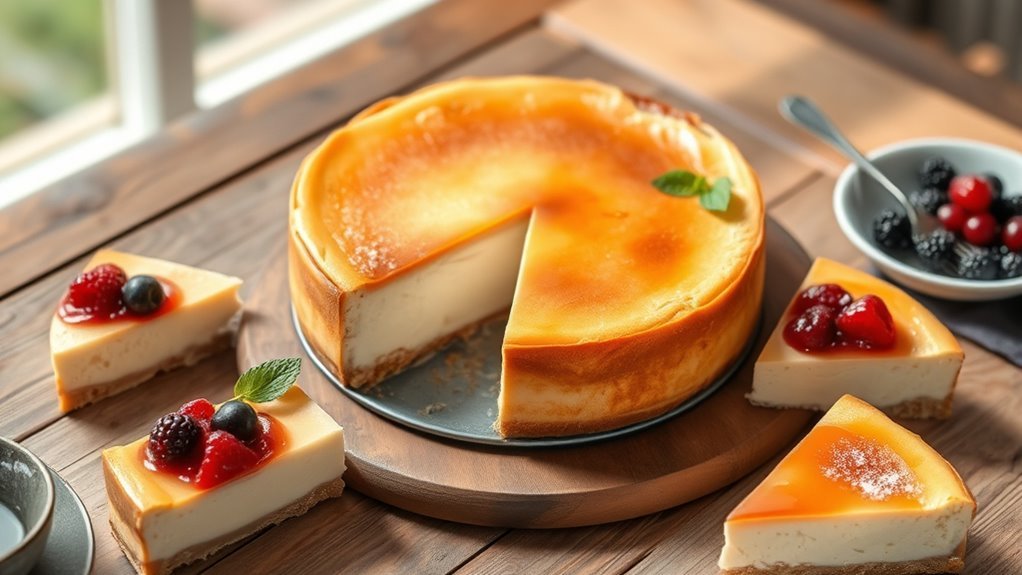
Although Basque cheesecake traditionally bakes in a cast-iron skillet, you don’t need a springform pan to make it. This crustless cheesecake is famous for its caramelized top and creamy interior, achieved through high-temperature baking.
Its rustic appearance comes from simple ingredients and the signature slightly burnt exterior. You can use various oven-safe dishes as alternative dish options, such as round or square pans. Just line your chosen dish with parchment paper to guarantee easy removal and help maintain the cheesecake’s shape.
Whether you have a cast-iron skillet or another oven-safe dish, you can still enjoy the rich textures and flavors Basque cheesecake offers without relying on a springform pan.
Preparing Your Pan and Crust Without a Springform

When you don’t have a springform pan, preparing your pan and crust properly guarantees your cheesecake comes out cleanly and holds its shape. Use an alternative pan like a 9-inch cake pan, lining it thoroughly with parchment paper for easy removal.
Cut strips of parchment to cover the sides and bottom, overlapping to ensure full coverage. For added pan stability, fold or crisscross the strips and lightly grease them before lining. Create a parchment circle that fits the bottom and extends slightly above the edges to help with cheesecake removal later.
If you’re using a crumb or graham cracker cheesecake crust, pre-baking it in the lined pan is essential. Allow it to cool completely before adding the filling. This crust preparation guarantees your cheesecake won’t stick and will lift out easily.
Mixing and Handling the Cheesecake Filling

Once your crust is ready and cooled, focus on creating a smooth, creamy cheesecake filling. Start with softened cream cheese, beating it with sugar, salt, and vanilla until smooth. Incorporate eggs one at a time, beating well but avoiding overmixing to maintain a perfect batter consistency.
Next, add cream and vanilla with gentle mixing. Finally, sift flour and fold it in carefully to avoid lumps.
| Step | Action | Tip |
|---|---|---|
| 1 | Beat softened cream cheese | Beat until smooth |
| 2 | Incorporate eggs | Add one at a time |
| 3 | Mix in cream and vanilla | Avoid excess aeration |
| 4 | Fold in sifted flour | Use gentle mixing |
Proper handling cheesecake batter ensures a creamy texture.
Baking, Cooling, and Managing Cracks
To bake your cheesecake without cracks, you need to control the temperature carefully and cool it gradually. Since you’re not using a springform pan, managing structural stress is even more vital to prevent cracks. During baking, avoid high temperatures that cause surface cracks.
Once baked, use a slow cooling method to minimize sudden temperature changes. Follow these steps to prevent cracks:
- Keep the oven door slightly open for 45 minutes after baking to allow gradual cooling.
- Remove the cheesecake from the water bath and place it on a wire rack for complete cooling.
- Avoid rapid temperature shifts to reduce contraction stress and maintain a smooth surface.
Tips and Tricks for Perfect Cheesecake Removal and Serving
Although removing a cheesecake without a springform pan can be tricky, lining your baking pan with parchment paper that extends over the sides creates handy handles for lifting.
After baking, let your cheesecake cool in the oven briefly, then refrigerate for at least 4 hours.
This guarantees firmness, essential for smooth cheesecake removal and to prevent cracks or breakage.
When ready, gently lift the cheesecake using the parchment paper handles.
Before you remove the sides, run a sharp knife around the edges to achieve clean slices.
For the best serving presentation, transfer the cheesecake onto a flat plate, guiding it with the parchment overhang for smooth handling.
These tips make cheesecake removal and serving effortless and impressive without a springform pan.
Frequently Asked Questions
What to Do if You Don’t Have a Springform Pan for Cheesecake?
If you don’t have a springform pan, line a regular cake or pie pan with parchment paper to lift the cheesecake out easily.
You can also use muffin tins for mini cheesecakes or wrap pans tightly for water baths.
Can You Make Cheesecake in a Regular Pie Pan?
You can make cheesecake in a regular pie pan by lining it with parchment paper to prevent sticking. Adjust baking time since it’s shallower, and use foil or a water bath to avoid leaks for a perfect result.
Can I Bake Cheesecake in an Aluminum Pan?
Yes, you can bake cheesecake in an aluminum pan. Just line it with parchment or grease well.
Monitor baking closely since it heats fast, and cool thoroughly before serving to guarantee your cheesecake turns out perfect.
How to Get a Cheesecake Out of a Non-Springform Pan?
You’ll cool your cheesecake completely, then run a thin spatula around the edges to loosen it. Use the parchment paper lining as handles to gently lift it out and slide the cake onto a serving plate.
Conclusion
You don’t need a springform pan to enjoy a delicious cheesecake—over 60% of home bakers successfully use alternative pans like cast-iron skillets or round baking dishes. By lining your pan with parchment and handling the batter carefully, you’ll get a creamy, crack-free dessert every time.
Remember, gradual cooling and chilling make slicing easier. So, embrace these simple tricks, and soon you’ll be serving perfect cheesecake without any special equipment!
With these easy tips, you can make cheesecake without a springform pan and still achieve that rich, smooth texture everyone loves.


