

Can You Bake With Silicone Molds?
If you’ve wondered whether silicone molds are safe and effective for baking, you’re not alone. These flexible, colorful baking molds have gained popularity in kitchens everywhere. However, questions about their heat tolerance and food safety still come up frequently.
Before you pull them out of the cupboard, it’s important to understand how silicone molds perform under heat. Knowing the right precautions to take will help you get the best results without compromising your baked goods.
Understanding Silicone Molds and Their Baking Safety

Although silicone molds might seem delicate, they’re actually made from food-grade, FDA-approved silicone that’s safe for oven use. When you use silicone bakeware, you can trust its heat resistance to withstand high temperatures, usually up to 430°F (220°C), without melting or releasing harmful chemicals. This ensures safe baking every time.
Silicone molds also feature a nonstick surface, making it easier to remove your baked goods without sticking. However, to maintain oven safety and the mold’s integrity, you should always check the manufacturer guidelines before heating.
Following those instructions helps you avoid exceeding temperature limits and ensures your silicone bakeware performs well, stays durable, and remains safe for use in the oven, microwave, or freezer.
Benefits of Using Silicone Molds for Baking

When you bake with silicone molds, you benefit from their excellent heat resistance and nonstick surface, which make your baking process smoother and more efficient. Silicone molds withstand temperatures up to 430°F, so you can confidently bake a variety of treats.
Silicone molds offer superb heat resistance and a nonstick surface, enhancing your baking experience up to 430°F.
Their nonstick quality means you often won’t need greasing, saving time and reducing mess.
These molds also provide even heat distribution, ensuring your baked goods cook uniformly without hot spots.
Thanks to their flexible and durable design, silicone molds allow you to create intricate shapes and easily pop out your creations without damage.
Plus, they’re reusable and dishwasher safe, resisting chipping, denting, and rusting, which makes them a long-lasting, convenient choice for any baker’s kitchen.
Best Practices for Preparing and Using Silicone Molds
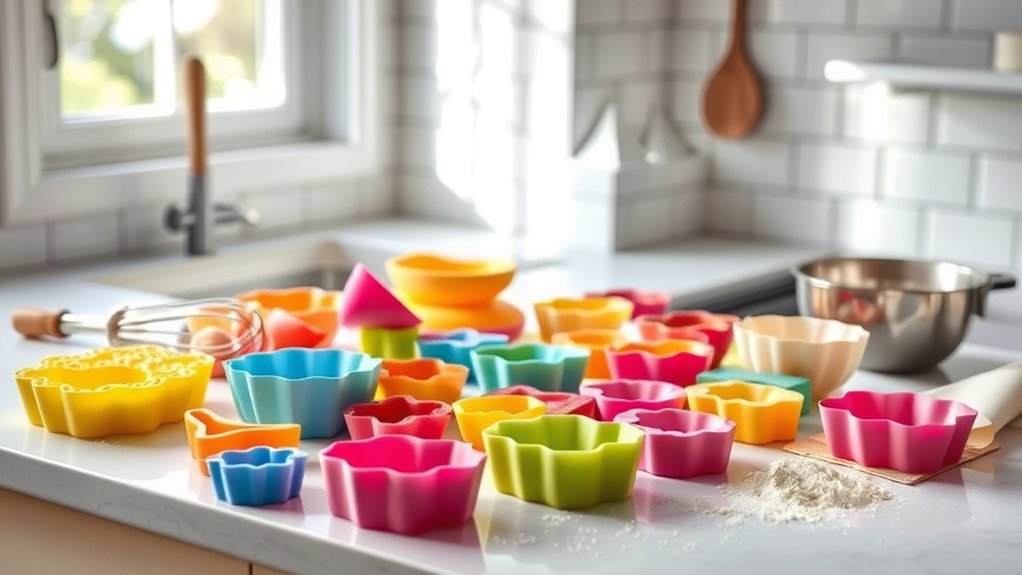
Before using your silicone molds for the first time, rinse and wipe them with warm soapy water, then dry thoroughly to remove any residues.
To guarantee easy release of your baked goods, lightly grease silicone molds using a brush of butter, oil, or a nonstick cooking spray, especially for intricate designs.
When baking, place your silicone molds on a sturdy baking sheet to prevent wobbling or spilling.
Keep in mind that baking times may be slightly longer than with metal pans due to silicone’s insulating properties, so monitor your items closely.
After baking, let your goods cool completely before removing them to avoid damage.
Always clean your silicone molds gently, avoiding sharp utensils to maintain their flexibility and durability for many uses.
Tips for Baking Times, Temperatures, and Cake Removal
Since silicone molds insulate heat differently than metal pans, you’ll need to adjust baking times and temperatures accordingly to guarantee perfect results. Here are key tips for baking times, temperatures, and cake removal:
- Always bake silicone molds at around 350°F but expect slightly longer baking times, typically 18-22 minutes for cupcakes. Place molds on a sturdy sheet pan to prevent flexing and spills.
- Check doneness early using a toothpick or cake tester; avoid sharp objects that can damage the silicone. Adjust times based on mold size and thickness.
- For easy cake removal, let your baked goods cool completely in the mold. You can also freeze the mold for a few hours before gently peeling or inverting to release from mold cleanly.
Following these steps guarantees your treats bake evenly and release effortlessly.
Care, Maintenance, and Storage of Silicone Molds
After your baked treats have cooled and released easily from silicone molds, it’s important to focus on their care and storage to keep them in good shape. Start by washing with warm water and mild soap; silicone molds are dishwasher safe, making cleanup simple.
Always avoid abrasive cleaners or utensils that could scratch their surface. Once clean, dry thoroughly to prevent mold or bacterial growth, especially in humid environments. For proper storage, store flat or gently rolled, steering clear of sharp folds that can deform the molds. Regularly inspect for damage like tears or cracks, and replace any compromised molds to maintain peak performance.
Frequently Asked Questions
Can I Bake Directly in Silicone Molds?
Yes, you can bake directly in silicone molds. Just place them on a sturdy baking sheet for support, lightly grease if needed, and let your baked goods cool before removing.
This helps keep their shape intact and avoid damage.
Will a Silicone Mold Melt in the Oven?
Like a steadfast guardian, your silicone mold won’t melt in the oven if you keep it below its heat limit. Just avoid direct flames and follow guidelines, and it’ll support your baking adventures without faltering.
How Can You Tell if a Silicone Mold Is Oven Safe?
You can tell if a silicone mold is oven safe by checking for food-grade, FDA approval, and a temperature rating on the packaging or product.
Also, verify it’s flexible, undamaged, and can withstand temperatures up to 430°F or higher.
Do You Put Silicone Bakeware Directly on the Oven Rack?
No, you shouldn’t put silicone bakeware directly on the oven rack. Always place it on a sturdy baking sheet to keep it stable, prevent bending or spills, and make sure of even baking and easy removal.
Conclusion
Baking with silicone molds is as safe and reliable as your grandma’s trusted cast iron skillet—designed to withstand heat and deliver consistent results. Just stick to the temperature limits, place your mold on a sturdy baking sheet, and you’ll enjoy easy release and even baking every time.
With a little care and attention, your silicone molds will become a kitchen staple, helping you whip up treats that feel as comforting and timeless as a classic family recipe. Whether you’re making cakes, muffins, or other baked goods, silicone molds offer convenience and versatility. Incorporating silicone molds into your baking routine ensures easy cleanup and reliable performance.