
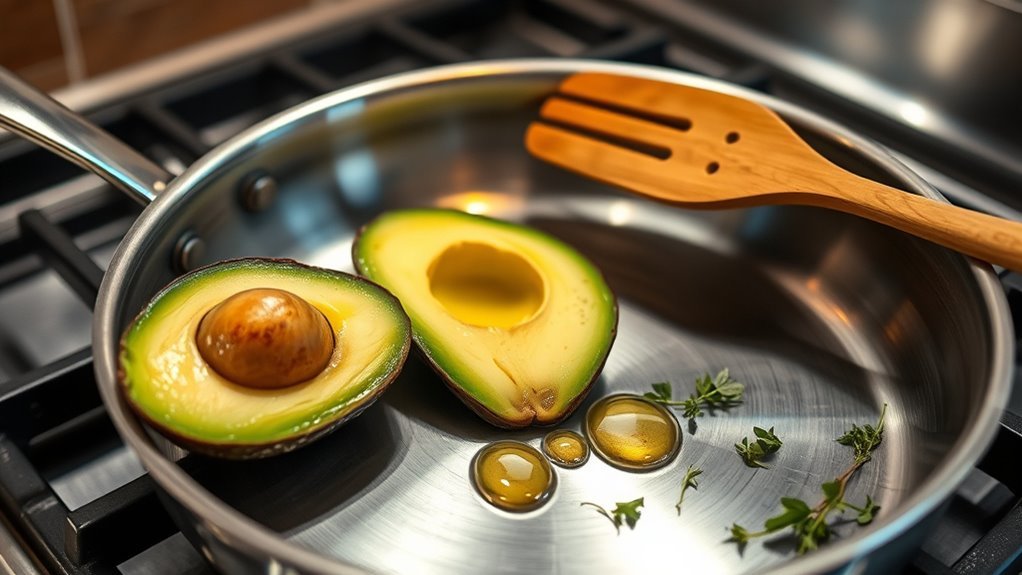
How to Cook Avocado in a Pan: Step-by-Step Guide for Perfect Results
Did you know that nearly 70% of avocado consumption comes from fresh use, but cooking avocado in a pan can reveal new flavors and textures? If you’ve only enjoyed avocado in salads or on toast, pan-cooking offers a surprisingly satisfying twist.
With just a few simple steps—from selecting the right avocado to mastering the pan technique—you can create a crispy yet creamy dish that’s anything but ordinary. Let’s explore how to cook avocado in a pan step by step and make that happen.
Selecting and Preparing the Avocado
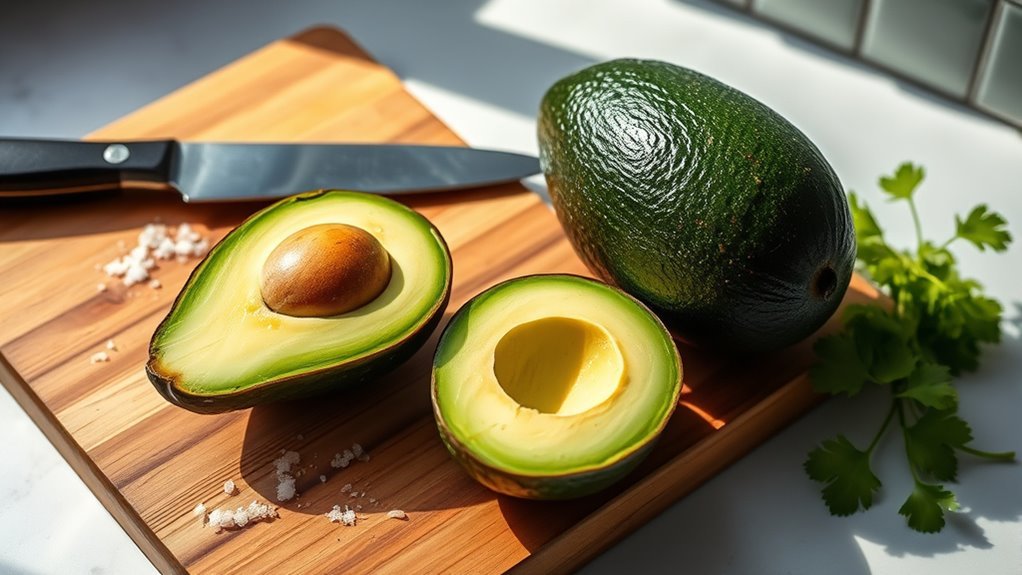
Start by selecting ripe avocados that feel firm but yield slightly when you press them gently; avoid any with black spots or wrinkles.
Once you’ve picked the perfect avocado, use a sharp knife to cut it lengthwise around the seed.
Twist the halves to separate them easily.
Carefully remove the pit with a spoon or gently tap it with your knife and twist it out.
To prepare for cooking or including in food recipes, scoop the flesh out with a spoon, keeping the skin on if you want easier handling and presentation.
If you prefer slices, cut the avocado into 1/2-inch thick pieces while it’s still in the skin or after scooping.
Proper prep ensures your avocado cooks evenly and tastes great.
Choosing the Right Cooking Oil and Seasonings
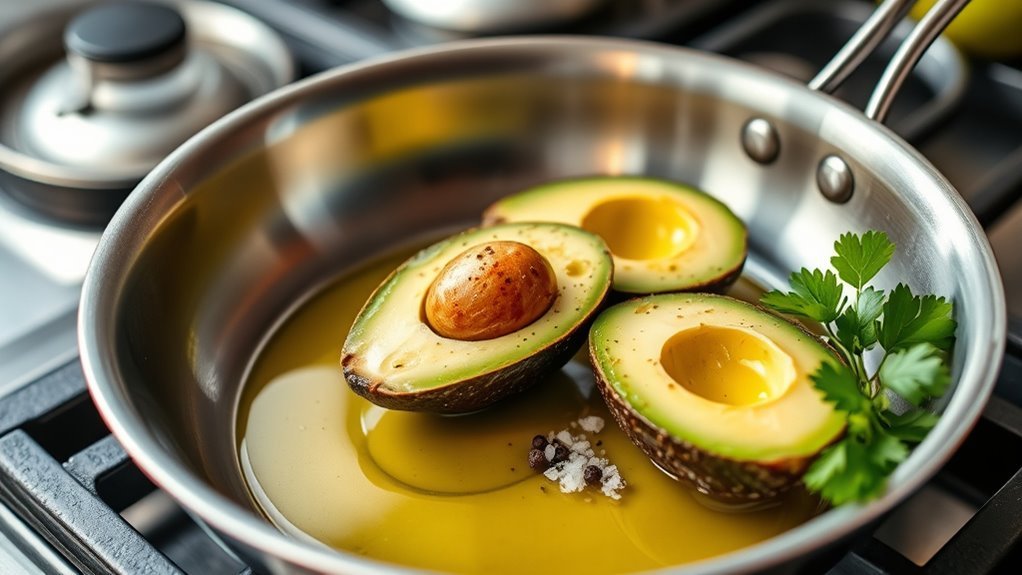
When cooking avocado, choosing the right oil is essential to prevent burning and bring out its natural flavor. Opt for high-smoke-point oils like light olive oil, avocado oil, or grapeseed oil to keep your avocado slices from scorching.
Use high-smoke-point oils like avocado or grapeseed oil to perfectly cook avocado without burning.
You can also mix butter with these oils to add richness and help create a crispy crust without compromising the smoke point.
For seasoning, sprinkle granulated garlic, sea salt, and black pepper to enhance the avocado’s savory notes.
Adjust the amount of oil and seasonings depending on the size of your slices and personal taste.
After cooking, consider adding a splash of soy sauce or lime juice for a burst of complexity that complements the creamy texture perfectly.
Pan-Frying Techniques for Perfect Texture
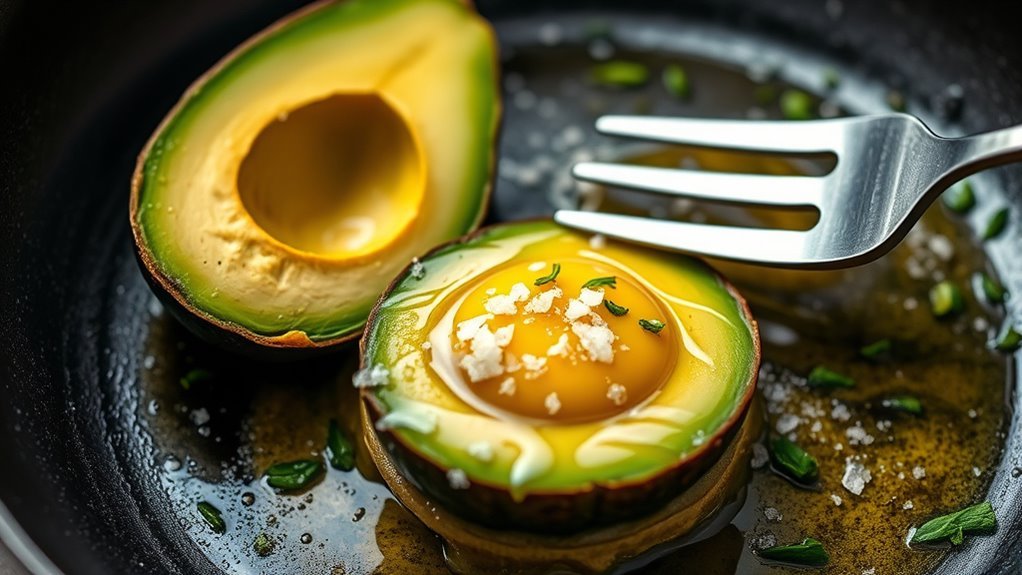
Mastering pan-frying brings out the best texture in avocado, balancing a crispy exterior with a warm, tender inside. To achieve this perfect contrast, follow these essential steps:
- Heat a frying pan over medium-high heat and add cooking oil or butter. Make sure the pan is hot before adding the avocado slices.
- Slice your avocado thickly, remove the pit, and season generously with sea salt. Place the slices cut-side down in the pan without moving them, allowing a golden-brown crust to form in about five minutes.
- Flip the slices carefully and cook for another 2-3 minutes. This softens the avocado while keeping the outside crisp. Adjust heat as needed to avoid burning and ensure ideal texture.
This technique guarantees a deliciously balanced avocado every time.
Flavor Enhancements and Serving Suggestions
Although pan-frying brings out a great texture in avocado, enhancing its flavor with butter and soy sauce takes it to the next level. You can sprinkle garlic powder before cooking for a fragrant boost, but add butter and soy sauce after frying to preserve their rich flavors.
For serving, try fresh herbs or a squeeze of lime to brighten the dish.
| Enhancement | Flavor Profile | Serving Suggestion |
|---|---|---|
| Butter | Rich, creamy | Melt on top post-cook |
| Soy Sauce | Umami, savory | Drizzle lightly |
| Garlic Powder | Aromatic, pungent | Sprinkle before frying |
These simple touches make your pan-fried avocado irresistibly delicious and versatile.
Tips for Storage and Avoiding Waste
To keep your avocados fresh longer, store ripe ones in the refrigerator after they give slightly to gentle pressure at room temperature. This slows spoilage and extends usability.
When storing avocado halves, follow these tips to avoid waste:
- Wrap avocado halves tightly in plastic wrap or place them in airtight containers to reduce oxidation and browning.
- Keep avocados away from direct sunlight and handle them gently to prevent bruising or black spots.
- If you find any blackened pulp on overripe avocado halves, scoop it out and only add the green flesh to your recipes. Use leftover avocado pulp quickly in smoothies or spreads to minimize waste and make the most of your fruit.
Frequently Asked Questions
How Do You Cook an Avocado in a Pan?
You heat butter or oil in a skillet, place avocado halves cut-side down, and cook until golden brown. Flip carefully, warm through, then season with salt or spices.
You’ll enjoy a tasty, pan-cooked avocado!
What Is the Best Way to Cook Avocados?
You’ll get the best results by pan-frying avocado slices in butter or oil over medium-high heat, searing cut-side down until golden and crispy.
Season with salt or garlic to boost flavor and enjoy a delicious texture contrast.
Can You Fry an Avocado?
Yes, you can fry an avocado! Just slice firm avocado, heat oil in a pan, and cook each side for 3-4 minutes until golden and crispy.
You’ll get a delicious, warm, and nutty-flavored treat.
Is Avocado Good for Pan Frying?
Think of pan-frying avocado like giving it a golden armor; it’s perfect! You’ll get a crispy outside while keeping creamy inside, thanks to its stable fats.
Just use ripe, firm fruit, and cook briefly at medium heat.
Conclusion
Now that you know how to pan-fry avocado to get that crispy outside and creamy inside, it’s time to give it a try!
Fun fact: avocados contain nearly 20 different vitamins and minerals, making them as nutritious as they are tasty. Cooking them this way not only adds flavor but helps you enjoy their health benefits in a new way.
So, grab your skillet and savor this delicious, wholesome treat! Perfect for those looking to cook avocado in a pan and explore new, healthy recipes.


