Discover the Best Milk for Cheese Making Secrets
In the intricate world of cheese making, the choice of milk is foundational to the process, as it directly influences the texture, flavor, and yield of the final product. From the casein and butterfat content to the presence of specific microorganisms, each component of milk plays a critical role.
The pasteurization process, homogenization status, and milk’s provenance further contribute to the cheese’s personality and complexity. As cheese artisans strive for perfection, selecting the optimal milk becomes an art in itself.
What truly constitutes the best milk for cheese making? Delve deeper to explore the nuances and unlock the secrets behind this essential ingredient.
Discover the Creamy Champions of Cheese Alchemy
| Image | Product | Price |
|---|---|---|
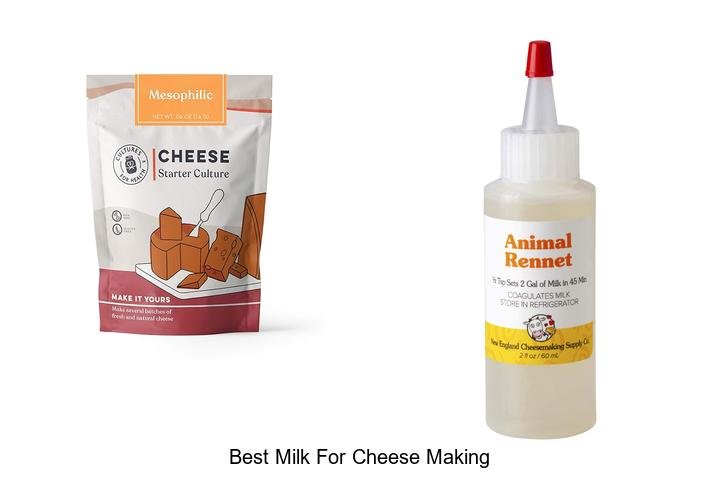
Pick 1  | Cultures for Health Mesophilic Cheese Starter | 4 Packets Direct-Set | Check Price On Amazon |
Pick 2  | Liquid Animal Rennet – Single Strength Calf Rennet for Home | Check Price On Amazon |
Pick 3  | North Mountain Supply Professional Quality Liquid Calf Rennet – Animal | Check Price On Amazon |
1. Cultures for Health Mesophilic Cheese Starter | 4 Packets Direct-Set
Discover the joy of crafting homemade cheese with the Cultures for Health Mesophilic Cheese Starter. This versatile kit provides everything you need to explore cheese-making, giving you control over your ingredients for healthier results. Ideal for beginners and enthusiasts, it offers a fulfilling culinary journey without long-term commitments.
Ideal for beginners and enthusiasts, it offers a fulfilling culinary journey without long-term commitments.
The Cultures for Health Starter includes four packets and two vegetable rennet tablets, versatile enough to make various cheeses such as feta, farmer, and cheddar. Its direct-set nature ensures there’s no starter maintenance, making it perfect for those new to cheese-making.
Pros
- Includes ingredients for multiple cheese varieties.
- Pathogen-tested for safety and quality assurance.
- Easy to use with no ongoing maintenance required.
Cons
- Limited to mesophilic cheese varieties.
Overall, the Cultures for Health Mesophilic Cheese Starter offers a simple yet rewarding cheese-making experience. Priced at $19, it stands out by offering pathogen-tested safety and ingredient quality, setting it apart from other brands.
Slight limitations in cheese variety are outweighed by its ease of use and the joy of homemade quality.
2. Liquid Animal Rennet – Single Strength Calf Rennet for Home
Unlock the secrets of professional cheesemaking at home with Liquid Animal Rennet. Perfect for both beginners and seasoned artisans, this single-strength calf rennet is your gateway to crafting delicious, high-quality cheese effortlessly. Experience the authentic taste of homemade cheese with our top-rated, reliable rennet solution.
Harness the power of clean, high-quality ingredients designed for excellence in every batch. This NON-GMO, gluten-free rennet is crafted for precision, allowing you to set about 2 gallons of milk with just half a teaspoon in approximately 45 minutes.
Pros
- Easy to measure and use, suitable for all skill levels.
- Versatile for making both hard and soft cheeses.
- Provides smooth and clean curd cuts for professional quality results.
Cons
- Slightly higher price point compared to non-animal rennet options.
Choose Liquid Animal Rennet for dependable cheesemaking success. While alternatives like vegetable rennets exist, the authentic texture and taste from animal-derived sources are unmatched.
3. North Mountain Supply Professional Quality Liquid Calf Rennet – Animal
Unleash your cheese-making potential with North Mountain Supply Professional Quality Liquid Calf Rennet. Crafted for both novices and cheese-making enthusiasts, this Italian-produced rennet ensures the perfect coagulation, bringing your artisanal cheese to life with flavors that boast authenticity and richness.
This professional-grade rennet features a potent 1:10,000 strength, making it the best milk for cheese making. Ideal for crafting a range of cheeses from short to long seasoning, just a quarter teaspoon per gallon of whole milk is all you need to achieve optimal results.
Pros
- High potency for effective coagulation.
- Ideal for short to long seasoning cheeses.
- Comes with a 30-day hassle-free replacement policy.
Cons
- Requires precise temperature control for best results.
Choosing North Mountain Supply’s rennet means investing in quality and authenticity for your homemade cheeses. Its unmatched potency and easy-to-use format provide a superior experience that outshines comparable products, ensuring your cheese-making is both gratifying and professional.
4. Rennet Microbial 10ml – Cheese Coagulant

Elevate your cheese-making prowess with our Rennet Microbial 10ml – Cheese Coagulant; designed to help you craft delectable dairy creations effortlessly. Ideal for beginners and seasoned artisans alike, this natural and effective coagulant is a must-have for anyone passionate about making the best milk for cheese-making.
Unlock the full potential of up to 8 gallons of milk with our high-yield formula. Each 10ml vial is packed with natural microbial coagulants, ensuring your cheese has the perfect texture without the use of GMOs or animal-based components. Simple instructions guide your process for consistently delightful results.
Simple instructions guide your process for consistently delightful results.
Pros
- Economical with the ability to coagulate up to 8 gallons of milk.
- Derived from microbial sources for a natural cheese-making experience.
- User-friendly with detailed instructions included.
Cons
- Might require adjustment from the suggested dosage for stronger milk coagulation.
Invest in this microbial rennet for a superior cheese-making journey. Its natural composition and efficient performance make it stand out, offering both quality and satisfaction.
5. Liquid Animal Rennet For Cheese Making | Milk Coagulant |

Made for cheese enthusiasts, our Liquid Animal Rennet for Cheese Making is the secret ingredient to crafting the best milk for cheese making. This traditional veal-based coagulant promises quick and efficient curdling, ensuring your cheeses have the perfect texture and flavor, ideal for both beginners and seasoned artisans.
Designed for all cheese recipes requiring a coagulant, this liquid rennet contains single-strength veal-derived enzymes, including chymosin and pepsin. It’s easy to measure, perfect for small batch creations, and boasts a non-GMO formulation for conscientious cheesemakers.
Pros
- Efficient and precise milk coagulation for quality cheeses.
- Ideal for aged cheese recipes, surpassing alternative rennets.
- User-friendly measuring for small batch production.
Cons
- Might not be suitable for those seeking non-animal derived coagulants.
With a user review highlighting its efficacy, this liquid animal rennet is an excellent choice for any cheesemaker looking to enhance their creations. Priced affordably at $14, it offers an invaluable edge over other rennet types, aligning with the needs of discerning cheese enthusiasts.
6. 6-Pack Cheesecloth 20×20″ Grade 100-100% Unbleached Cotton (Food-Grade), Fine Filtration

Discover the ultimate kitchen accessory for cheese aficionados and home chefs: the Aloimiki 6-Pack Cheesecloth. Completely crafted from 100% unbleached cotton and Grade 100 fine filtration technology ensures your homemade cheese, nut milk, and broths are nothing short of impeccable, free from chemicals and impurities.
The Aloimiki Cheesecloth excels in versatility and durability. Its 20×20 cloths are perfect for diverse kitchen tasks like straining yogurt and filtering broths. Double-hemmed seams and reinforced edges ensure longevity, while the tightly woven mesh captures even the finest particles for a smooth, pure result.
Pros
- Unbleached, chemical-free cotton for safe food handling
- Durable construction with lock-stitched edges
- Multi-purpose use extends beyond cheese making
Cons
- Only available in one size (20×20″)
For those serious about cheese making, the Aloimiki Cheesecloth set offers unmatched value in both performance and economics. Its longevity and versatility outshine typical cheesecloths, ensuring it’s an investment that will enhance your culinary experiences.
7. Cultures for Health Thermophilic Cheese Starter Culture | 4 Gluten-Free

Dive into the world of artisan cheesemaking with Cultures for Health Thermophilic Cheese Starter Culture. Designed for both novices and seasoned cheesemakers, this starter culture provides the foundation for creating diverse, restaurant-quality cheeses while offering an exciting and fulfilling hobby.
This comprehensive kit includes four packets of Streptococcus thermophilus starter culture and two rennet tablets, perfect for making a wide range of hard and semi-hard cheeses, including mozzarella, Asiago, and Parmesan. Safe and rigorously tested, this gluten-free, non-GMO culture ensures you craft delicious cheeses with confidence.
Pros
- Versatile selection for various cheese types.
- Pathogen-tested for safety and quality assurance.
- Ideal for gifting or sharing a creative activity with friends.
Cons
- Requires precise adherence to instructions for successful outcomes.
Perfectly suited for cheese enthusiasts, this high-quality starter culture unlocks the potential to craft mouthwatering cheeses at home. For those seeking extensive versatility and safety, this product stands out over others, offering a superior and satisfying home cheesemaking experience. Available at an attractive price of $19, it’s a valuable addition to any kitchen.
8. Galbani Whole Milk Ricotta Cheese, 15 oz.

Unleash your culinary creativity with Galbani Whole Milk Ricotta Cheese, the best milk for cheese making. Whether you’re crafting a silky lasagna or indulging in a rich cheesecake, this ricotta offers a decadent texture and superior flavor, elevating every bite to gourmet standards.
Crafted with premium whole milk, Galbani Ricotta Cheese is celebrated for its creamy consistency, perfect for both sweet and savory dishes. Its velvety smoothness ensures a rich taste that delights all palates and transforms ordinary recipes into extraordinary meals.
Pros
- Enhances dishes with a creamy, rich texture
- Versatile ingredient for both sweet and savory recipes
- Not overly salty, making it ideal for desserts
Cons
- Limited size options for larger cooking needs
Galbani Whole Milk Ricotta Cheese offers unmatched quality at a competitive price, making it an essential addition to any kitchen. Compared to other brands, it consistently delivers exceptional taste and texture, ensuring every dish you prepare is a masterpiece.
9. Microbial Rennet For Cheese Making | Vegetarian Rennet Tablets |

Experience the art of cheesemaking at home with our Microbial Rennet For Cheese Making tablets. Perfectly crafted for the cheese enthusiast, this vegetarian-friendly coagulant empowers you to make your own delicious cheeses like mozzarella, ricotta, and cheddar right in your kitchen, ensuring fresher and more organic results.
Derived from fungus, these tablets offer an eco-conscious choice, designed for easy portioning—perfect for small batches. A 1/4 tablet transforms a gallon of milk, helpfully accommodating both room temperature and freezer storage for an extended lifespan. Discover the creamy goodness with the included 30-minute mozzarella recipe and usage chart!
Pros
- Vegetarian-friendly, satisfying diverse dietary preferences.
- Convenient portioning for precise cheesemaking.
- Long shelf life with versatile storage options.
Cons
- Specialized usage may not cater to everyday cooking needs.
Microbial Rennet For Cheese Making is a standout choice among cheese enthusiasts. Priced affordably at just $9, this product offers a sustainable and versatile solution for home cheesemaking compared to traditional rennets. Transform your kitchen into an artisanal cheese shop and relish the satisfaction of crafting your own cheese delights today!
Transform your kitchen into an artisanal cheese shop and relish the satisfaction of crafting your own cheese delights today!
10. Bixa Liquid Microbial Rennet For Cheese Making | Vegetarian |

Unlock the full potential of your cheese-making endeavors with the Bixa Liquid Microbial Rennet. Crafted with precision for both novices and seasoned artisans, this vegetarian rennet ensures a seamless cheese-making experience, from home kitchens to industrial settings.
Bixa Liquid Microbial Rennet, crafted from Rhizomucor Miehei, is non-GMO, gluten-free, and vegan. Perfectly engineered, its dosage accommodates up to 100 liters of milk, yielding up to 2,400 pounds of authentic cheese without any allergens like soy or nuts.
Pros
- Simple application for varying expertise levels in cheese making.
- Free from animal products, catering to vegetarian preferences.
- Non-GMO and allergen-free for safe consumption.
Cons
- Limited to usage guidelines (6-8 cc per 100 liters of milk).
Enhancing your cheese-making process with Bixa Liquid Microbial Rennet is a decision rich in yield and ethical consumption. Offering premium quality and ease of use, it outshines similar products in its allergen-free ingredients and environmentally friendly credentials.
Unlock Creamy Delights: Your Ultimate Guide to Choosing the Perfect Milk for Cheese Making
Types of milk
When selecting the ideal milk for crafting cheese, understanding the distinct characteristics of various types of milk is essential. Cow’s milk, celebrated for its relatively high fat content and rich, creamy flavor profile, is a popular choice for a wide range of cheeses, offering versatility and accessibility. Goat’s milk, on the other hand, provides a unique tanginess and a different composition, which not only imparts a distinct flavor but also results in a softer cheese texture, ideal for those seeking a more adventurous taste experience.
Sheep’s milk is prized for its exceptional creaminess and high fat content, making it an excellent option for producing richer, more decadent cheeses. As you cultivate your cheese-making skills, consider experimenting with these different milk types, keeping in mind their unique properties and how they might influence the final product.
Each type of milk can bring out different flavors and textures, allowing your cheese creations to stand out with individuality and character.
Additional ingredients
When seeking the optimal choice for crafting delicious homemade cheese, it’s crucial to consider factors beyond the type of milk itself. Understanding the impact of additives and preservatives is essential, as these elements can significantly alter the texture of your cheese, either enhancing or detracting from the final product.
Carefully reading and interpreting milk labels allows you to select milk that aligns with your cheese-making goals, ensuring that it is free from unwanted additives that could interfere with the process. Supplements such as cultures or enzymes can be a fantastic addition, enhancing milk’s properties and helping you achieve the desired flavor and texture. These supplementary ingredients play a vital role in developing the cheese’s character, allowing you to refine the taste and consistency to your liking.
By keeping these aspects in mind, you can ensure a successful cheese-making experience that yields high-quality, flavorful cheese tailored to your personal preference.
Source of milk
When searching for the finest options to craft exceptional cheese, consider the source of your milk as a crucial factor. Embracing milk from local dairy farms not only supports community businesses but also often ensures a higher quality product due to stringent local regulations and the advantage of fresher milk.
However, if you are an enthusiast looking to experiment with unique cheese varieties, specialty milk options become particularly appealing. These include milk with distinctive fat contents or from specific breeds, offering flavors and textures that can make your homemade cheese stand out.
Whether you’re just starting or refining your skills, paying attention to these milk sources can enrich your cheese-making experience.
Fat content
When choosing the optimal ingredient for crafting cheese, understanding the balance of components in milk is critical to achieving the desired results. Whole milk, celebrated for its creamy texture and rich taste, is often favored for producing cheeses with a full-bodied flavor and smooth consistency. However, those seeking a lower-fat option may opt for skim milk.
While this alternative offers health benefits, its reduced fat content can significantly impact the texture of the final product, often leading to a more rubbery or crumbly cheese. This makes the selection of milk not just a matter of flavor preference, but also of how the cheese’s texture will turn out.
To ensure you achieve the right consistency and flavor in your cheese, choosing the appropriate milk fat percentage becomes crucial. Whether you strive for a decadent, traditional flavor or a lighter, health-centric option, selecting the right fat level in milk will guide you towards crafting the cheese that best meets your culinary goals.
Milk quality
When selecting milk for cheese making, understanding the quality and characteristics of different types can greatly impact your success. Considering the benefits of organic versus non-organic milk is a great starting point.
The debate between raw and pasteurized milk centers on safety and flavor; raw milk offers rich, distinctive flavors and natural enzymes that can enhance cheese fermentation, but it comes with increased safety concerns regarding bacteria. On the other hand, pasteurized milk is safer due to heat treatment, though it might result in less pronounced flavors in the final product.
Checking freshness is critical, as using milk close to its expiration can affect the cheese-making process. It’s advisable to purchase milk well before the expiration date and store it correctly by keeping it cold, ideally between 34°F and 38°F, to maintain its quality. Your choice of milk should align with your flavor preferences and safety priorities while considering the impact of freshness and storage on the final cheese product.
Your choice of milk should align with your flavor preferences and safety priorities while considering the impact of freshness and storage on the final cheese product.
FAQ’s
Are There Any Specific Considerations For Using Plant-Based Milks In Dairy-Free Cheese Making?
Yes, when using plant-based milks for dairy-free cheese making, it’s important to consider the fat and protein content, as they impact texture and flavor; additionally, different plant milks offer varying base flavors that can influence the final product’s taste. Thickeners and stabilizers may also be needed to achieve the desired cheese consistency.
How Does The Fat Content In Milk Affect The Texture And Flavor Of The Cheese?
The fat content in milk significantly impacts the texture and flavor of cheese; higher fat levels generally lead to a creamier texture and richer flavor, while lower fat content results in a firmer texture and a milder taste. Fat contributes to the smoothness and meltability of cheese, enhancing its overall richness and mouthfeel.
What Types Of Milk Are Most Commonly Used For Different Varieties Of Cheese Making?
Cow’s milk, goat’s milk, and sheep’s milk are the most commonly used types for cheese making, with cow’s milk being predominant for cheeses like cheddar and mozzarella, goat’s milk for varieties like chèvre, and sheep’s milk for cheeses such as Roquefort and manchego. Each type of milk contributes distinct flavors and textures to the final cheese product.
What Are The Benefits And Drawbacks Of Using Raw Milk Versus Pasteurized Milk In Cheese Making?
The benefits of using raw milk in cheese making include the potential for richer flavors and a more complex, unique taste profile due to its natural bacteria and enzymes, while the drawbacks include an increased risk of harmful bacteria and shorter shelf life. Pasteurized milk is safer with a reduced risk of pathogens, but it may result in a less complex flavor and requires the addition of cultures to compensate for the loss of natural bacteria.
How Do Goat, Sheep, And Cow Milk Compare In Terms Of Their Impact On The Cheese Taste And Quality?
Goat, sheep, and cow milk each impart distinct flavors and textures to cheese, with goat milk producing a tangy and earthy taste, sheep milk offering a rich and buttery flavor, and cow milk providing a mild and creamy base. The unique fat and protein compositions in each type of milk influence the cheese’s quality, affecting characteristics like texture, aging potential, and overall complexity.
Conclusion
In the quest for the best milk for cheese making, fresh, whole cow’s milk often stands out due to its high butterfat content, which is ideal for producing a rich and creamy cheese. However, goat and sheep milk offer unique flavors and textures, favored for artisanal cheeses.
The key is using milk that is fresh and free from additives for the ultimate cheese-making experience.