How to Pan Fry Frozen Salmon: 3 Easy Steps for Perfectly Cooked Fish
You might have heard that cooking frozen salmon straight from the freezer can lead to uneven cooking or a soggy texture, but is that really the case? If you approach it correctly, you can achieve a beautifully crisp skin and tender flesh without thawing. Pan frying frozen salmon is a quick and effective method that preserves flavor and texture.
Understanding the right technique can save you time while still delivering great flavor. Let’s explore how to pan fry frozen salmon efficiently in just three simple steps. With the right approach, you’ll enjoy a delicious meal in no time.
Preparing the Frozen Salmon for Pan Frying
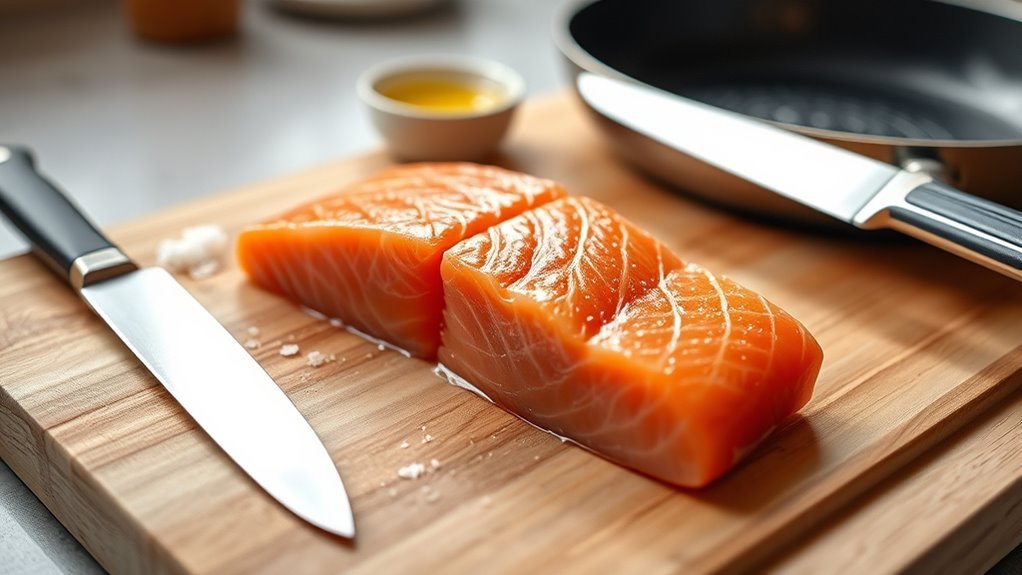
Before you start cooking, keep the salmon fillet frozen until you’re ready to pan fry to preserve its quality. When ready, gently rinse the frozen salmon under cool water to remove any ice crystals. Then, pat dry the fillet thoroughly with paper towels to guarantee it sears properly.
Avoid seasoning with salt before cooking to prevent burning spices. Heat a nonstick skillet over medium heat, monitoring the oil temperature carefully. Place the fillet skin side down to start; this helps the skin crisp up nicely.
When you pan fry frozen salmon, handling it carefully with a fish spatula is key to avoid breaking the delicate flesh. Preparing your fillet this way sets you up for a perfectly cooked salmon in your skillet over medium heat.
Cooking the Salmon in the Skillet
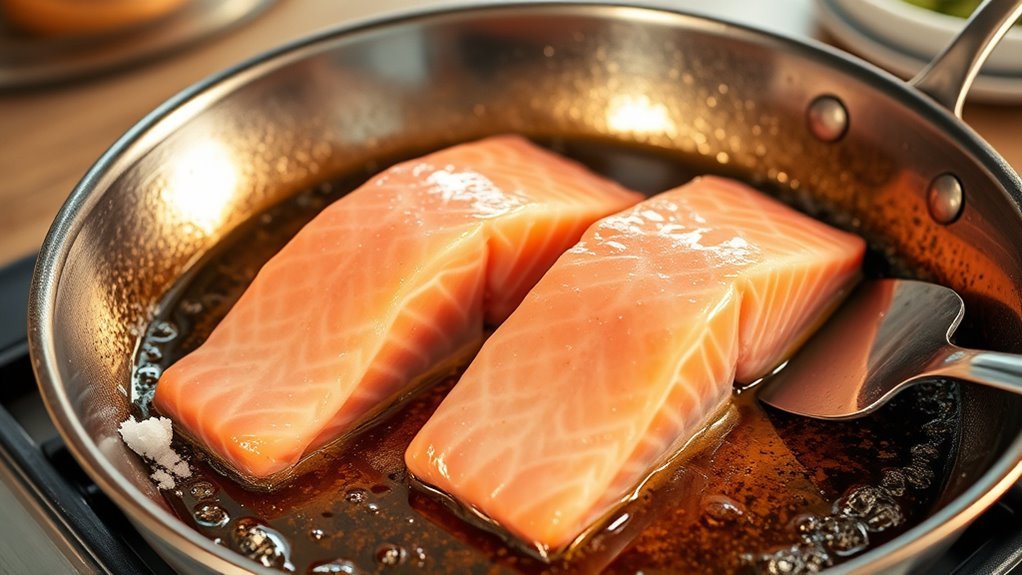
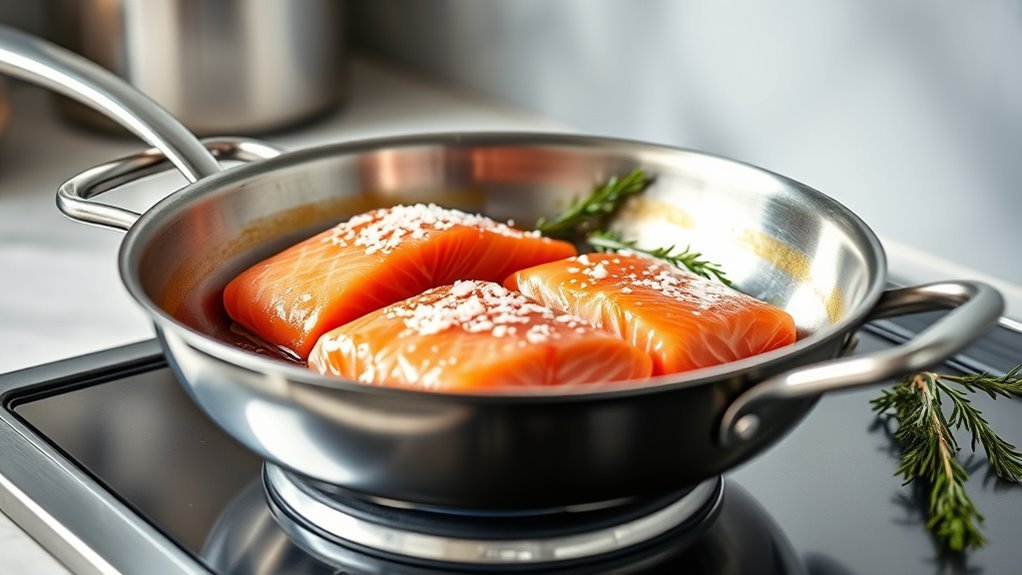
Once your skillet is preheated over medium heat and coated with shimmering high-heat oil, place the frozen salmon fillet flesh side down on a piece of parchment paper to prevent sticking.
Pat the fillet dry with paper towels to help the skin crispy up nicely during searing.
Press gently on the fillet with a spatula to ensure even contact with the skillet.
After about 2-3 minutes, when the flesh side is browned and the skin crispy, carefully flip the salmon.
Continue cooking on the skin side, monitoring the cook time to avoid overcooking.
Use a thermometer to check the internal temperature, aiming for 125°F for medium doneness.
This method guarantees your frozen salmon cooks evenly with a perfect sear and crispy skin.
Finishing and Serving the Pan-Fried Salmon
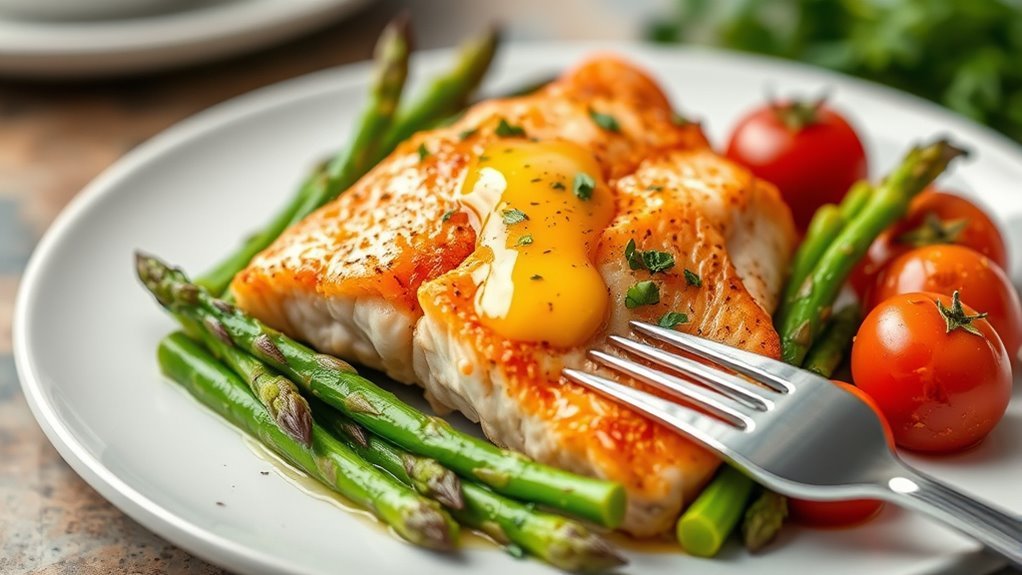
After flipping the salmon and reaching the desired medium doneness, let it rest uncovered for 1 to 2 minutes. This resting period allows the residual heat to finish cooking the salmon gently, ensuring even doneness and reaching an internal temperature of 145°F.
During resting, the juices redistribute throughout the fillet, resulting in a moist texture and a flaky interior. This step also helps the fish become flaky without losing excess moisture, enhancing both texture and flavor.
Resting lets juices redistribute, ensuring moist, flaky salmon with enhanced texture and flavor.
Once rested, you want to serve immediately to enjoy the crispy skin paired with the tender, flaky interior at its freshest.
Skipping resting can cause uneven cooking and dry out the salmon, so take this small pause to elevate your pan-fried salmon experience.
Frequently Asked Questions
How Do You Cook Frozen Salmon in a Frying Pan?
You rinse frozen salmon, pat it dry, then heat oil in a skillet. Cook skin-side down until crispy, flip carefully, season, cover, and cook until opaque.
Let it rest briefly before serving for best results.
How to Cook Salmon Directly From Frozen?
You cook salmon directly from frozen by placing it skin-side down in a hot, oiled pan. Cover and steam for 6-8 minutes, then flip briefly.
Season after cooking and let it rest before serving.
Can I Cook Frozen Salmon Without Thawing?
You can cook frozen salmon without thawing, and it’s safe because freezing inhibits bacteria growth. Just add about 50% more cooking time to ensure it’s fully done, and you’ll enjoy fresh, delicious fish every time.
How Long Does Salmon Take to Cook When Frozen?
Frozen salmon usually takes about 10 to 15 minutes to cook, depending on thickness. Thinner fillets cook faster, around 8 to 10 minutes, while thicker ones may need up to 15 minutes for thorough cooking.
Conclusion
Pan frying frozen salmon is as simple as riding a bike once you know the steps. By prepping your fillet properly, cooking it skin-side down for that crispy texture, and finishing it to the perfect temperature, you’ll have a delicious meal in no time.
Let it rest briefly to lock in the juices, and you’re ready to serve a tasty, flaky salmon that’s sure to impress every time. With these easy techniques, pan frying frozen salmon becomes a quick and satisfying way to enjoy a healthy, flavorful dish.