
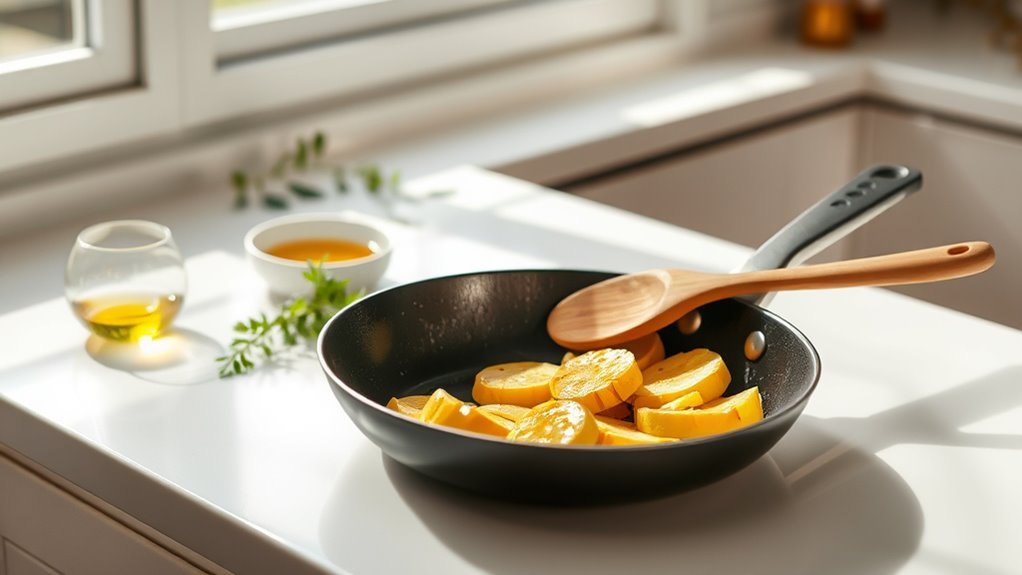
How to Cook Squash in a Frying Pan: 7 Simple Steps for Perfectly Tender Veggies
Imagine the humble squash as a blank canvas ready for transformation. Cooking squash in a frying pan is a simple way to bring out its natural flavors and textures. You can turn it into a flavorful dish with just a few simple steps in your frying pan.
By choosing the right squash, preparing it carefully, and seasoning it well, you’ll unleash its natural sweetness and texture. But what’s the secret to achieving that perfect golden caramelization? Keep going, and you’ll find out how easy it is to master this skill.
Selecting the Best Summer Squash

When selecting summer squash, choose small to medium-sized yellow squash with vibrant, glossy skin to guarantee the best flavor and texture.
You’ll want to pick squash that feels firm to the touch and is free of soft spots or blemishes, as these indicate freshness.
Avoid large or thick yellow squash since they tend to be bland and watery inside, which can affect your dish’s taste.
Look for a uniform shape and consistent color, ensuring even cooking and a balanced flavor throughout.
Farmers markets and grocery stores usually offer the freshest summer squash during peak summer months, so try to buy your squash then.
Preparing the Squash for Cooking
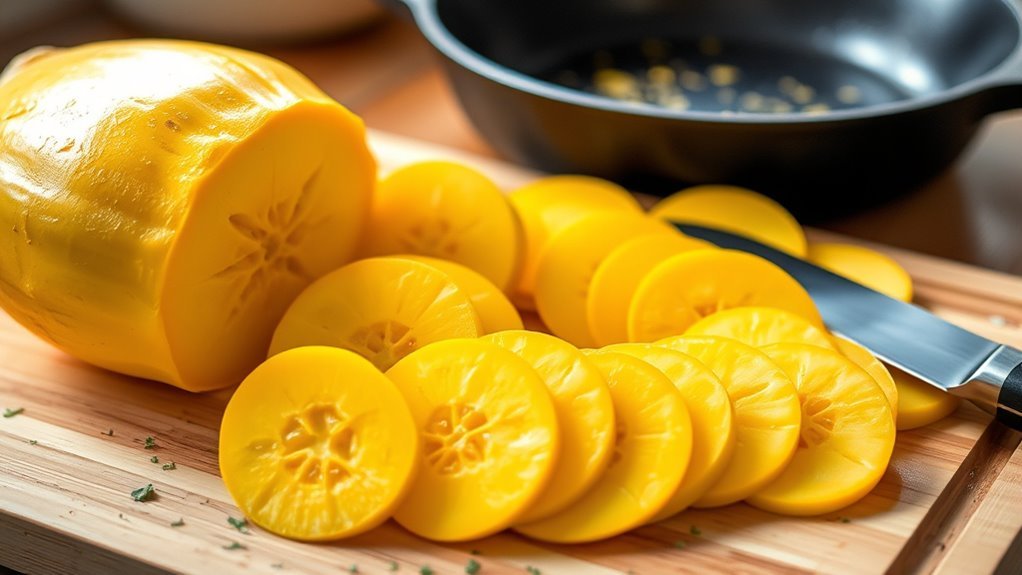
Picking fresh, firm squash is just the start. Proper preparation guarantees your dish turns out perfectly. Begin by washing the squash thoroughly under cold water to remove any dirt or residues.
Next, trim off the stem and blossom ends. If you’re working with patty pan squash, its unique shape calls for careful cutting. Depending on your recipe, slice the squash into rounds, half-moons, or small cubes, ensuring each piece is about 1/4 to 1/2 inch thick for even cooking.
If your squash variety is larger and contains seeds, remove them for a more tender bite. Taking these steps will help your squash cook evenly and enhance its flavor, setting the stage for a delicious frying pan dish.
Heating the Skillet and Adding Oil
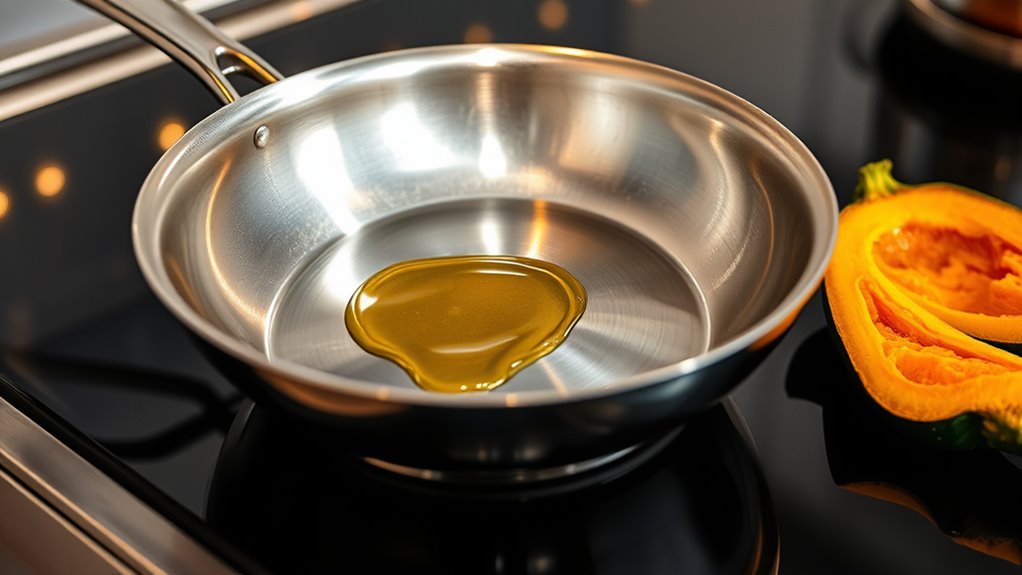
Before adding your squash, heat the skillet over medium-high until it’s hot enough to sizzle. This usually takes about 2 to 3 minutes.
Next, pour 1 to 2 tablespoons of olive oil into the pan, making sure to coat the bottom evenly. Wait for the oil to shimmer and start to lightly smoke—that’s when it’s ready.
Swirl the oil around so it spreads uniformly, preventing your squash from sticking and ensuring even cooking.
Picture this:
- The oil gleaming like liquid gold
- A faint wisp of smoke rising gently
- The pan’s surface shimmering under the heat
Once your pan is perfectly heated and oiled, you’re set to add the squash and hear that satisfying sizzle.
Layering Squash and Onions With Seasonings
Although the skillet is hot and oiled, you’ll want to layer the sliced squash and onions alternately to guarantee even cooking and flavor throughout. Start by placing a layer of squash, then a layer of onions, creating a bed of layered squash and onions.
Layer sliced squash and onions alternately in a hot, oiled skillet for even cooking and flavor.
Sprinkle seasonings like garlic salt, sugar, and pepper over each layer to boost flavor. Lightly spray with olive oil to help with caramelization.
Use high heat during this process to avoid sogginess and encourage a nice golden crust. Keep repeating these layers until the skillet is full.
This stacking method ensures every piece gets seasoned and cooked evenly. It sets the foundation for a flavorful dish before you move on to cooking and stirring.
Cooking and Stirring for Even Caramelization
When you start cooking the layered squash and onions, make sure to stir them every 8 to 10 minutes to promote even caramelization and prevent burning. Use high heat in your skillet to develop a deep, flavorful crust, especially on the yellow patty pan squash pieces.
Keep stirring consistently to distribute heat and avoid sticking. Scrape the skillet’s sides regularly to mix in caramelized bits, adding rich flavor without water or covering the pan, which slows browning.
Visualize this:
- Golden edges forming on yellow patty pan slices
- Rich caramelized bits clinging to the skillet’s surface
- Evenly browned, tender squash and onions mingling
This method ensures your squash cooks beautifully with balanced caramelization and delicious taste.
Checking for Tenderness and Flavor
Once your squash and onions have developed a rich caramelized crust from consistent stirring and high heat, it’s time to check their tenderness and flavor.
Insert a fork or skewer into the thickest part of the squash; it should slide in easily without resistance, indicating proper tenderness.
Check tenderness by inserting a fork into the thickest squash; it should glide in effortlessly.
The color and texture should reveal tender squash with a slight bite, not mushy. Next, taste a small piece to ensure the flavor is just right: soft, slightly caramelized, and well-seasoned.
Keep in mind, cooking time varies, usually 7-10 minutes for sautéed squash or up to 45 minutes for pan-fried, depending on thickness. Adjust accordingly, as smaller or softer squash cooks faster. This careful check guarantees your dish has the perfect tenderness and flavor every time.
Serving Suggestions and Variations
If you want to elevate your sautéed squash, try serving it alongside grilled meats, seafood, or roasted vegetables for a balanced meal that satisfies every palate. Yellow and patty pan squash work beautifully in these pairings, adding color and sweetness.
You can also top your squash with a poached or fried egg for a hearty vegetarian main that’s both simple and satisfying. For extra flair, sprinkle crumbled feta or grilled halloumi over the warm squash.
To complete your plate, serve with crusty or garlic bread to soak up the herb-infused oil.
- Stuff yellow squash and patty pan squash into wraps or tacos with fresh salsa
- Combine sautéed squash with marinated tofu for a protein-packed vegetarian dish
- Add a sprinkle of fresh herbs and a dash of lemon juice for brightness
Frequently Asked Questions
How to Cook a Pan Pan Squash?
You’ll slice the squash thinly, heat oil in your pan, then toss the slices in.
Season well, cook over medium heat, stirring often until tender but crisp. Enjoy your delicious, quick squash side!
What Is the Cooking Method for Squash?
You simply sauté squash in a hot pan, turning it into tender, flavorful bites that melt in your mouth! Just slice, heat oil, cook for 7-10 minutes, and season. You’ll have a quick, delicious dish!
What Seasonings Go Well on Squash?
You’ll want to use garlic, thyme, and rosemary for aromatic sweetness, or cumin, paprika, and chili powder for warmth.
Don’t forget salt, pepper, fresh herbs like basil, and a splash of lemon juice to brighten it up.
How to Make Squash Step by Step?
You slice fresh squash into rounds, heat oil in a pan, add squash, season with salt and pepper, cook 2-3 minutes per side until golden and tender, then serve with optional herbs or cheese for extra flavor.
Conclusion
Now that your golden squash is tender and caramelized, imagine the warm, fragrant steam rising as you take that first flavorful bite. Cooking squash in a frying pan brings simple ingredients to life, turning humble slices into a comforting, vibrant dish.
With just a few easy steps, you’ve created a symphony of textures and tastes—crisp edges, sweet notes, and savory depth—that invite you to savor the bright colors of summer right on your plate. Mastering how to cook squash in a frying pan is a quick and delicious way to enjoy this versatile vegetable.