
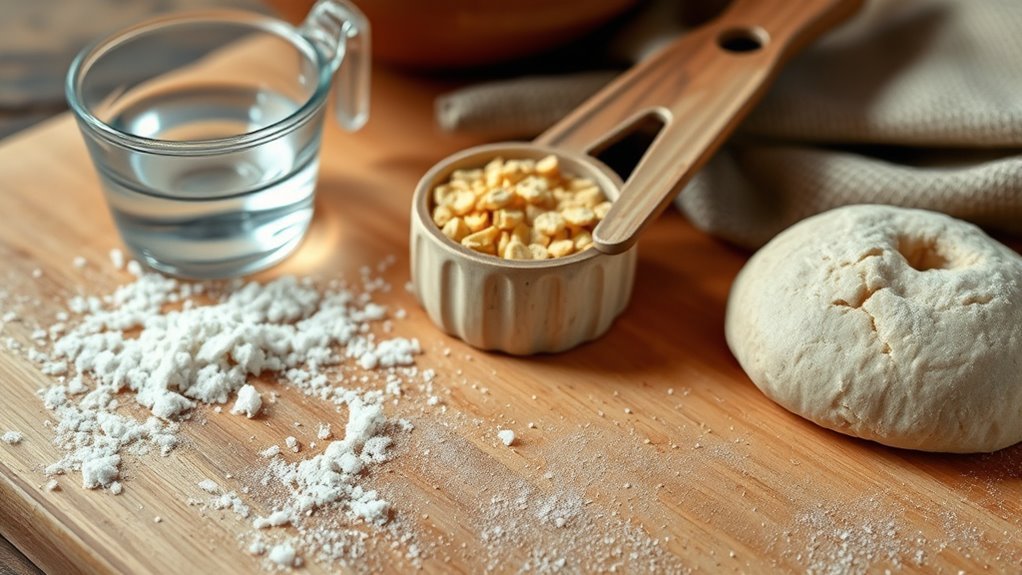
What Is Sourdough Bread Made Of? Step-by-Step Ingredients Guide
You might think sourdough bread is just flour and water, but it’s actually a complex dance of natural fermentation that takes patience and care. Understanding what sourdough bread is made of step by step reveals a fascinating process behind this delicious staple.
You’ll start by creating and nurturing a living starter, then move through precise mixing, slow fermentation, shaping, and baking techniques. Each step shapes the flavor and texture, and understanding this process can completely change how you approach homemade bread.
Let’s explore exactly how it all comes together.
Origins and Basics of Sourdough Bread
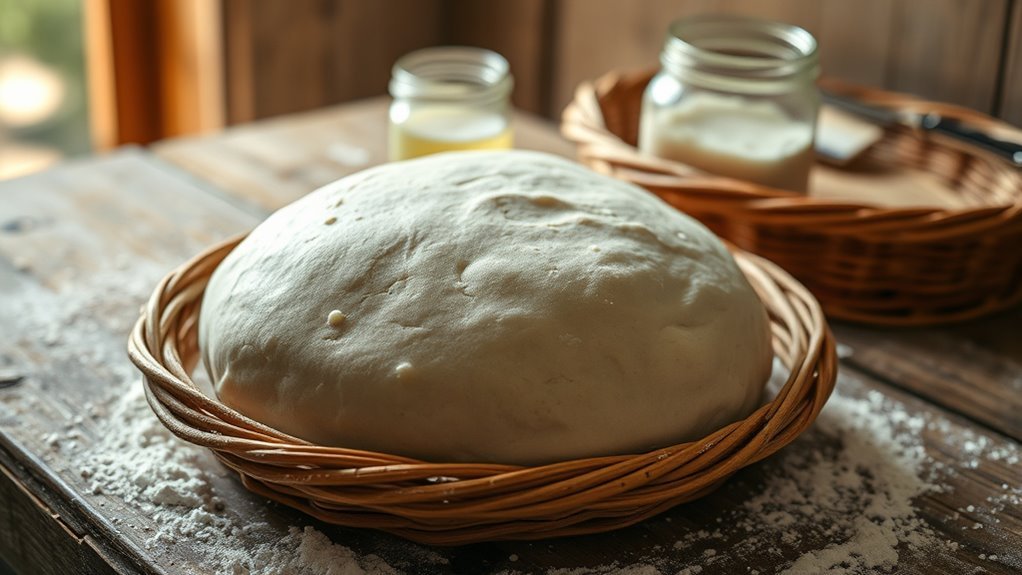
Although sourdough bread has gained popularity recently, it actually dates back thousands of years to ancient fermentation techniques used before commercial yeast existed. When you make pan de masa madre, you rely on masa madre, a fermento vivo created through cultivo de levadura natural.
This fermentación natural uses ingredientes tradicionales like flour and water, developing wild yeast and bacteria that transform the dough during fermentación lenta. The proceso de elaboración respects this técnica ancestral, allowing the dough to rise slowly and develop a unique sabor ácido.
This slow fermentation not only enhances flavor but also creates the characteristic crusty exterior and chewy crumb. By embracing these time-honored methods, you connect to history and craft bread that’s both authentic and delicious.
Ingredients Required for Sourdough Bread
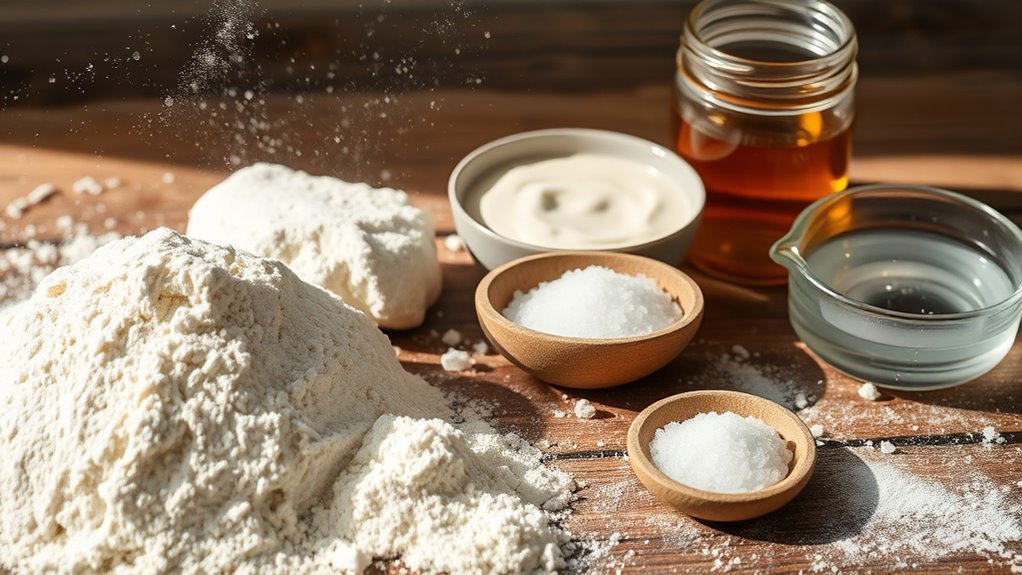
When you bake sourdough bread, you rely on a few key ingredients that work together through natural fermentation to create its distinctive flavor and texture. The masa madre, or sourdough starter, provides the natural levadura essential for fermentation. Your receta calls for high-quality harina de trigo, which develops the gluten structure *vital* for the pan de masa madre’s crumb and rise.
Key ingredients like masa madre and high-quality harina de trigo create sourdough’s unique flavor and texture through natural fermentation.
Agua activates the fermentation natural process and hydrates the dough.
Here are the main ingredientes you’ll need:
- Masa madre (active sourdough starter) the natural levadura that drives fermentation and depth of flavor.
- Harina de trigo (bread flour) ideally unbleached, for gluten development and textura.
- Agua (water) to hydrate the dough and facilitate fermentación natural.
These ingredientes work in harmony to give your pan de masa madre its characteristic *importancia* de sabor and texture.
Preparing and Maintaining the Sourdough Starter
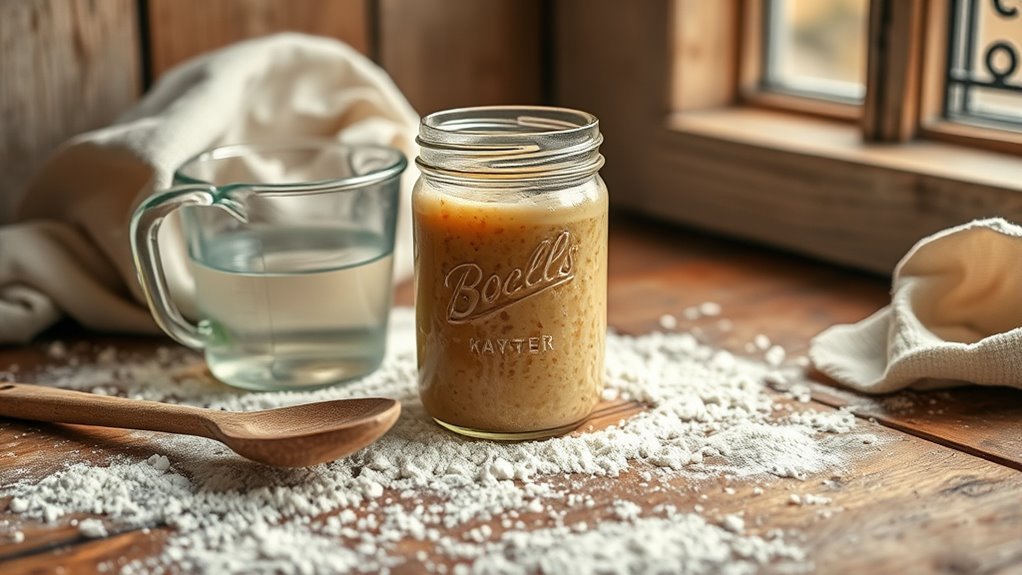
To prepare your sourdough starter, you mix equal parts harina y agua and let the masa madre undergo fermentación natural at room temperature for several days.
During fermentación en casa, you’ll feed the starter regularly by discarding a portion and adding fresh harina y agua. This alimentación del starter keeps the culture active.
Within 4 to 7 days, you’ll notice burbujas forming, a distinct aroma ácido, and a textura esponjosa, all clear signos de salud indicating readiness.
For conservación en refrigeración, store your starter in a clean, covered container and feed it weekly to maintain vitalidad.
Mixing and Fermentation Process
Once your sourdough starter shows signs of readiness, you can move on to mixing the dough. Begin by blending 2 cups of room temperature water with 1 cup of masa madre to aerate and activate the fermento natural.
Then, follow these steps for the proceso de fermentación:
- Add 1/4 teaspoon of levadura and 3 tablespoons of harina, stirring until the mezcla is homogeneous.
- Gradually incorporate the remaining 1 cup of agua and mix in salt evenly.
- Slowly add the last 3 cups of harina until a well-formed masa develops.
Cover your masa and let it rest in a draft-free area for 12-15 hours. During this levado, the fermentación will create bubbles and expansion, signaling a successful proceso de fermentación.
Shaping and Proofing the Dough
After the bulk fermentation, you’ll gently punch down the dough to release excess gas and then shape it into a round or oval loaf. Al amasar, focus on creating tensión en la superficie by stretching la masa en la forma deseada.
This step is crucial para el proceso de fermentación y para que el fermento se distribuya uniformemente. Después, deja que la masa repose en un lugar cálido y sin corrientes para el levado.
Este el levado suele durar entre una y dos horas, hasta que la masa casi duplique su tamaño. Durante el levado, la masa se vuelve ligera y aireada, preparando la textura ideal.
Para verificar si está lista, haz la prueba del toque suave: si la masa vuelve lentamente, el fermento ha cumplido su función y está lista para hornear.
Baking Techniques and Tips
Although baking sourdough might seem straightforward, mastering the right techniques can dramatically improve your loaf’s texture and crust. To get the best results, you need to focus on horno temperature, crust formation, and proper cooling.
- Preheat your horno and Dutch oven to at least 450°F (232°C). This high temperatura ensures proper rise and crust development during hornear.
- Use a sharp blade to make a precise corte on the dough surface before baking. This controls expansion and enhances the crust’s appearance.
- After hornear for 30-40 minutes, remove the lid for the last 10 minutes to deepen caramelization. Then, let the loaf cool completely to allow cristalización of the crumb, preventing gummy texture when slicing into rebanadas.
Follow these tips to perfect your masa madre every time.
Frequently Asked Questions
What Are the Ingredients to Make Sourdough Bread?
You’ll need flour, water, salt, and a sourdough starter to make sourdough bread. The starter contains wild yeast and bacteria, which help the dough rise and develop its unique flavor and texture.
What Is Sourdough Bread Made Of?
Sourdough bread’s made of flour, water, salt, and a sourdough starter filled with wild yeasts and bacteria.
You let it ferment naturally, which gives the bread its unique flavor and crusty texture without adding commercial yeast.
Is Sourdough Bread Made From Wheat?
Yes, sourdough bread is usually made from wheat flour, which gives it gluten for structure and elasticity. You can also use other grains, but wheat’s natural yeasts and bacteria make it the classic choice for sourdough.
How Healthy Is Eating Sourdough Bread?
You’d think sourdough’s health benefits are medieval myths, but they’re real.
You’ll digest it easier, enjoy stable blood sugar, absorb more nutrients, and support your gut with probiotics, all while savoring naturally preserved bread.
Conclusion
Making sourdough bread is like nurturing a tiny garden—you start with the sourdough starter, a living culture that needs regular care. Just as a gardener patiently tends plants, you feed and ferment your dough slowly, allowing wild yeast and bacteria to develop flavor and texture.
After hours of waiting, you transform simple ingredients into a crusty masterpiece. Every step, from mixing flour and water to the final bake, plays a crucial role in creating that unique tangy taste and airy crumb.
Remember, every loaf tells a story of patience, care, and the magic of natural fermentation. Understanding what sourdough bread is made of step by step helps you appreciate the art behind this delicious and healthy bread.