
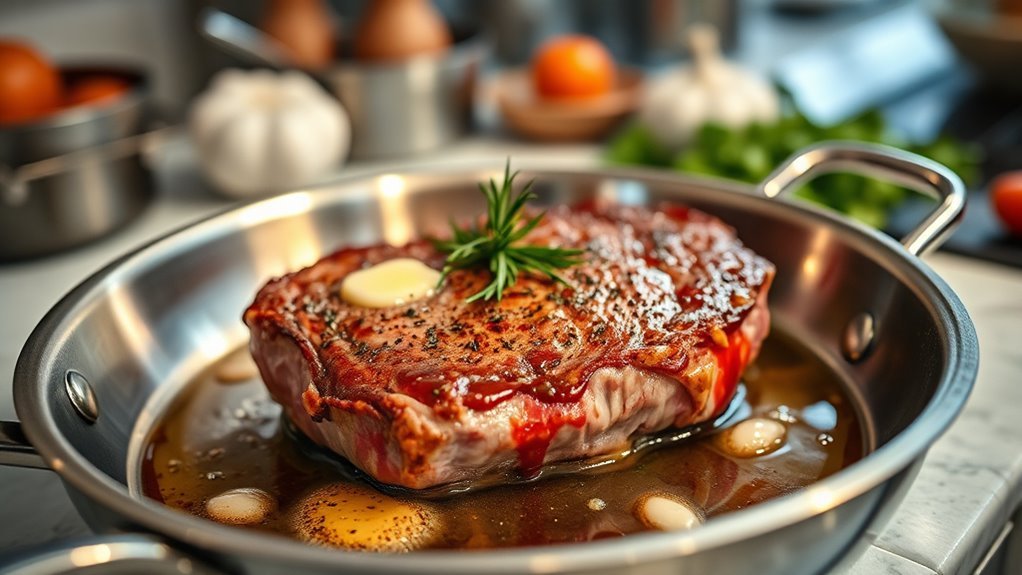
10 Steps to Cook Filet Mignon Perfectly in a Pan
When you want to cook filet mignon perfectly in a pan, every detail counts—from choosing the right cut to resting the steak just right. It’s not just about searing; it’s about timing, seasoning, and technique that bring out the steak’s best qualities.
If you’ve ever wondered how to get that ideal crust while keeping the inside tender and juicy, the process might be simpler than you think. Let’s take a closer look at how to master it.
Selecting the Right Cut of Filet Mignon
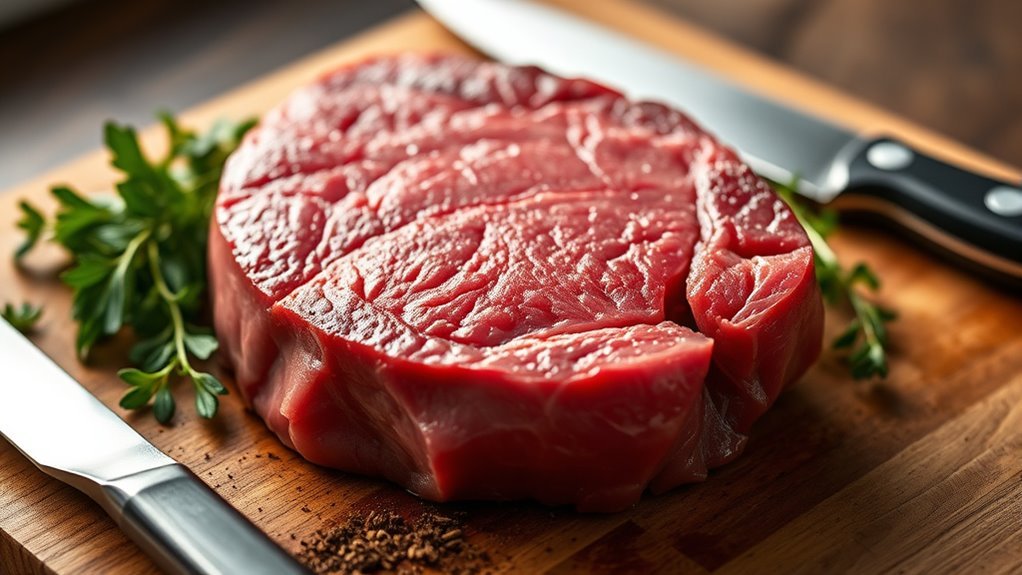
To cook filet mignon perfectly, start by selecting cuts that are 1.5 to 2 inches thick, which guarantees even cooking and a great sear. When choosing your steak, look for a deep red color and firm texture to ensure freshness and quality.
Opt for USDA Prime or Choice labels, as they offer superior marbling and tenderness. A thick cut provides the best balance between a crisp exterior and a juicy interior. Avoid any filet mignon with discoloration, excessive fat, or a slimy surface, as these are signs of poor freshness.
Consider portion sizes too. Six to eight ounces is standard, but petite cuts work if you prefer lighter servings. Selecting the right cut sets the foundation for a perfectly cooked steak every time.
Preparing the Steak for Cooking
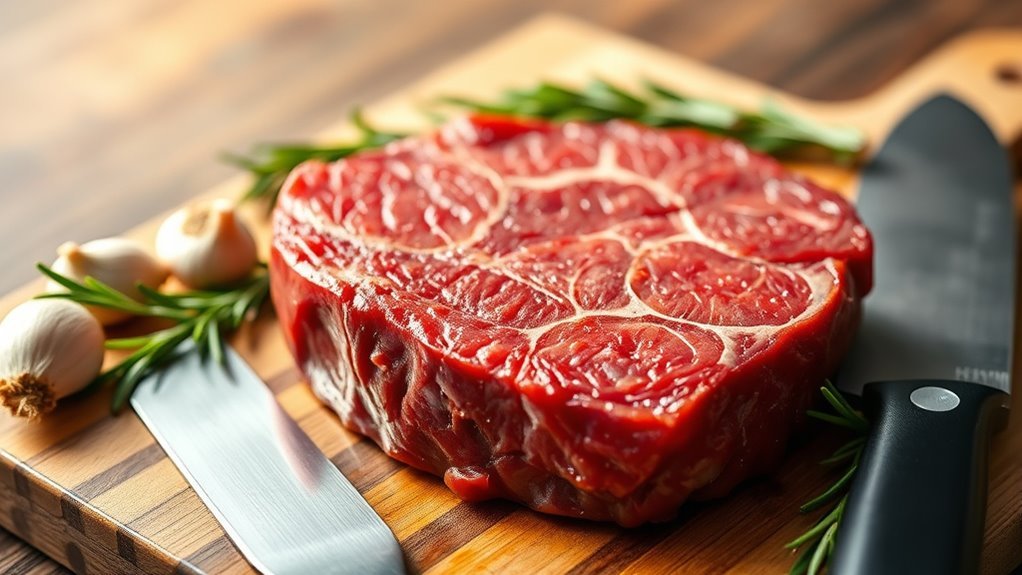
Once you’ve chosen the perfect cut of filet mignon, the next step is getting it ready for the pan. Start by removing the steak from the fridge and letting it reach room temperature for 30 to 45 minutes. This helps guarantee even cooking throughout.
Next, pat dry the filet mignon with paper towels to remove any excess moisture, which is essential for a good sear.
If you prefer, you can dry brine by salting the steak with coarse sea salt and leaving it uncovered on a wire rack in the fridge for a few hours or overnight.
When it’s time to cook, season the steak generously with coarse sea salt and freshly ground black pepper.
Use a meat thermometer to monitor the internal temperature for perfect doneness.
Seasoning the Filet Mignon Properly
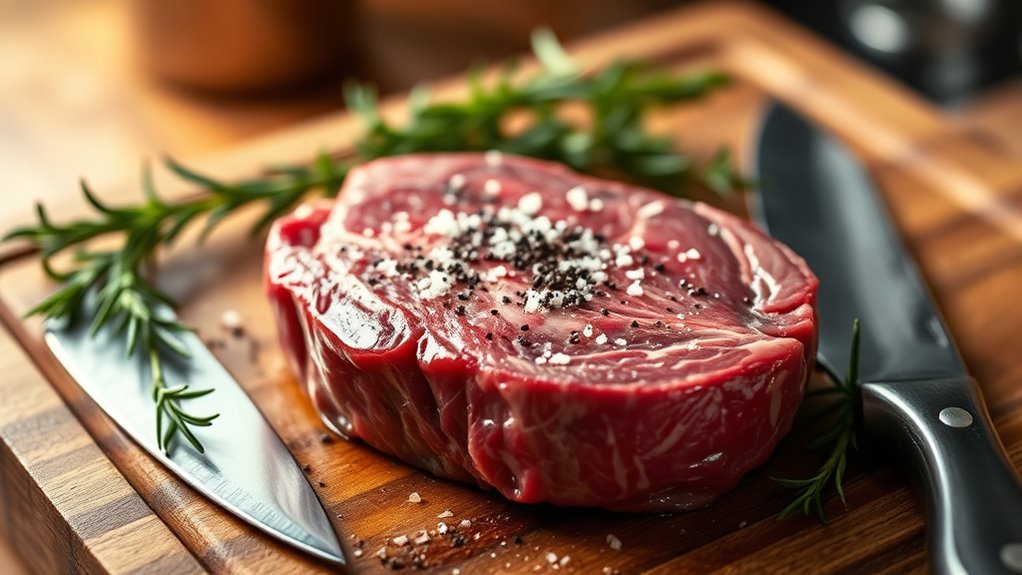
Although seasoning might seem straightforward, getting it right can make all the difference in your filet mignon’s flavor and crust. Start by seasoning generously with coarse salt to enhance taste and promote a crispy crust.
For the best results, dry brine your steak by salting and refrigerating it uncovered for several hours or overnight. Just before cooking, add freshly ground black pepper to preserve its aromatic punch.
Remember, if you marinate your filet or it’s already flavored, use seasoning sparingly to keep the natural beef flavor balanced. After cooking, let your steak rest and adjust seasoning lightly if needed.
- Use coarse salt liberally for flavor and crust development
- Dry brine by refrigerating uncovered to intensify taste
- Add black pepper only before cooking
- Season lightly post-rest if pre-marinated or needed
Preheating Your Pan for Searing
Before you add your filet mignon, make sure your pan is thoroughly preheated over medium-high to high heat for at least 3 to 5 minutes.
Ensure your pan is thoroughly preheated on medium-high heat for 3 to 5 minutes before cooking.
Use an oven-safe cast iron or stainless steel skillet to guarantee even heat distribution.
To check if your pan is hot enough, perform the water test: sprinkle a few drops of water onto the surface. If they dance and evaporate immediately, your pan is ready.
Add a small amount of high smoke point oil, like vegetable or canola oil, just before cooking.
Heat the oil until it shimmers but doesn’t smoke excessively.
Make sure the pan’s surface is dry and free from moisture to avoid steam, which can prevent a proper sear.
A hot pan is essential for perfect browning.
Achieving the Perfect Sear on Each Side
With your pan properly heated and oiled, you’re ready to achieve the perfect sear on your filet mignon. For a flawless pan-seared filet mignon, follow these key steps:
- Use high heat and a high smoke point oil like canola to prevent burning and promote crust formation.
- Place the steak in the pan and sear without moving it for 2-3 minutes until it develops a deep golden-brown crust.
- Avoid pressing down on the steak to retain juices and ensure the crust stays intact.
- Turn the steak using tongs to sear each side evenly, achieving an evenly cooked interior and a uniform crust.
This method locks in flavor while creating the ideal crust on your filet mignon.
Adding Aromatics and Butter for Flavor
You add aromatics like garlic and fresh herbs during the final minute of searing to infuse your filet mignon with fragrant flavors. Toss in rosemary or thyme alongside a generous pat of butter.
As the butter melts, tilt the pan and start basting the steak continuously with the rich, aromatic mixture. This basting helps the flavors meld and develops a deep, savory crust.
When you combine butter with herbs and garlic, you create a delicious herbs butter that enhances every bite. Using clarified or browned butter adds a nutty aroma, elevating the steak’s flavor profile even further.
Finishing the Steak in the Oven
Once you’ve seared your filet mignon to develop a flavorful crust, transfer the oven-safe pan to a preheated 360°F oven to finish cooking the steak evenly and precisely.
Finishing the steak in the oven guarantees a consistent temperature throughout without overcooking the exterior.
Here’s how to proceed:
- Roast the steak in the oven-safe skillet for 2 to 8 minutes, depending on your desired doneness.
- Monitor the internal temperature closely to avoid overcooking.
- Remove the steak about 5°F below your target temperature to let residual heat finish the cooking.
- Rest the steak tented with foil for 5-10 minutes to redistribute juices.
This method gives you control over the temperature and assures a perfectly cooked filet mignon every time.
Checking Internal Temperature for Doneness
Monitoring the internal temperature of your filet mignon guarantees it reaches the perfect doneness without overcooking. Use a digital meat thermometer for an accurate measurement by inserting it into the thickest part of the steak, avoiding bone or fat.
For a perfect filet mignon cooked medium rare, aim for an internal temperature of 130°F. Since cooking time varies, consistently oversee the temperature to adjust heat and prevent overcooking.
Remove the steak from the pan when it’s about 5°F below your target temperature, as the resting temperature will continue to rise. This precise monitoring ensures your filet mignon achieves the desired doneness and maintains juiciness.
Keeping an eye on the internal temperature is essential throughout cooking to master your perfect steak every time.
Resting the Filet Mignon After Cooking
Although the filet mignon looks ready to serve, letting it rest for 5 to 10 minutes allows the juices to redistribute, keeping your steak tender and flavorful. During this essential resting period, the beef retains moisture and enhances tenderness, preventing dry, less flavorful results.
To maximize your steak rest, follow these tips:
- Allow to rest at room temperature to minimize heat loss
- Use a loose foil tent to keep warmth without trapping moisture
- Avoid cutting immediately to prevent juice loss
- Respect the full rest time for ideal juice redistribution
Serving and Slicing Tips for Best Presentation
After letting your filet mignon rest to lock in its juices, you’ll want to focus on slicing and serving it properly to highlight its tenderness and flavor. Use a sharp carving knife to cut clean, even slices against the grain, enhancing both juiciness and tenderness.
Hold the steak steady with tongs to maintain control and prevent tearing during slicing. Serve the slices immediately to enjoy the ideal texture and presentation.
| Step | Tool Needed | Purpose |
|---|---|---|
| Resting | None | Redistribute juices |
| Holding | Tongs | Steady for slicing |
| Cutting | Carving Knife | Clean, even slices |
| Serving | Plate | Maintain juiciness |
Frequently Asked Questions
How Do You Cook Filet Mignon in a Skillet?
You heat a skillet until it’s very hot, season your filet mignon, sear it without moving for a few minutes per side, then rest it after cooking to lock in juices and flavor before serving.
How Does Gordon Ramsay Cook Filet Mignon in a Pan?
Imagine crafting a masterpiece; Gordon Ramsay seasons your filet generously, sears it fiercely in a blazing pan, then bathes it in butter and herbs.
You’ll finish it with care, resting it to perfection.
How Should a Filet Mignon Be Cooked?
You should sear your filet mignon on high heat, then finish in the oven until it reaches your preferred doneness.
Let it rest to lock in juices, then slice against the grain before serving.
How Long to Cook Filet Steak in the Pan?
You’ll cook a 1.5-inch filet mignon about 3-4 minutes per side for medium rare.
Just imagine that sizzling crust forming in those few minutes, sealing in all the juicy, tender flavor you crave.
Conclusion
Now that you’ve mastered the method, savor the satisfaction of a perfectly seared, succulent filet mignon. Remember, selecting stellar steaks, seasoning smartly, and searing swiftly set the stage for success. Resting retains rich juices, rewarding your efforts with remarkable flavor.
With these simple steps, you’ll serve stunning steaks that steal the spotlight every time. So, sharpen your skills, seize the skillet, and savor sumptuous steaks that always satisfy. Follow these 10 steps to cook filet mignon perfectly in a pan and enjoy restaurant-quality results at home.