How Do You Pan Fry Haddock in 5 Easy Steps
Did you know that haddock is one of the most popular white fish choices in households worldwide? Pan frying haddock is a fantastic way to enjoy its mild flavor and flaky texture. If you want to master this cooking method, you’re in the right place.
You’re just five simple steps away from cooking haddock that’s golden on the outside and tender inside. Stick with me, and I’ll guide you through the process to make your next meal a success.
Gather Your Ingredients and Equipment
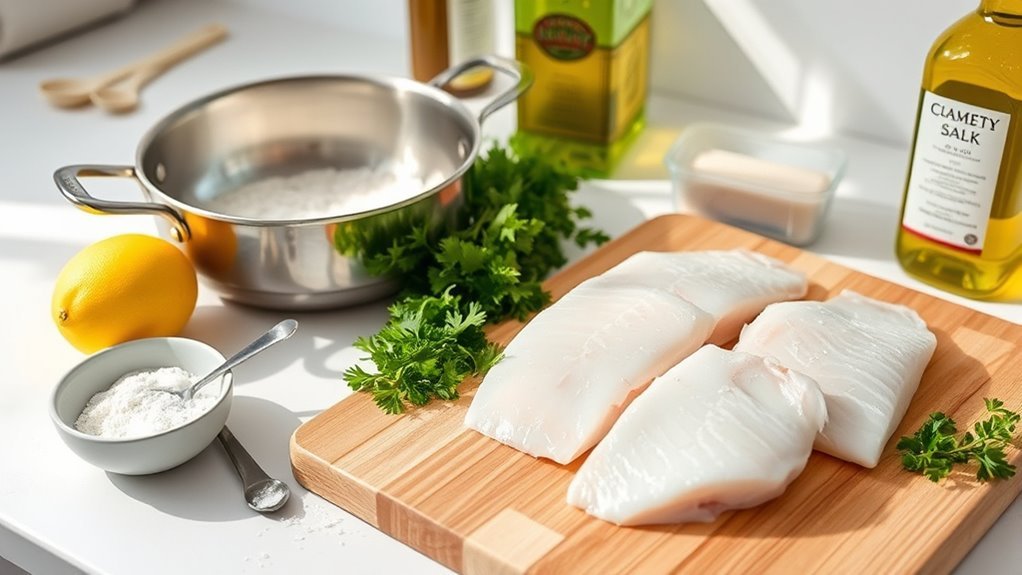
Before you start cooking, gather fresh haddock fillets that are thawed and pat them dry with paper towels to remove excess moisture. This step is vital for perfect pan frying because excess water can cause oil splatters and prevent a crisp crust.
Start with thawed, dry haddock fillets to ensure a crisp, splatter-free pan-fry crust.
Next, prepare your all-purpose flour seasoned with salt and pepper, and have milk or beaten eggs ready for dipping.
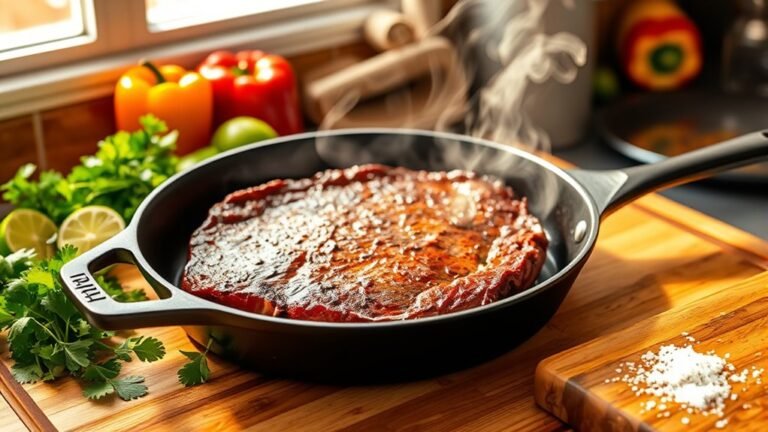
Choose a heavy-bottomed frying pan, like cast iron or copper, to guarantee even heat distribution; avoid non-stick pans as they don’t develop the same sear.
Have enough oil or clarified butter on hand to coat or partially submerge the haddock during frying.
Finally, set up your ingredients in an assembly line to make the coating and frying process smooth and efficient.
Prepare and Coat the Haddock Fillets
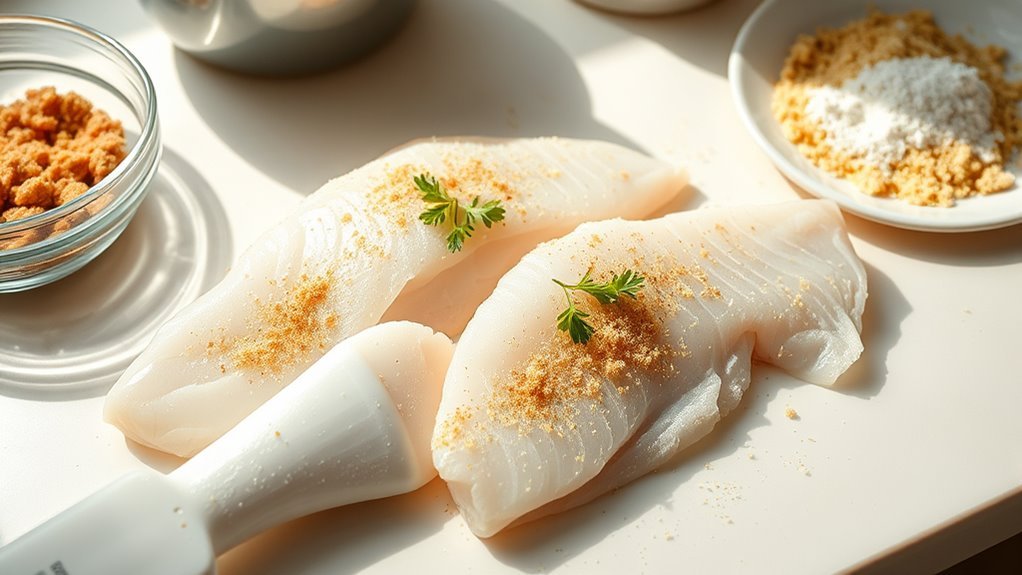
With your ingredients and equipment ready, you can move on to preparing and coating the haddock fillets. First, pat the fillets dry with paper towels to remove any excess moisture. Season them with salt, pepper, or your preferred spices.
Next, dredge each fillet in all-purpose flour, shaking off the excess for a light coat. For a traditional touch, dip the floured fillets into beaten egg or milk, helping the coating stick better. Place the coated fillets on a plate or tray, setting them up perfectly for frying.
| Step | Purpose |
|---|---|
| Pat dry | Remove moisture |
| Season | Enhance flavor |
| Flour coat | Create a light layer |
| Egg/milk dip | Help coat adhere to fillets |
Heat the Pan and Add Fat
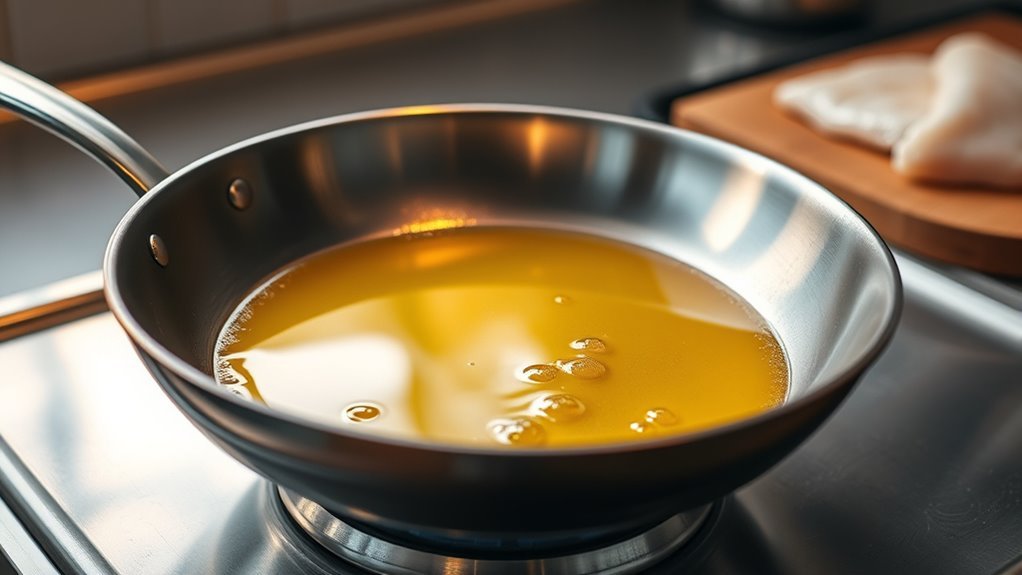
Once your skillet is hot, add 1 to 2 tablespoons of oil or clarified butter and swirl it to coat the surface evenly.
Add 1 to 2 tablespoons of oil or clarified butter and swirl to coat the hot skillet evenly.
Make sure you use a heavy skillet like cast iron or copper and preheat it over medium-high heat until it’s truly hot.
To check, drop a small piece of fish or bread into the pan; it should sizzle immediately.
The oil should shimmer but not smoke. If it smokes, lower the heat slightly.
Swirling the oil ensures the entire hot pan surface is coated, preventing the fish from sticking and promoting even cooking.
Adjust the heat as needed to maintain a steady sizzle without burning the oil or fat.
This step sets the stage for perfectly pan-fried haddock.
Cook the Haddock Fillets
After coating your pan with oil or butter and making certain it’s hot enough, it’s time to cook the haddock fillets.
Start by patting the fillets dry with paper towels to remove any excess moisture. Season both sides with salt, pepper, or your favorite spices to enhance the flavor.
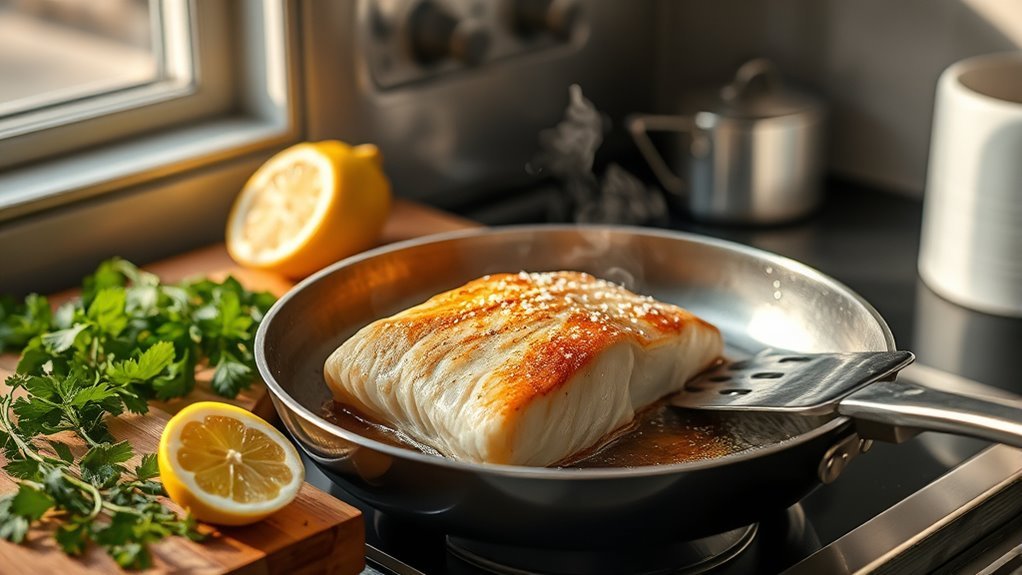
Place the fillets in the hot pan, presentation side down first, and let them cook undisturbed for 3 to 4 minutes until they develop a golden brown crust.
Carefully flip the fillets using a spatula, then cook the other side for another 3 to 4 minutes.
You’ll know the haddock is done when it flakes easily with a fork.
This simple pan fry method ensures tender, flavorful fillets every time.
Serve and Garnish Your Pan-Fried Haddock
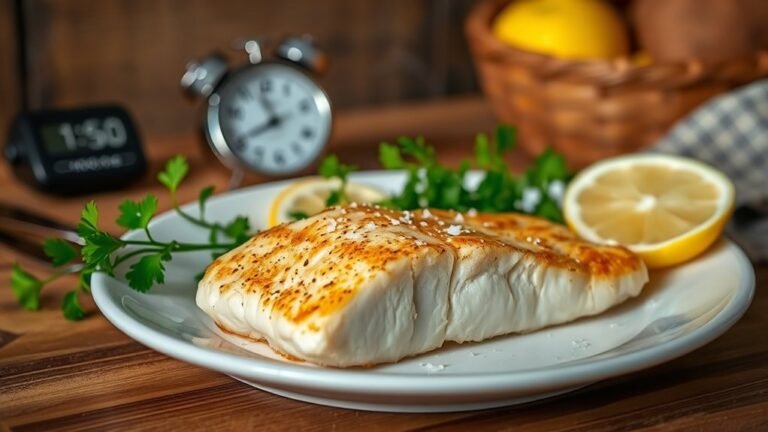
A perfectly cooked pan-fried haddock deserves an equally thoughtful presentation to highlight its crispy crust and delicate flavor. Serve your fish hot, right after cooking, to keep that satisfying crunch intact. Place the fillets on a warm plate to maintain their texture.
Serve pan-fried haddock immediately on a warm plate to preserve its crispy crust and delicate flavor.
Add lemon wedges on the side so you or your guests can squeeze fresh citrus over the fish, enhancing its brightness. Garnish with a sprig of parsley for a pop of color that complements the golden crispy crust beautifully.
Pair your haddock with sides like crispy fries, fresh salads, or fluffy rice to create a balanced meal. For extra flavor, consider a dollop of herby tartar sauce alongside.
This simple yet elegant presentation makes your pan-fried haddock irresistible.
Frequently Asked Questions
How Do You Fry Haddock in a Pan?
You heat a heavy skillet with oil, season and dry your haddock, then place it in the pan.
Cook undisturbed for 3-4 minutes, flip gently, cook another 3-4 minutes, and serve once flaky and opaque.
How to Cook Haddock Simply?
You might think cooking haddock is tricky, but it’s simple. Just season the fillets, heat oil and butter, then cook 3-4 minutes per side until golden and flaky.
Don’t rush flipping for a perfect crust.
What Is the Best Cooking Technique for Haddock?
The best technique is pan-frying over medium-high heat. You’ll get a crispy crust by lightly coating the haddock in seasoned flour.
Use a hot, oiled pan, and flip it carefully when edges brown.
What’s the Best Way to Cook Fish in a Frying Pan?
You should heat a heavy pan with oil until hot, pat your fish dry, season it well, then place it gently in the pan.
Don’t move it until it’s golden, then flip and cook until opaque.
Conclusion
Now that you’ve mastered pan-frying haddock, you hold the key to a simple yet delicious meal that comes together like a well-choreographed dance. Each step—seasoning, coating, heating, cooking, and serving—works in harmony to create a golden, flaky masterpiece.
Keep practicing, and soon this skill will feel as natural as breathing, turning everyday ingredients into a celebration on your plate. Enjoy the process and savor the tasty rewards of perfectly pan-fried haddock!