What Does Pan De Muerto Represent and How Is It Symbolic?
Just as the cycle of seasons hints at renewal, Pan de Muerto captures a deeper story about life and death. This traditional Mexican bread is rich in symbolism and plays a significant role in Día de Muertos celebrations. When you look at its round shape and delicate bone-like decorations, you’re witnessing more than a traditional treat—you’re seeing symbols that connect the living with those who’ve passed on.
But what exactly do these symbols mean, and why has this bread remained such a powerful part of Día de Muertos? The round shape represents the cycle of life and death, while the bone-like decorations symbolize the deceased. Each element of Pan de Muerto tells a story of remembrance, honoring ancestors and celebrating the enduring bond between generations.
Historical Origins of Pan De Muerto
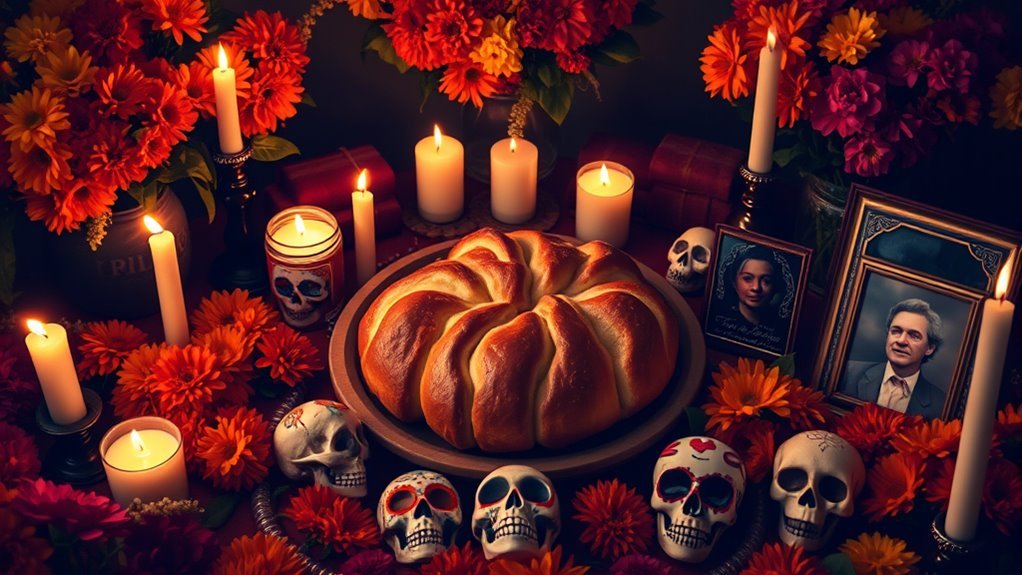
Although Pan de Muerto has become a staple of Día de Muertos celebrations today, its origins reach back to pre-Hispanic Mexico, where indigenous peoples offered amaranth bread to gods like Cihuapipiltin. You’ll find that these offerings were part of indigenous rituals deeply rooted in Aztec beliefs about the cycle of life and death.
The bread’s circular shape carries powerful symbolism, representing rebirth and the eternal cycle of life.
Over time, Spanish colonization introduced wheat flour and baking methods, blending with native customs to evolve the tradition you see now.
Some say the tradition reflects ancient Aztec sacrifices, though that’s debated. Understanding this history helps you appreciate Pan de Muerto as a living symbol, connecting pre-Hispanic spirituality with modern celebrations.
Cultural Significance in Mexican Traditions

When you see Pan de Muerto on a Día de Muertos altar, you’re witnessing more than just bread. You’re connecting with a deep cultural tradition that honors life, death, and rebirth.
This bread holds immense cultural significance in Mexican traditions as an essential offering that symbolizes the cycle of life and death. Placed on altars, Pan de Muerto serves as spiritual nourishment for the spirits of the departed, reminding you of your loved ones’ enduring presence.
Its symbolism reflects the natural cycle, with sweetness representing that death can be embraced with acceptance and even joy.
Symbolism of the Bread’s Shape and Decorations
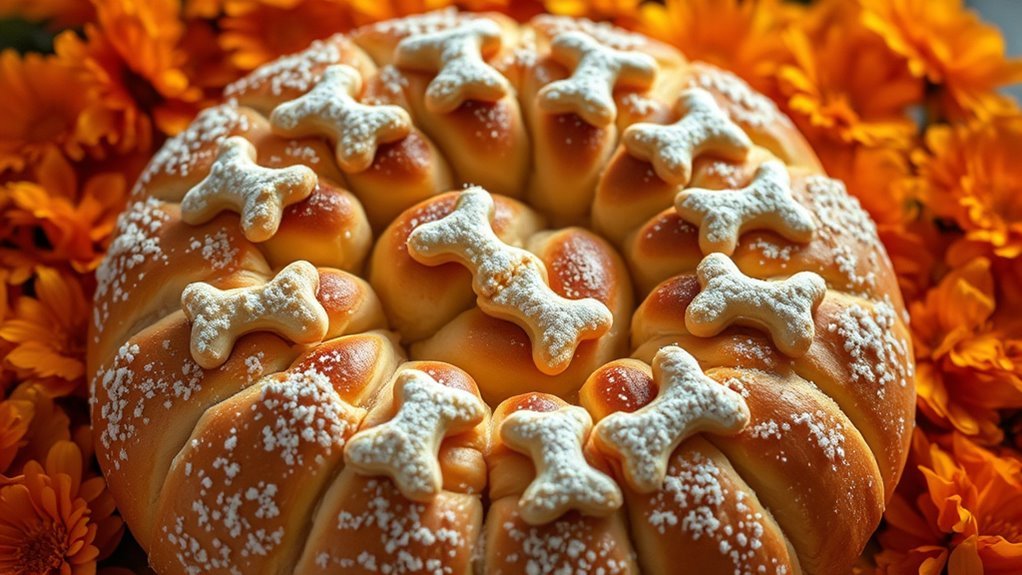
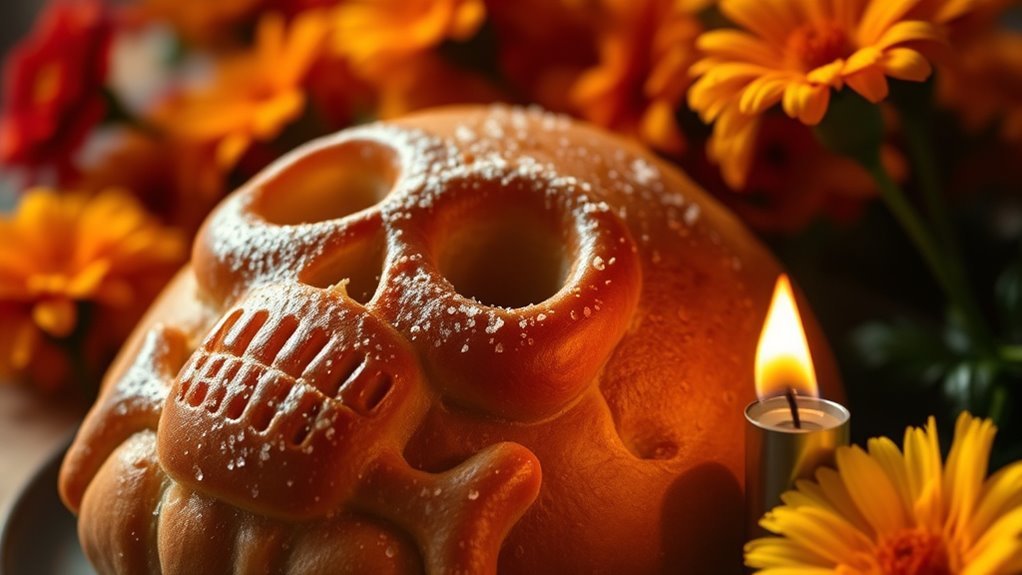
Because Pan de Muerto’s shape and decorations carry deep meaning, you can understand much about Mexican beliefs by examining them closely. The bread’s circular shape symbolizes the cycle of life and death, representing the earth covering the deceased. Its decorations carry rich symbolism that connects you to the afterlife.
Here’s what you’ll notice:
- The four dough strips, or “bones,” represent the bones of the departed and the four cardinal directions, symbolizing spiritual guardianship.
- The central bump, or “skull,” reminds you of mortality and honors the deceased.
- Additional decorations like sugar and floral patterns symbolize sweetness, tears, and the journey to the underworld.
Together, the shape and decorations weave a powerful story about life, death, and spiritual connection.
Ingredients and Their Meaning
The shape and decorations of Pan de Muerto tell a rich story, but the ingredients themselves also carry powerful meanings. When you taste Pan de Muerto, you’re experiencing symbolism through orange blossom and anise seeds, which add a sweet, fragrant note representing the sweetness of death and the journey to the afterlife.
Wheat flour and sugar provide the bread’s sustenance, nourishing spirits during Día de Muertos. Eggs in the dough symbolize fertility, rebirth, and life’s cycle.
Sesame seeds resemble tears, reminding you of mourning and remembrance.
Finally, the bright colors, often seen in pink or red sugar coatings, signify vitality and life beyond death. Each ingredient contributes a layer of meaning, making Pan de Muerto a deeply symbolic bread you can both see and taste.
Regional Variations and Unique Forms
Although Pan de Muerto shares common symbolism across Mexico, each region adds its own unique touch, creating diverse shapes and flavors that reflect local traditions. You’ll notice regional variations in shapes and decorative patterns that reveal local customs and symbolism.
Pan de Muerto varies across Mexico, with unique regional shapes and flavors reflecting local customs and symbolism.
For example:
- Oaxaca’s Pan de Muerto features intricate patterns symbolizing weaving and life’s cycle.
- Puebla favors bright pink sugar and bone-shaped dough pieces, highlighting regional aesthetic preferences.
- Michoacán shapes bread as animitas, small shrines representing departed souls.
Some areas even craft animal figurines or human-like figures, adding layers of meaning tied to their folklore.
In Yucatán, you’ll find filled breads with cream cheese and red glaze, showing how local ingredients influence these symbolic treats. These unique forms deepen your connection to Mexico’s rich cultural heritage.
Pan De Muerto in Día De Muertos Celebrations
How does Pan de Muerto bring meaning to Día de Muertos celebrations? You’ll find this special bread placed on altars as a heartfelt offering to honor and nourish the spirits of deceased loved ones. Its circular shape symbolizes the circle of life, reminding you of eternal remembrance and the ongoing connection between life and death.
Decorated with dough bones and sugar, Pan de Muerto embodies both the tradition and spiritual bond you share with those who’ve passed. By including this bread on your ofrendas, you actively participate in a cultural ritual that respects death and celebrates rebirth.
When you eat Pan de Muerto during Día de Muertos, you invite the spirit of your ancestors to return, keeping their memory alive through this meaningful tradition.
Evolution Through 20th and 21st Centuries
Pan de Muerto has long held a special place in Día de Muertos celebrations, but its form and meaning have shifted considerably over time. The evolution through the 20th and 21st centuries blends traditional roots with innovation and artistic expression.
You’ll notice:
- In the 20th century, Pan de Muerto evolved from simple breads to elaborately decorated pastries reflecting cultural symbolism and regional diversity.
- By the late 20th and into the 21st century, artisan bakers introduced new flavors and fillings like chocolate and Nutella, marking creative adaptations.
- Today, its vibrant colors and shapes highlight both Mexican heritage and global recognition, expanding its role beyond religious practice to a broader cultural symbol.
This journey shows how Pan de Muerto continually adapts, preserving tradition while embracing modern influences.
Representation in Popular Culture and Media
When you explore popular culture and media, you’ll see that Pan de Muerto plays a significant role in celebrating Mexican heritage. Films like Pixar’s *Coco* highlight Pan de muerto’s importance during Día de los Muertos, showcasing its cultural symbolism tied to life and death.
In literature, works such as *Cemetery Boys* use the bread as a symbol of remembrance and identity.
Media representation extends to TV, art installations, and social media, where Pan de muerto often appears as an emblem of Mexican traditions and festive spirit.
Its imagery promotes cultural continuity and honors both the living and the dead. Through popular culture, Pan de muerto becomes a powerful symbol that connects you with Mexico’s rich heritage and the ongoing celebration of life and death.
Connection Between the Living and the Dead Through Pan De Muerto
Although you might see it as just a festive treat, Pan de Muerto carries deep meaning that connects the living with the spirits of the departed. This bread’s symbolism plays a key role in the Day of the Dead cultural tradition, reinforcing the connection between the living and the dead.
Here’s how Pan de Muerto bridges both worlds:
- Its circular shape represents the cycle of life and death, symbolizing continuous remembrance.
- Decorative bones and a skull-like ball on the bread visually honor the deceased.
- Placing Pan de Muerto on altars welcomes and nourishes the returning spirits during Día de los Muertos.
Frequently Asked Questions
What Does the Pan De Muerto Symbolize?
Pan de muerto symbolizes life’s cycle, connecting you to ancestors. Its shape, bone decorations, and sweet coating remind you of mortality, rebirth, and the sweetness found in remembering loved ones during Día de Muertos celebrations.
What Does the Day of the Dead Represent?
The Day of the Dead represents honoring your ancestors and embracing death as a natural part of life. You celebrate family bonds, remember loved ones joyfully, and connect spiritually through vibrant traditions and meaningful rituals.
What Is Pan De Muerto?
Think of Pan de Muerto as the sweet centerpiece on your Day of the Dead altar. You’ll find it’s a round, fragrant bread adorned with dough bones, inviting you to honor and celebrate those who’ve passed on.
What Does the Rosca Symbolize?
The rosca symbolizes life’s eternal cycle, blending life, death, and rebirth. Its shape and hidden figurines remind you of mortality’s mysteries, while sweet decorations and hollow centers invite you to reflect on hope and spiritual journeys.
Conclusion
As you explore Pan de Muerto, you’ll see it’s more than just bread—it’s a powerful symbol connecting life, death, and rebirth. Did you know that over 90% of Mexican families include Pan de Muerto in their Día de Muertos altar? This tradition reflects a deep cultural embrace of mortality, honoring ancestors while celebrating life’s sweetness.
By sharing this bread, you partake in a timeless ritual that keeps memories and heritage alive across generations. Pan de Muerto represents the cycle of life and death, serving as a meaningful emblem during Día de Muertos celebrations. Its symbolism is deeply woven into the cultural fabric, making it an enduring icon of remembrance and renewal.