5 Steps to Cook Filet Mignon Perfectly in a Frying Pan
If you want to cook a filet mignon that’s tender and full of flavor, you need more than just heat and time. Cooking filet mignon perfectly in a frying pan requires attention to detail from start to finish. It starts with choosing the right cut and ends with letting the steak rest just so.
Along the way, precise seasoning, proper searing, and finishing in the oven all make a difference. Mastering these steps will change how you approach cooking steak at home—here’s how to get it right.
Selecting and Preparing Your Filet Mignon
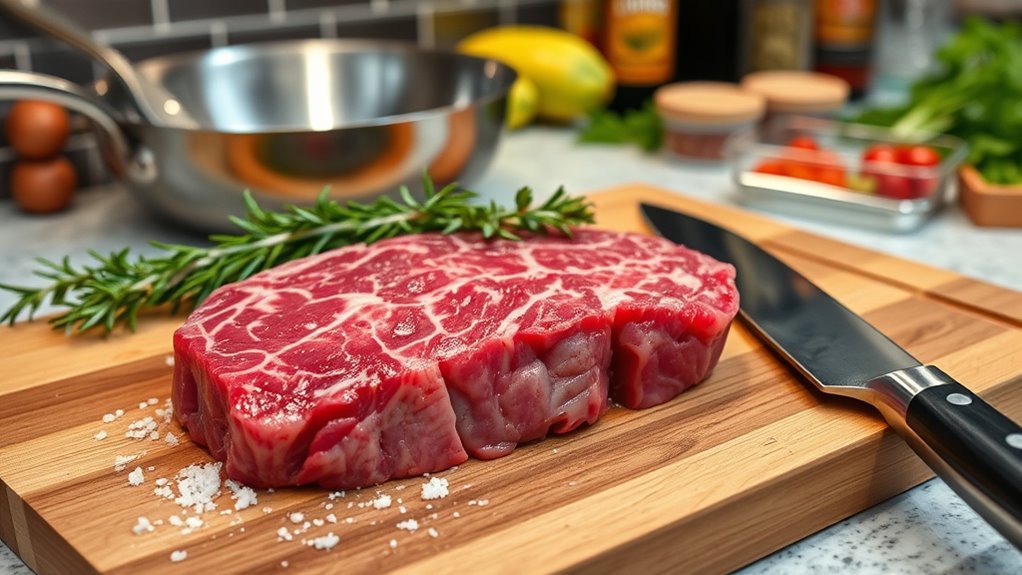
Before you start cooking, pick thick-cut filet mignon steaks about 1.5 to 2 inches thick with a deep red color and minimal marbling to guarantee tenderness.
Let your filet mignon come to room temperature for 30 to 60 minutes to assure even cooking.
If you want a better crust formation, consider dry brining the steak by seasoning it generously with salt and pepper, then refrigerate it uncovered on a wire rack for several hours or overnight.
Before seasoning, trim any silver skin or excess fat with a sharp knife to prevent curling and improve searing.
These steps in selecting and preparing your steak set the foundation for a perfectly cooked filet mignon with enhanced flavor and texture every time.
Seasoning and Preheating Your Pan

Once your filet mignon is properly prepped and at room temperature, it’s time to season it generously with coarse salt and freshly ground black pepper on all sides. Doing this at least 30 minutes before cooking enhances flavor and helps form a crispy exterior.
Season your filet mignon generously with coarse salt and pepper 30 minutes before cooking for maximum flavor and crust.
Meanwhile, focus on preheating your pan. A heavy-duty cast iron skillet works best. Place it over medium-high to high heat for several minutes until it reaches about 400-450°F, ensuring a hot surface essential for effective searing.
Just before adding your steak, pour in a small amount of high smoke point oil like vegetable or canola oil. Wait until the oil shimmers, signaling the pan’s ready.
This preparation prevents sticking and guarantees your filet mignon sears evenly with a perfect crust.
Searing the Filet Mignon to Develop a Crust

Although your pan is hot and ready, you’ll want to pat the filet mignon dry with paper towels to remove any excess moisture before searing. This step is essential to guarantee a proper crust forms.
Heat a cast iron skillet over high heat and add a small amount of neutral oil with a high smoke point, like canola or grapeseed oil.
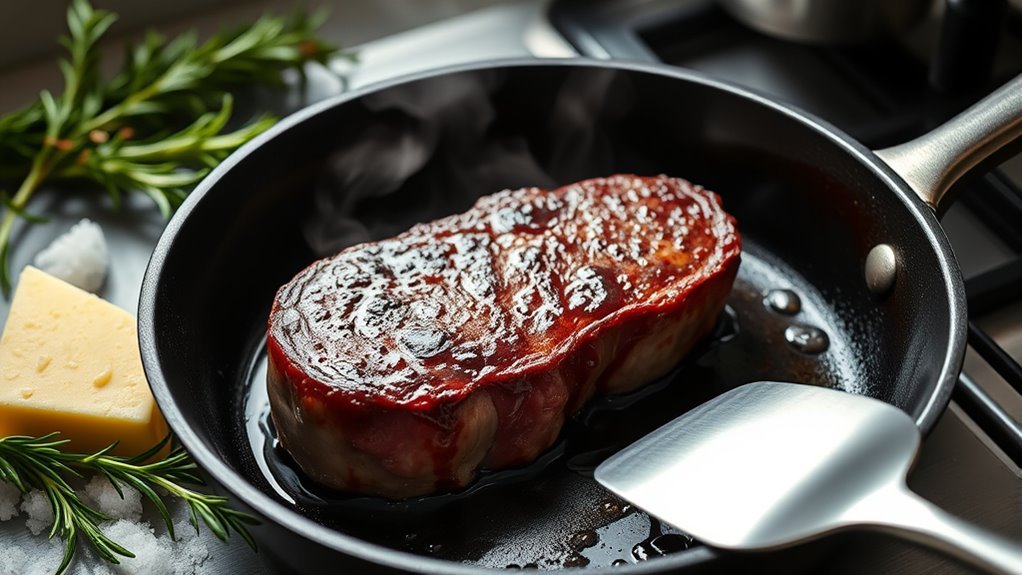
Place the steak in the pan without moving it, allowing it to sear undisturbed for 2-3 minutes. This intense high heat promotes browning and a deeply caramelized crust.
Avoid overcrowding the pan to maintain temperature and even searing.
The result will be a perfectly pan-seared filet mignon with a flavorful, golden crust that locks in juices.
Finishing Cooking in the Oven
When you finish searing your filet mignon on the stovetop, transfer the skillet to a preheated oven set at 360°F to cook the steak evenly through. Make sure you use an oven-safe skillet, like cast iron, to safely transfer from stovetop to oven and ensure consistent heat during oven roasting.
Roast the filet for 2 to 8 minutes, depending on the doneness you want. Use a meat thermometer to check the internal temperature: 125°F for rare, 130°F for medium-rare, and 140°F for medium. This precise monitoring helps you finish in the oven perfectly without overcooking.
Transferring the skillet carefully and roasting at the right temperature lets your filet mignon cook evenly and develop the perfect texture inside.
Resting and Serving Your Perfect Filet Mignon
Since the filet mignon just came out of the oven, you need to let it rest for at least 5 minutes, tented loosely with foil, to let the juices redistribute evenly throughout the meat.
Resting the steak prevents the juice from spilling out when you slice or carve it, ensuring every bite stays juicy and tender.
During resting, the internal temperature stabilizes and can rise by about 5°F, helping you reach your perfect doneness.
Avoid cutting into the tenderloin immediately; slicing too soon results in a drier texture.
When ready to serve, always slice against the grain to maximize tenderness and enhance the steak’s appearance.
Properly resting and carving your filet mignon will elevate your dining experience with every delicious, juicy slice.
Frequently Asked Questions
What’s the Best Way to Cook Filet Mignon in a Frying Pan?
You should sear your filet mignon in a hot, heavy skillet, seasoning it well, then finish in the oven.
Don’t forget to baste with butter and rest the steak to keep it juicy and tender.
How Does Gordon Ramsay Cook Filet Mignon in a Pan?
Imagine crafting a masterpiece; Gordon seasons the filet mignon, sears it in a hot pan with butter and herbs, then finishes in the oven.
You’ll achieve a tender, flavorful steak worth savoring every bite.
Should I Use Butter or Oil to Cook Filet Mignon?
You should start cooking filet mignon with oil for a high-heat sear, then add butter towards the end to enhance flavor without scorching. This combo ensures a perfect crust and rich, buttery taste.
How to Pan Fry the Perfect Fillet Steak?
Did you know 70% of chefs recommend high heat for steaks? You’ll sear your fillet steak in a smoking-hot pan, season well, cook to 130°F for medium-rare, then rest it to lock in juicy flavor.
Conclusion
Now that you’ve mastered these steps, cooking filet mignon perfectly in a frying pan will feel like second nature. With just a little patience and technique, you’ll create a steak so tender and flavorful it could make angels sing.
Remember, seasoning, searing, oven finishing, and resting are your keys to success. Follow this guide, and every bite will be a melt-in-your-mouth experience worth savoring again and again.
By using these 5 steps to cook filet mignon perfectly in a frying pan, you ensure a delicious and impressive meal every time. Enjoy the rich flavors and tender texture that come from mastering this method.