
10 Easy Steps to Cook Swordfish in a Pan Perfectly
If you want to cook swordfish steaks that come out juicy and flavorful every time, there are a few key steps you’ll want to follow. From picking the right cut of swordfish to knowing exactly when to flip and rest your fish, each detail matters. Mastering these simple techniques can make your pan-seared swordfish steak a standout dish.
Getting these steps right can transform a simple pan-seared meal into something truly impressive. Let’s start by looking at how to choose the perfect swordfish steak.
Selecting the Right Swordfish Steaks

When selecting swordfish steaks, you’ll want to pick pieces about 3/4 to 1 inch thick to make certain they cook evenly.
Choose fresh swordfish steaks with a firm texture and a clean, moist appearance, steering clear of any discoloration or drying edges.
Pick swordfish steaks that are firm, clean, and moist, avoiding any signs of discoloration or dryness.
Opt for cuts of uniform size so they cook at the same rate; if your steaks vary in size, consider slicing larger ones horizontally to match the others.
If you’re using frozen fish, proper thawing is essential to maintain flavor and texture.
Before cooking, pat the steaks dry with a paper towel and remove any skin to help achieve a perfect sear without splattering.
Selecting quality, sustainably sourced swordfish will make your dish both delicious and responsible.
Thawing and Preparing Swordfish for Cooking
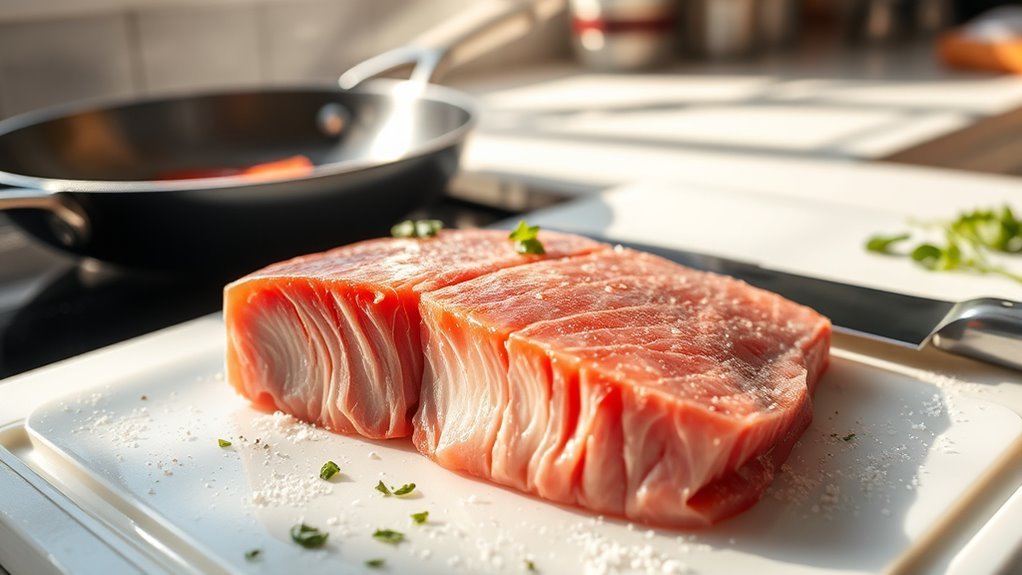
Although frozen swordfish steaks offer convenience, proper thawing is essential to preserve their flavor and texture. You can thaw swordfish in the refrigerator for 12-24 hours or speed it up by submerging the sealed steak in cold water for about 30 minutes, changing the water if it warms.
Once thawed, remove the swordfish from its packaging and pat dry thoroughly with paper towels to ensure even searing.
For best results, let the swordfish sit at room temperature for 10-15 minutes before cooking; this helps the fish cook evenly.
Avoid refreezing thawed swordfish and cook it promptly to maintain freshness.
Taking these steps when thawing and preparing swordfish sets the foundation for a perfectly cooked meal.
Drying and Seasoning the Swordfish
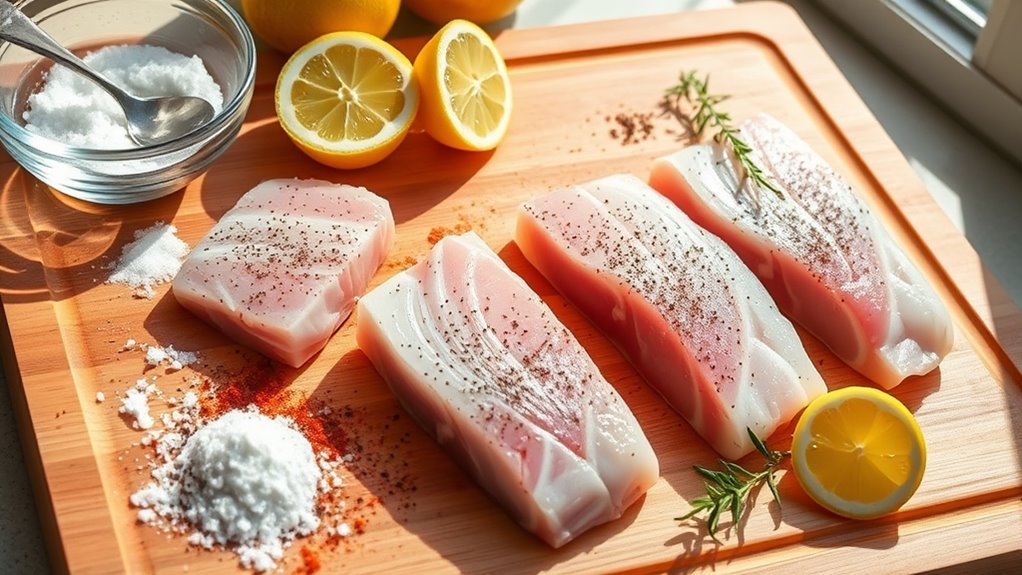
Since moisture hinders a proper sear, you should pat the swordfish steaks dry with paper towels before seasoning. Removing excess moisture guarantees the fish browns evenly. Also, discard any skin to allow your seasoning to penetrate better.
Season both sides generously with salt, using about ¾ teaspoon per pound if fine, or 1 teaspoon if coarse. For extra flavor, sprinkle herbs like rosemary or thyme, or try spice blends such as Old Bay or lemon pepper.
Let the swordfish rest at room temperature for 10-15 minutes. This helps the seasoning absorb and promotes an even sear.
| Step | Tip |
|---|---|
| Drying | Pat steaks dry to reduce moisture |
| Seasoning | Use salt generously and herbs for flavor |
| Resting | Let sit 10-15 mins before cooking |
Choosing the Best Pan for Searing
After seasoning and resting your swordfish steaks, choosing the right pan sets the stage for a perfect sear. Opt for a 10-inch nonstick pan or cast iron skillet. Both are excellent for searing because they hold heat well and prevent sticking.
A heavy-bottomed pan distributes heat evenly, which helps create that golden crust you want on your swordfish. Make sure the pan is large enough to fit the steaks in a single layer without overcrowding. This allows proper airflow for even browning.
When you use a well-seasoned cast iron or quality nonstick pan, flipping the steaks becomes easier and cleaner. Selecting the right pan ensures your swordfish cooks uniformly and develops that ideal sear every time.
Preheating Your Pan Properly
When you preheat your pan properly over medium-high heat for 2 to 3 minutes, it reaches the ideal temperature to sear swordfish perfectly.
To check if your pan is hot enough, sprinkle a few drops of water. It should sizzle immediately.
Sprinkle a few drops of water on the pan; it should sizzle immediately when hot enough.
For precision, use a kitchen thermometer to guarantee the pan’s temperature hits between 400-450°F. This range is perfect for creating a flavorful crust without overcooking.
Avoid adding your swordfish before the pan is fully heated, or it might stick and cook unevenly.
You can also test by placing a tiny piece of fish or bread. It should sizzle and brown quickly.
Taking these steps to preheat your pan properly ensures a beautifully seared swordfish every time.
Adding Oil and Preparing to Cook
Choose a high smoke point oil like canola or grapeseed to guarantee your swordfish sears perfectly without smoking up your kitchen.
After you preheat your pan over medium-high heat until it’s very hot but not smoking, add about 1 teaspoon of oil per 4-ounce swordfish steak.
Swirl the oil around to coat the entire pan surface evenly. This creates a barrier that prevents sticking and helps develop a golden crust.
Before this, make sure to pat your swordfish steaks dry with paper towels to remove excess moisture, which helps the oil adhere better and ensures a crisp sear.
Searing the Swordfish Steaks Evenly
Though your pan should already be hot, double-check it’s at medium-high heat before adding the swordfish steaks. Place them carefully in the hot pan, avoiding overcrowding to guarantee even cooking.
Flip the steaks every 2 minutes to develop a golden crust on both sides and prevent burning. Searing each side for 4-5 minutes will give you perfectly pan seared swordfish steaks. Basting with juices or oil during searing helps maintain moisture and browning.
| Step | Time per Side | Key Tip |
|---|---|---|
| Initial Sear | 2 minutes | Flip regularly |
| Full Sear | 4-5 minutes | Avoid overcrowding |
| Basting | Throughout | Use juices/oil |
This technique guarantees evenly cooked, flavorful swordfish steaks every time.
Monitoring Temperature and Doneness
As you cook your swordfish, monitoring its internal temperature guarantees you achieve the perfect doneness without overcooking. Use a meat thermometer to check the internal temperature, aiming for about 130°F during cooking.
Keep an eye on visual cues, like the fish turning opaque and flaking easily with a fork. Manage cooking time carefully, flipping the steak every 2 minutes for even heat distribution.
- Insert a meat thermometer into the thickest part to track internal temperature.
- Flip the swordfish every 2 minutes for uniform cooking.
- Watch for opacity and flaking as signs of doneness.
- Remove from heat once near 130°F; residual heat will raise it further.
Combining temperature checks and visual cues guarantees moist, tender swordfish every time.
Resting the Swordfish After Cooking
While the swordfish rests after cooking, its internal temperature rises by about 5°F, ensuring even doneness throughout the fillet. This resting period is essential because it allows the juices to redistribute, enhancing both juiciness and tenderness.
If you skip resting, slicing the fish right away can cause moisture to escape, leaving the meat dry. Aim to rest your swordfish for 3-5 minutes on a warm plate or separate dish to avoid pooling juices on the serving surface.
Serving Suggestions and Accompaniments
When you serve swordfish, adding fresh lemon wedges and herbs like parsley or thyme brings out its natural flavors beautifully. These simple touches, along with a drizzle of olive oil, brighten the dish perfectly.
Fresh lemon wedges and herbs like parsley or thyme beautifully enhance swordfish’s natural flavors.
For a balanced presentation, consider these accompaniments:
- Roasted vegetables like bell peppers and zucchini for color and texture.
- Light sauces such as lemon caper or garlic butter to enhance flavor.
- Low-carb sides like cauliflower rice or sautéed greens to keep it healthy.
- Colorful garnishes including cherry tomatoes or microgreens for visual appeal.
Frequently Asked Questions
How Do You Cook Swordfish in a Pan?
You’ll heat a pan till it’s really hot, add oil, then season and dry your swordfish. Sear each side for a few minutes, flipping often.
Rest it briefly before serving for juicy, tender fish.
How Is Swordfish Supposed to Be Cooked?
You should cook swordfish until it’s just opaque and reaches 130°F to 140°F internally. Sear it quickly on high heat, avoid overcooking, and let it rest briefly for juicy, tender results.
How Long Do I Fry Swordfish For?
Picture a golden crust forming as you fry swordfish for 4 to 5 minutes per side. Thicker cuts need more time, thinner less.
Flip every 2 minutes, aiming for 130°F to savor perfect, juicy fish.
What Is the Best Seasoning to Put on Swordfish?
You’ll want to use salt, black pepper, and a squeeze of lemon juice to highlight swordfish’s natural flavor.
Adding herbs like rosemary or thyme gives it a fresh touch, while a dash of paprika adds mild spice.
Conclusion
Now that you know the secrets to pan-searing swordfish, you’re all set to create a meal that’s simply unforgettable. With a little patience and care, you’ll turn those firm steaks into tender treasures that dance on your taste buds.
Remember, a gentle rest after cooking lets the flavors settle into a perfect harmony. So go ahead—embrace the process, and enjoy a deliciously rewarding experience every time you cook swordfish in a pan.
By following these easy steps to cook swordfish in a pan perfectly, you’ll consistently achieve flavorful, juicy results that make your meals stand out. Happy cooking!