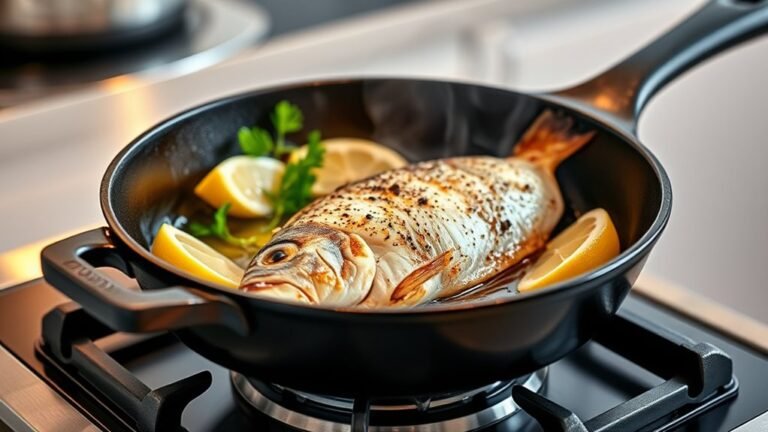

How Long to Bake Steak in the Oven Simply Explained
Just like a painter needs the right brushstroke to bring a canvas to life, you need the perfect timing to bake your steak in the oven to perfection. Baking steak in the oven is a simple method that, when done right, delivers a juicy and flavorful result every time. It’s not just about tossing it in and hoping for the best—you’ll want to master a few key steps to get that ideal doneness.
Before you know it, you’ll be serving a steak that’s juicy, flavorful, and cooked just the way you like. Understanding how long to bake steak in the oven simply is the key to achieving that perfect balance of tenderness and flavor. With a little practice, you’ll impress everyone at your table with your perfectly baked steak.
Choosing the Right Steak for Oven Baking

When you want a perfectly baked steak, choosing the right cut is essential. For oven baking, thick cuts measuring at least 1 to 1.5 inches work best, ensuring even cooking and a juicy interior.
Focus on cut selection by opting for premium choices like ribeye, T-bone, New York strip, or porterhouse. These cuts are well-marbled, with intramuscular fat that melts during baking, enhancing flavor and moisture.
Avoid lean cuts such as sirloin or round unless they’re thick and have some fat. Always pick high-quality, sustainably raised steaks with good color and marbling to get the best texture and taste.
Preparing Your Steak for Oven Cooking

Although selecting the right cut is essential, properly preparing your steak before oven cooking makes all the difference in flavor and texture. Start by removing your steak from the refrigerator at least 30 minutes prior, allowing it to reach room temperature.
Proper preparation before cooking transforms your steak’s flavor and texture—start by bringing it to room temperature.
Next, pat dry the steak with paper towels to eliminate excess moisture, which helps achieve a better sear. Lightly brush both sides with high-heat oil, like avocado or vegetable oil, to prevent sticking and encourage browning.
Generously season your steak with salt, pepper, and any preferred herbs or spices. After seasoning, let your steak rest at room temperature until you’re ready to cook.
This resting step ensures even cooking and maximizes flavor, making your oven-baked steak tender and delicious every time.
Essential Tools and Equipment Needed
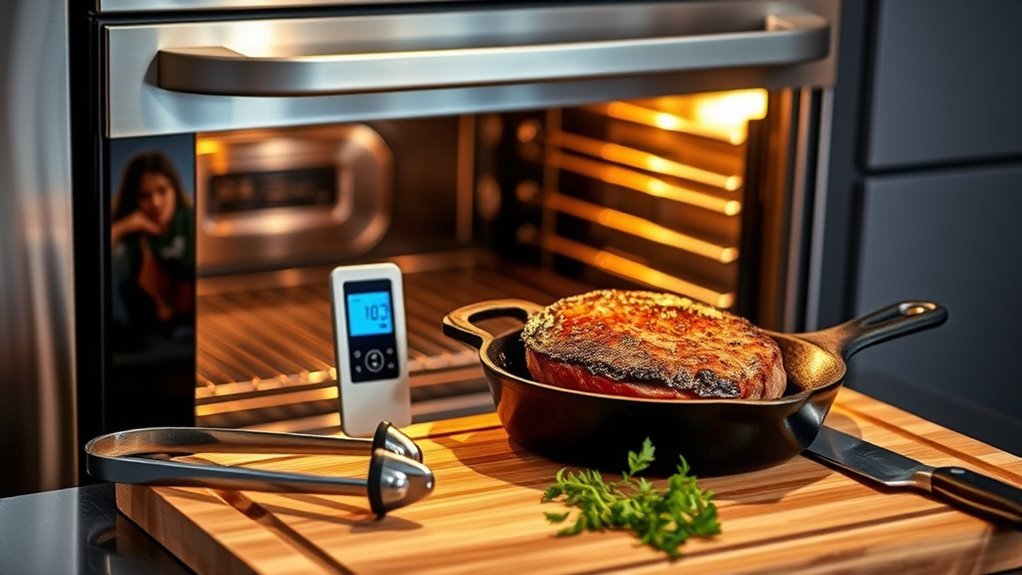
Getting your steak ready is just the start; having the right tools makes all the difference in achieving restaurant-quality results at home. Use an oven-safe skillet, preferably a cast iron skillet, for even heat distribution and a perfect sear.
High-heat cooking oils like avocado or vegetable oil help you achieve a great crust without smoking. You’ll need tongs to flip and handle your steak safely without piercing the meat, preserving its juices.
A reliable meat thermometer, such as an instant-read type, ensures you hit the ideal internal temperature for your preferred doneness.
Finally, position your skillet on an oven preheated rack placed in the middle to promote uniform cooking and easy transfer.
These essentials set you up for success every time.
Preheating the Oven for Perfect Results
Since even heat is key to cooking steak evenly, you should preheat your oven to 375°F (190°C) before putting your steak inside. Preheating ensures even cooking and optimal results by allowing the oven to reach a consistent temperature.
Use an oven thermometer to verify the oven temperature for accuracy. Position the oven rack in the middle to promote uniform heat circulation around your steak. Proper preheating also helps develop a great crust during searing and consistent internal doneness.
| Step | Purpose |
|---|---|
| Preheat oven | Achieve steady cooking temp |
| Set oven to 375°F | Optimal heat for steak |
| Use oven thermometer | Verify actual oven temperature |
| Position oven rack | Ensure even heat distribution |
| Wait for preheating | Avoid temperature fluctuations |
Searing the Steak Before Baking
Before baking, you want to sear your steak to lock in flavor and create a caramelized crust. Start by heating a cast iron skillet over high heat until it’s hot and sizzling, about 3-5 minutes.
Place your steak in the hot skillet and press down gently to maximize contact. Sear each side for 30 seconds to 1 minute, depending on thickness, without moving it too much. This helps develop a deep golden-brown crust that enhances both flavor and appearance.
Avoid flipping too often to ensure an even sear.
Once your steak has that perfect crust, it’s ready to finish cooking in the oven. This method guarantees a flavorful, well-textured steak every time.
Baking Times Based on Steak Thickness
Once you’ve seared your steak to lock in flavor, the next step is baking it to your preferred doneness.
Searing your steak first locks in flavor before baking to your preferred doneness.
For a steak thickness of 1 inch, set your oven temperature to 400°F and bake for about 10-12 minutes to reach medium doneness.
Thicker cuts, like those 1.5 inches or more, need 15-20 minutes of oven baking time. Remember to add roughly 5 minutes for every additional 0.5 inch to hit your desired internal temperature.
Use a meat thermometer to check doneness levels: 125°F for rare, 135°F for medium-rare, and 145°F for medium. After baking, let your steak rest for 5-10 minutes; this resting time helps juices redistribute, enhancing flavor and tenderness.
Using a Meat Thermometer for Doneness
Although it might seem simple to judge steak doneness by sight or touch, using a meat thermometer gives you precise control over the cooking process. To cook steak perfectly in your oven, monitor the internal temperature carefully. Insert the thermometer into the thickest part for the most accurate readings.
Remember to pull your steak about 5°F below your target temperature to allow for carryover cooking.
Keep these tips in mind when using a meat thermometer:
- Use a digital instant-read thermometer for quick, reliable results
- Know doneness temperatures: rare 125°F, medium rare 130°F, medium 140°F
- Adjust for oven temperature fluctuations
- Avoid overcooking by tracking internal temperature, not time alone
- Clean the probe after each use for hygiene and accuracy
This approach guarantees perfectly cooked steak every time.
Resting Your Steak After Baking
After you pull your steak from the oven at the right temperature, letting it rest for 5 to 10 minutes helps the juices redistribute and the meat relax.
Resting your steak allows those flavorful juices to redistribute evenly, preventing them from spilling out when you cut into it.
During this time, tent the steak loosely with foil to keep it warm without trapping moisture.
Rest for 5-10 minutes to let the internal temperature stabilize, as carryover cooking will often raise it by about 5°F.
Skipping the rest causes the juices to escape, leaving your steak drier and less tender.
Seasoning and Flavor Enhancements
To bring out the best in your steak, season it generously with kosher salt and freshly ground black pepper before baking. These basic seasonings reveal the meat’s natural flavor.
For an extra kick, consider adding garlic powder or seasoned salt to deepen the taste.
Before cooking, let your steak rest at room temperature for 30-45 minutes to help the seasonings penetrate evenly.
You can also enhance flavor by:
- Applying a thin coat of olive oil to help seasonings stick
- Using fresh herbs like thyme or rosemary for aromatic notes
- Marinating the steak to infuse it with additional flavors
- Adding compound butter after baking for richness
- Trying different marinades to customize taste
These steps elevate your steak’s flavor without complicating the process.

Serving Suggestions and Side Dish Ideas
Once your steak is perfectly seasoned and baked, choosing the right sides can elevate the entire meal. Classic side dishes like creamy mashed potatoes, roasted vegetables, or a crisp green salad complement the steak’s savory flavor beautifully.
For added richness, top your steak with a dollop of garlic herb butter or a drizzle of steak sauce.
If you prefer lighter options, pair it with grilled asparagus, green beans, or steamed broccoli.
Don’t forget to garnish the steak with fresh herbs like parsley or thyme to add a burst of color and aroma. These simple touches will enhance both the presentation and taste, making your steak dinner truly memorable.
Frequently Asked Questions
How Many Minutes to Bake Steak in the Oven?
You’ll bake a 1-inch steak for about 10-12 minutes at 400°F and a thicker one around 15-20 minutes. Use a thermometer, removing it slightly before your target temperature, then let it rest before serving.
How Long Do I Bake My Steak at 350 Degrees?
You’ll bake your 1-inch steak at 350°F for about 20-25 minutes for medium-rare. Thicker cuts need longer.
Use a thermometer, pull it out slightly early, and let it rest for perfect results.
Is It Better to Cook Steak at 350 or 400?
Choosing between 350°F and 400°F is like picking between a slow dance and a sprint. You’ll get a quicker, flavorful crust at 400°F but more even cooking and control at 350°F. So it depends on your steak goals.
What Is the 3 3 2 2 Rule for Steak?
The 3-3-2-2 rule means you sear your steak for 3 minutes per side, rest it for 2 minutes, then repeat searing and resting. This method helps you get a perfectly cooked, juicy medium-rare steak every time.
Conclusion
Baking your steak in the oven is like tending a garden—you plant the right cut, nurture it with seasoning, and give it just the right heat and time. With your trusty thermometer as your guide, you’ll watch it bloom into tender perfection.
Remember to let it rest, like letting fruit settle before picking.
Follow these steps, and you’ll harvest a delicious steak that’s worth every moment of care. Knowing how long to bake steak in the oven simply ensures a juicy, flavorful meal every time.