

How Long to Bake Salmon at 400°F for Perfect Results
Baking salmon at 400°F is like finding the perfect balance between art and science. Getting the best results requires more than just setting the right time and temperature. If you want moist, flaky salmon, understanding how long to bake salmon at 400°F is key.
You might think it’s just about time and temperature, but there’s more to achieving moist, flaky fish than a simple timer. If you’ve ever ended up with dry or undercooked salmon, you’ll want to contemplate what really determines the ideal baking time.
Let’s explore how to get it just right every time.
Optimal Temperature for Baking Salmon

When you bake salmon at 400°F, you guarantee it cooks evenly while staying moist and tender. Setting your oven to 400 degrees provides the ideal baking temperature, allowing the salmon fillet to cook evenly without drying out.
This gentle heat ensures the fish remains moist and tender, especially when you monitor the internal temperature carefully. To achieve a perfectly cooked salmon, check the thickest part of the fillet; once it reaches an internal temperature of 130-135°F, it’s ready to come out.
Following these temperature guidelines helps you avoid overcooking while maintaining the right texture. Whether you’re baking a thin or thick salmon fillet, keeping the oven at 400°F ensures consistent results and the best flavor every time.
Determining the Ideal Baking Time
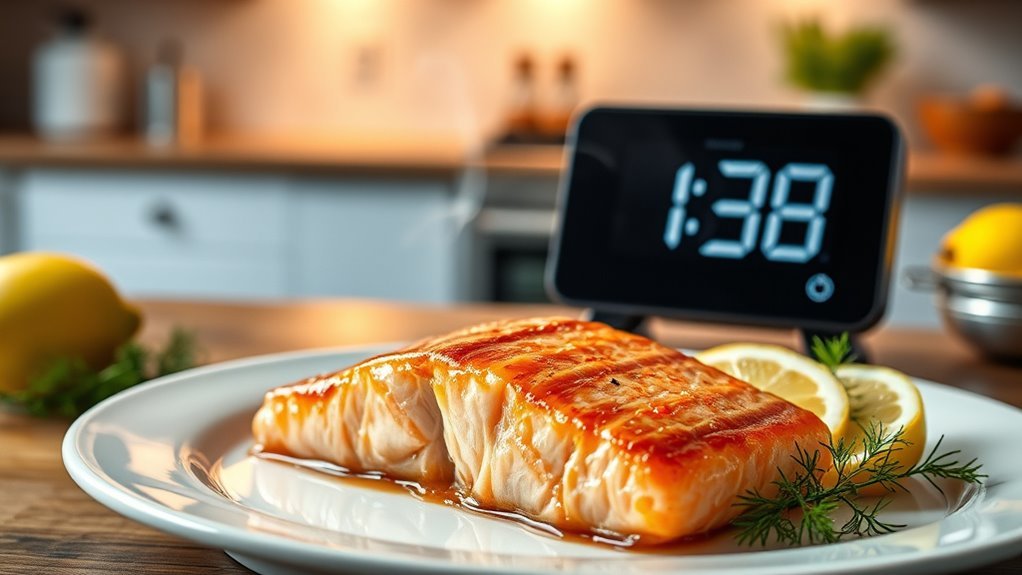
Baking time plays a key role in achieving perfectly cooked salmon at 400°F. When you bake salmon, the cooking time depends mainly on the fillet thickness rather than its weight.
For example, a 4-ounce fillet typically takes 10-15 minutes in the oven on a baking sheet.
A 4-ounce salmon fillet usually requires 10-15 minutes of baking on a sheet.
If your fillet is thicker than an inch, expect it to need 15-20 minutes to reach doneness. Maintaining the right temperature guarantees even cooking, but monitoring the internal temperature is essential for perfect results.
Following this recipe, check your salmon at the 10-15 minute mark to avoid overcooking.
Adjusting cooking time based on thickness assures tender, flavorful salmon every time you bake it.
Checking Salmon Doneness and Internal Temperature
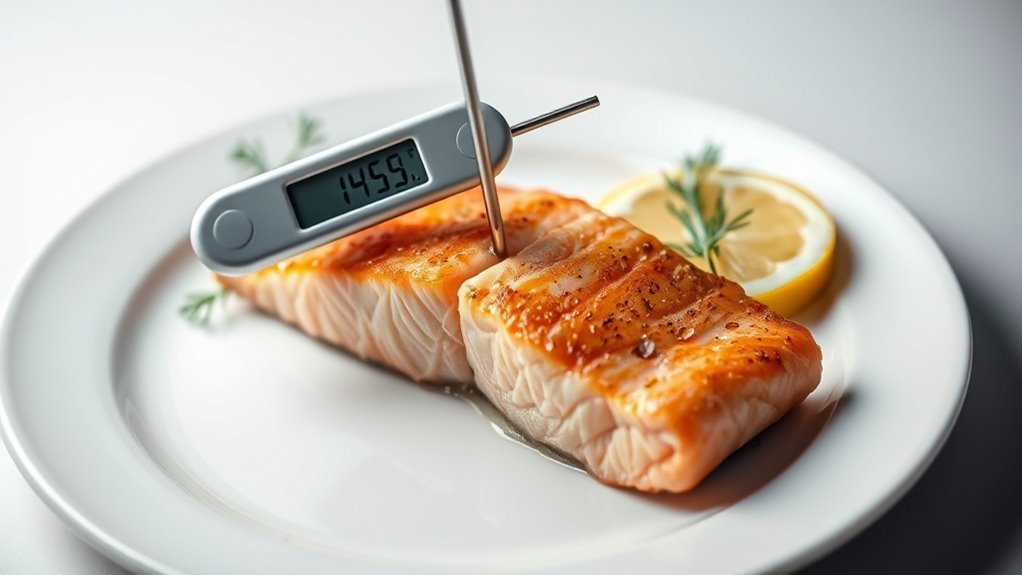
Although the baking time gives you a general guideline, you’ll want to check the salmon’s doneness by measuring its internal temperature. Use an instant-read thermometer inserted into the thickest part of the fillet to verify perfect doneness.
Aim for an internal temperature of 130-135°F, which keeps the salmon tender, flaky, and moist. Keep in mind the oven temperature and cook time affect how quickly the salmon reaches this point.
Since the internal temperature will rise a few degrees during resting, remove the salmon slightly below your target.
While the USDA recommends a safe temperature of 145°F, lower temperatures often yield better texture and flavor.
Besides temperature, look for salmon that flakes easily with a fork and appears opaque, both signs of doneness you can trust.
Preparing and Seasoning Salmon for Baking
Since proper preparation sets the foundation for perfectly baked salmon, start by patting your salmon fillets dry with paper towels to remove excess moisture. This step guarantees even cooking and prevents steaming.
Next, line your baking sheet with parchment paper or foil and lightly spray it to avoid sticking.
Let the fillets sit at room temperature for 20-30 minutes before seasoning; this promotes even cooking throughout.
Rub each fillet with olive oil, which helps the seasoning stick and enhances flavor.
Then, season generously with salt and pepper, along with your choice of herbs and spices to suit your taste.
Applying the seasoning just before baking locks in the flavors, setting you up for a delicious, perfectly cooked salmon every time.
Step-by-Step Baking Instructions at 400°F
Once your oven reaches 400°F and your salmon is seasoned, place the fillets skin-side down on the prepared baking sheet to guarantee even cooking and easy handling.
Follow these steps for perfect baking:
- Slide the baking sheet lined with parchment into the oven. Bake the salmon fillet for 10-15 minutes, adjusting cook time based on thickness.
- Check doneness by inserting an instant-read thermometer into the thickest part of the fillet. Aim for an internal temperature of 125-130°F.
- Remove the salmon from the oven and let it rest for 5-10 minutes. This allows carryover cooking to bring the temperature to 135°F for ideal texture.
Common Mistakes to Avoid When Baking Salmon
When baking salmon, you’ll want to avoid common mistakes that can ruin its texture and flavor. First, never skip patting dry the fillet; excess moisture leads to uneven cooking and poor browning.
Also, avoid using salmon straight from the freezer or fridge without proper thawing, as the initial temperature affects baking time and can cause uneven cooking.
Monitor the internal temperature closely. Overcooking past 145°F dries out the fish, so rely on a thermometer rather than guessing.
Don’t wait too long to apply seasoning; seasoning application early on ensures consistent flavor.
Be mindful of oven temperature and baking time to prevent overbaking.
Lastly, always consider food safety by fully cooking the salmon while preserving its tender texture through precise temperature control.
Tips for Enhancing Flavor and Texture
Although baking salmon is straightforward, you can boost its flavor and texture markedly with a few simple techniques. Here’s how to maximize flavor enhancement and moisture retention at the right oven temperature and baking time:
- Marinate your salmon in lemon juice or a soy-based sauce for 15-30 minutes before baking. This infuses vibrant flavors that penetrate deeply.
- Brush the fish with olive oil or butter, then season with fresh herbs like dill, parsley, or thyme, plus spices such as paprika or garlic powder. This creates a delicious crust that locks in juices.
- After baking, let the salmon rest for 5-10 minutes. Resting allows the juices to redistribute, resulting in a moist, tender texture.
These steps ensure your salmon turns out perfectly flavorful and juicy every time.
Storing and Reheating Baked Salmon
To keep your baked salmon fresh and flavorful, store any leftovers in an airtight container in the refrigerator for up to 3-4 days. When you reheat leftover salmon, use a gentle reheating method like the stovetop or air fryer on low heat to keep it moist and preserve texture. Avoid microwaving, as it causes uneven heating and dryness.
Aim for an internal temperature of 125-130°F for best flavor. If you freeze your salmon for storage, thaw it slowly in the refrigerator before reheating.
| Storage Method | Duration |
|---|---|
| Refrigerator | 3-4 days |
| Freezer | Up to 3 months |
| Thawing | In refrigerator |
| Reheating Method | Stovetop/air fryer |
| Avoid | Microwave |
Frequently Asked Questions
How Long Should I Cook Salmon at 400 Degrees?
You should cook salmon at 400 degrees for about 10 to 15 minutes if it’s a standard fillet. Thicker pieces might need up to 20 minutes.
Use a thermometer and let it rest before serving.
How Long Does Fish Take in the Oven at 400 Degrees?
Fish usually takes 10 to 20 minutes to cook at 400 degrees, depending on thickness. You’ll know it’s done when it flakes easily and reaches an internal temperature of 130-135°F, so keep an eye on it.
How Long to Cook Salmon in the Oven at 400 Reddit?
Think of baking salmon like tuning a guitar. Precision matters. You’ll want to cook it 10-15 minutes at 400°F, checking for flakiness and aiming for 130-135°F internally to hit that perfect note every time.
How to Cook Salmon for Best Results?
You should pat your salmon dry and season it well. Then, bake at 400°F until it reaches 130-135°F internally.
Remove it slightly early and let it rest 5-10 minutes for juicy, perfectly cooked results.
Conclusion
Baking salmon at 400°F is your best bet for a perfectly tender, flaky meal every time. Just remember, thickness—not weight—dictates your cooking time, so keep an eye on that internal temperature hitting 130-135°F. Overcooked salmon is like chewing on leather, so don’t let that happen!
With these simple tips, you’ll consistently serve up salmon so delicious, it might just make your taste buds dance for joy. For perfect results, always monitor the thickness and bake accordingly. This approach ensures your salmon remains moist and flavorful every time you bake it at 400°F.