How Long to Bake Flounder for Perfect Results (Easy Oven Guide)
When you bake a ¼-inch thick flounder fillet at 375°F for about 12 minutes, you get a flaky, tender result that’s hard to beat. Perfectly baked flounder requires precise timing to ensure the fish remains moist and flavorful. But what if your fillets are thicker or thinner?
Getting the timing just right can make all the difference between a dry, overcooked fish and a perfectly moist one. Understanding how to adjust your baking approach will help you achieve flawless flounder every time.
Understanding Flounder Fillet Thickness
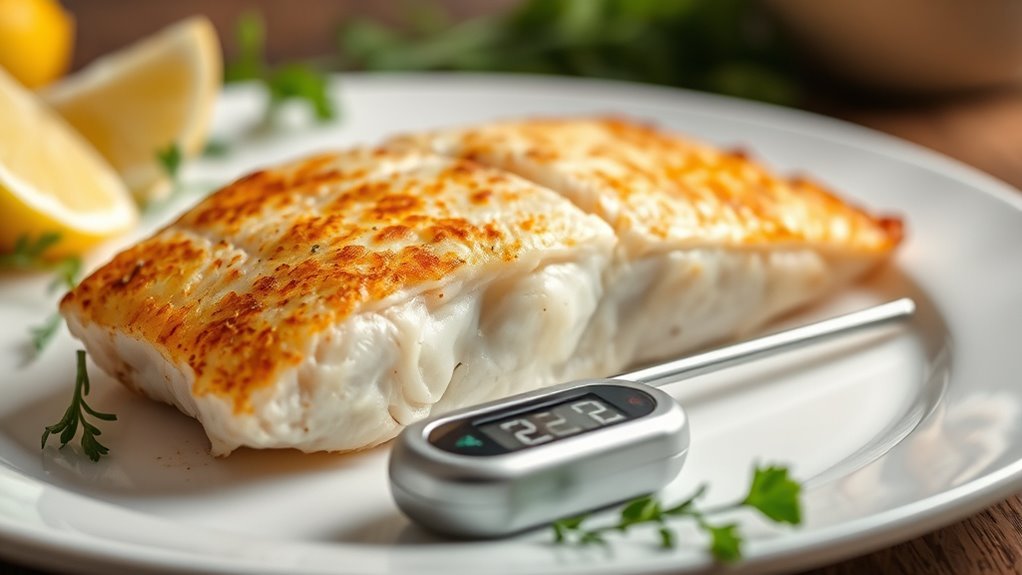
When you bake flounder, the thickness of the fillet directly influences the cooking time. Thinner fillets, about ¼ inch thick, usually take 10-12 minutes to bake at 375°F until they’re flaky.
Baking flounder? Thinner fillets around ¼ inch thick need just 10-12 minutes at 375°F to become perfectly flaky.
If your fillets are thicker, closer to ½ inch or more, plan on 15-20 minutes of baking time to ensure they cook through properly.
The internal temperature you’re aiming for is between 135-140°F, but since that varies with thickness, using a fork to check if the fish flakes easily is a reliable method, especially for thicker fillets.
Adjusting your baking time based on the fillet’s thickness helps you avoid overcooking or undercooking, giving you perfectly baked flounder every time.
Optimal Oven Temperature for Baking Flounder

Knowing the thickness of your flounder fillet helps you decide not only the baking time but also the best oven temperature to use. For tender, flaky flounder, the ideal oven temperature usually falls between 375°F and 400°F.
Baking at 375°F requires about 12-15 minutes, while 400°F shortens the baking time to 10-12 minutes without drying the fish. Preheat your oven to the chosen temperature to ensure even cooking and perfect results.
| Oven Temperature | Baking Time | Result |
|---|---|---|
| 375°F | 12-15 minutes | Tender, flaky |
| 400°F | 10-12 minutes | Faster, tender |
| Below 375°F | Longer than 15m | Risk of undercooking |
Stick to these guidelines for delicious flounder every time.
Preparing Flounder for Baking

Before baking flounder, you should rinse the fillets under cold water and pat them dry thoroughly with paper towels. This step guarantees the fish cooks evenly and the seasoning sticks well.
Next, prepare your flounder by following these tips:
Space the fillets evenly on the baking sheet to avoid overlapping and promote uniform baking. Season the fish with salt, pepper, and your choice of spices to enhance flavor.
Brush the fillets with melted butter or oil to keep them moist during baking. Sprinkle bread crumbs or fresh herbs on top for added texture and aroma.
Step-by-Step Baking Instructions
Since baking times vary with temperature and fillet thickness, you’ll want to preheat your oven accordingly and keep a close eye on the fish as it cooks.
Start by setting your oven to 325°F (165°C) for a gentle bake or 375-400°F (190-200°C) if you prefer a quicker result.
Place your seasoned flounder fillets on a baking sheet in a single layer, making sure they don’t overlap.
Bake the fillets for about 25-30 minutes at 325°F or 12-15 minutes at higher temperatures.
Check for doneness by seeing if the fish flakes easily with a fork and reaches an internal temperature of 135-140°F.
Signs Your Flounder Is Perfectly Cooked
When you bake flounder, you’ll notice it’s perfectly cooked once it flakes easily with a fork and reaches an internal temperature between 135-140°F. Pay close attention to these visual cues and signs of flakiness to guarantee ideal doneness:
- The flesh turns opaque, losing its translucent center.
- Edges bubble slightly, signaling heat penetration.
- The texture feels firm but still moist, not dry or rubbery.
- The fillet separates easily into delicate flakes with gentle pressure.
Checking the internal temperature with a reliable thermometer confirms doneness without guesswork.
A reliable thermometer takes the guesswork out of perfectly cooking your flounder every time.
These signs combined help you achieve perfectly cooked flounder every time, balancing tenderness and flavor without overcooking.
Common Mistakes to Avoid When Baking Flounder
Although baking flounder seems straightforward, you can easily make mistakes that dry out the delicate fish or cause uneven cooking. Overbaking is a common error; flounder only needs 10-15 minutes at 375-400°F.
Cooking at a high oven temperature like 425°F without adjusting the time often results in burnt edges and undercooked centers. Always preheat your oven properly to guarantee consistent heat and avoid longer cooking times.
Also, pat the fillets dry before baking to prevent sogginess and promote browning. Avoid opening the oven door frequently, as temperature fluctuations lead to uneven doneness.
Flavor Enhancements and Seasoning Tips
To bring out the best in your flounder, you’ll want to season it thoughtfully before baking. Simple seasoning with salt, pepper, and paprika enhances its natural flavor without overpowering it. Brushing the fillets with a mix of melted butter, lemon juice, and garlic adds brightness and richness.
Consider these tips to elevate your dish:
Marinate the fish in lemon juice or white wine for 15-30 minutes to tenderize and boost flavor.
Sprinkle seasoned bread crumbs or Parmesan cheese on top for a crispy, flavorful crust.
Add fresh herbs like parsley or thyme before baking to enhance aroma and taste.
Use lemon slices or zest to brighten the overall flavor profile.
These steps ensure your flounder bakes perfectly seasoned and delicious.
Serving Suggestions for Baked Flounder
Since baked flounder has a delicate flavor, you’ll want to pair it with side dishes that complement rather than overpower it. Serve flounder alongside roasted vegetables like asparagus, broccoli, or zucchini for a healthy balance.
Pair baked flounder with roasted veggies like asparagus or zucchini to enhance its delicate flavor.
Mashed potatoes or rice also make excellent side dishes, enhancing the meal without stealing the spotlight. Adding a fresh lemon wedge or drizzling lemon butter sauce over the flounder brightens the flavors.
For variety, serve flounder with crisp salads such as Greek or spinach salads to add texture and freshness. Finally, garnish your plate with chopped fresh herbs like parsley or dill to elevate both the presentation and aroma.
These thoughtful serving suggestions help you create a well-rounded, flavorful flounder dish every time.

Storing and Reheating Leftover Flounder
Wondering how to keep your leftover flounder fresh and tasty? Proper storage and reheating are key to enjoying your flounder again without losing flavor or texture. Follow these tips for best results:
Store leftovers in an airtight container in the fridge for up to 3 days.
Freeze flounder in a freezer-safe container for up to 3 months; thaw overnight in the fridge before reheating.
Reheat gently in the oven at 325°F for 7-10 minutes to keep it moist.
For a quick reheat, microwave at 50% power for 1-2 minutes, checking frequently.
Always guarantee your reheated flounder reaches 165°F internally for safety and ideal texture.
This way, your flounder leftovers stay delicious and ready to enjoy.
Frequently Asked Questions
How Long to Cook Flounder in the Oven?
You should cook flounder in the oven for 12 to 15 minutes at 375°F to 400°F. Check around 12 minutes to avoid overcooking, ensuring it flakes easily and stays moist and tender.
Is It Better to Bake Fish at 350 or 400?
Choosing between 350°F and 400°F is like picking a dance partner. 350°F moves slow and tender, perfect for thick fillets, while 400°F dances fast, giving you a crisp, firm finish. You decide your style!
How Long Do You Cook a Flounder For?
You should bake flounder for 12 to 15 minutes at 375°F or 25 to 30 minutes at 325°F. Check early to avoid dryness; it’s done when it flakes easily or reaches 135-140°F internally.
How Long Does Fish Take in the Oven at 400 Degrees?
Imagine the sizzle of your fish turning golden. At 400°F, it takes about 10-15 minutes to bake. You’ll know it’s done when it flakes easily and reaches that perfect, safe internal temperature of 145°F.
Conclusion
Now that you know how to bake flounder to flaky perfection, you’re ready to turn your kitchen into a seaside retreat. With the right temperature and timing, your fillets will dance off the fork, tender and juicy every time.
Remember, patience is your secret ingredient—treat your fish gently, and it’ll reward you with ocean-fresh flavor that melts like a sunset on your tongue.
Happy baking, and enjoy every delicious bite of perfectly baked flounder! With these tips, your baked flounder will always come out tender, moist, and full of flavor.